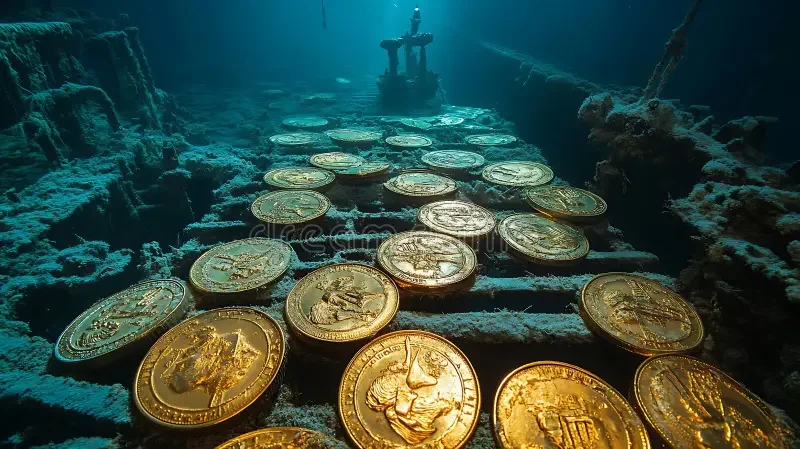
The islet of Mochlos, located in the Gulf of Mirabello in northeastern Crete, was a bustling, prosperous coastal town during the Minoan Bronze Age, separated from the main island by only a narrow, shallow strip of water that served as a natural double harbor. While the land excavations have yielded rich residential quarters and elite tombs, the most significant discovery has come from the seabed. Marine archaeologists running high-resolution side-scan sonar and sub-bottom profiling sweeps have located the intact hull outline of a Late Minoan IB (LMIB, c. 1500–1450 BCE) merchant vessel buried beneath deep layers of marine sediment.
The wreck sits at a depth of 35 meters along a treacherous underwater reef line that has historically claimed vessels across millennia. As the excavation team systematically vacuumed away centuries of protective silt, they exposed the lower structural timbers of the ship's hull, constructed using traditional Mediterranean mortise-and-tenon joints. Packed tightly within the hold was a diverse maritime cargo that provides an explicit look into the high-finance world of Late Bronze Age metal trading.
The primary ballast and commercial weight of the ship consisted of standard copper "oxhide" ingots—large, heavy slabs of copper shaped with four protruding handles to facilitate easy carrying by harbor laborers. Metallurgical isotope testing has traced the chemical signature of this copper directly to the rich mines of Cyprus, confirming the ship's role in a long-distance trade loop. However, the discovery that has electrified the archaeological community is a small, heavy wooden chest lined with lead that contained a cache of small, cast gold ingots.
These gold ingots are distinct from the loose jewelry or recycled scrap metal typically found on Bronze Age shipwrecks. They are clean, rectangular bars and small, circular planchets cast in precise weight increments that conform to the Aegean standard unit of value. Many of these gold bars bear deeply stamped administrative punch marks featuring Minoan linear signs, indicating they had been verified, weighed, and certified by an official palatial authority before being loaded onto the vessel.
The presence of certified gold ingots onboard an LMIB vessel changes our understanding of the prehistoric Aegean economy. It demonstrates that long before the invention of formal coinage in western Asia Minor during the 7th century BCE, the Minoan maritime network was utilizing standardized, pre-weighed precious metal bullion as a true currency to settle high-value international trade imbalances. The ship was likely en route to deliver this wealth to the elite artisans of Mochlos or the nearby palace of Gournia when it struck the reef, preserving a multi-million-dollar Bronze Age financial transaction for the modern world.