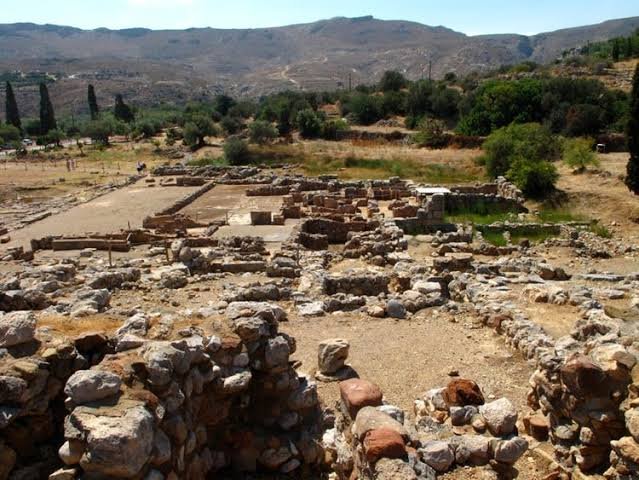
estled within a protected, rock-rimmed bay on the absolute eastern coast of Crete, the palace of Zakros served as the Minoan gateway to the kingdoms of the eastern Mediterranean. While excavations have focused heavily on the central palace complex, current archaeological work has shifted to a sprawling, multi-story elite architectural complex—popularly designated as the "Grand Villa"—situated on the ridge overlooking the harbor. This structure has changed our understanding of how the Minoan palatial economy operated, revealing that elite provincial families held immense wealth and autonomy over international trade long before goods ever reached the central authorities.
The Zakros villa is an architectural marvel of local stone masonry, featuring large ashlar blocks, internal lightwells designed to maximize ventilation, and expansive storage basements. As teams cleared the subterranean magazines, they exposed an unprecedented concentration of unworked exotic raw materials, imported luxury goods, and administrative clay sealings. The site was effectively an elite private custom house operating directly above the Minoan docks.
Among the most spectacular discoveries within the villa's lower magazines are multiple whole elephant tusks (ivory) imported from the Syrian coast, alongside large, semi-processed nodules of blue lapis lazuli tracing back to ancient Afghan supply lines. Nearby, rows of heavy Canaanite transport jars (amphorae) were found lined up against the plastered walls. Gas chromatography analysis of the organic residues inside these jars revealed they were packed with premium Terebinth resin and frankincense, highly prized materials used by Minoan elites to manufacture perfumed oils and sacred incense.
What makes the Zakros Villa an invaluable historical index is the direct physical union of this massive import wealth with advanced administrative tools. In a small, upper-floor archive room that collapsed into the basement during the site's final destruction, archaeologists recovered dozens of clay Linear A tablets alongside hundreds of "hanging nodules"—small pieces of clay baked around strings that once sealed wooden boxes, leather scrolls, or papyrus documents.
The inscriptions on these tablets, deciphered through structural comparative analysis, detail precise quantities of agricultural products, textiles, and raw metals being distributed to specialized local craftsmen. The villa was not merely storing foreign imports; its elite residents were acting as independent entrepreneurial distributors. They received raw materials from Eastern merchant vessels, processed them using a localized network of dependent artisans, and logged the entire transaction using the palace’s official script. This decentralized trade model suggests that the Minoan economic system was far more flexible and capitalistic than the highly centralized, top-down redistribution models traditionally associated with Near Eastern palace economies.