Introduction
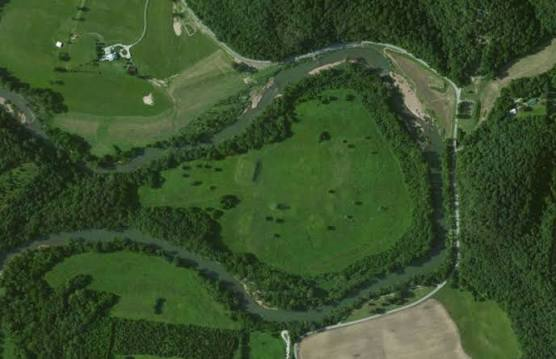
Located along the Harpeth River in present-day Cheatham County, Tennessee, Mound Bottom is one of the largest and most significant Mississippian archaeological sites in the Central Basin region. Occupied between approximately 1000 and 1300 CE, the settlement served as a major political, ceremonial, and economic center for numerous farming communities throughout central Tennessee. Covering nearly 100 acres (40 hectares), the site featured a large central plaza, multiple platform mounds, residential neighborhoods, and an extensive wooden palisade that enclosed the ceremonial precinct. Mound Bottom is considered one of the earliest major Mississippian centers in Tennessee and likely influenced the development of later mound-building communities across the Middle Cumberland region.
Settlement Layout and Monumental Architecture
The heart of Mound Bottom consisted of a large rectangular central plaza surrounded by at least twelve earthen platform mounds. These mounds were carefully constructed by transporting thousands of basket loads of clay and soil from nearby river terraces. Builders deposited the earth in compact layers to create stable, flat-topped platforms capable of supporting substantial wooden buildings.
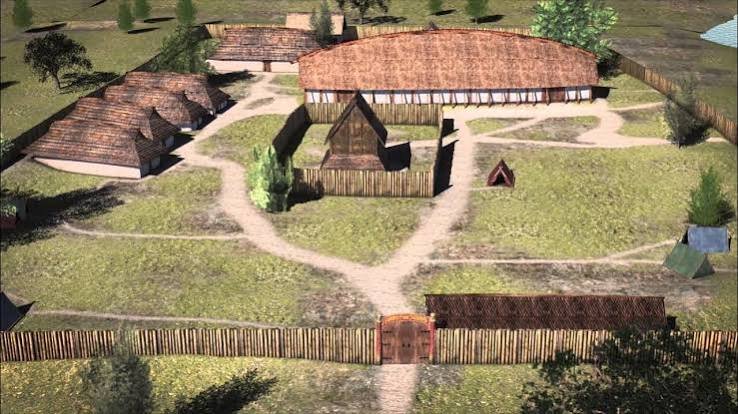
The largest mound likely housed the residence of the chief or an important temple where priests conducted religious ceremonies. Smaller platform mounds supported council houses, elite residences, ceremonial buildings, and administrative structures. Residential neighborhoods surrounded the ceremonial center, with clusters of rectangular houses connected by well-defined pathways leading toward the plaza.
The Defensive Palisade
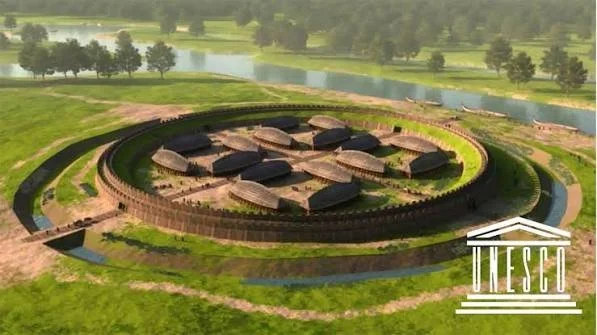
One of Mound Bottom's defining features was its massive wooden palisade, constructed from closely spaced upright timber posts surrounding much of the ceremonial center. Archaeological evidence indicates that the wall was reinforced with defensive gateways and may have included projecting bastions or watch stations that allowed defenders to monitor approaching visitors.
Beyond military protection, the palisade established a clear boundary separating sacred ceremonial spaces from the surrounding countryside. Its construction required coordinated labor from hundreds of workers, demonstrating the strong political leadership and organizational capacity of the community.
Agriculture, Trade, and Daily Life
The inhabitants practiced intensive agriculture centered on maize, beans, squash, and sunflowers, taking advantage of the fertile floodplain soils of the Harpeth River Valley. Hunting white-tailed deer, wild turkey, rabbits, and fishing in nearby rivers supplemented their diet throughout the year.
Craft specialists produced shell-tempered pottery, stone tools, bone implements, shell ornaments, and woven textiles. Trade routes connected Mound Bottom with major Mississippian centers such as Cahokia and Moundville, bringing marine shells, copper, exotic stone, and ceremonial objects from distant regions.
Religion and Ceremonial Activities
The large central plaza served as the location for seasonal festivals, religious ceremonies, athletic contests, diplomatic meetings, and communal feasts. Priests performed rituals atop the platform mounds honoring agricultural spirits, celestial forces, and revered ancestors. Ceremonial objects recovered from the site reflect participation in the Southeastern Ceremonial Complex, demonstrating strong cultural ties with Mississippian societies throughout the Southeast.
Archaeological Importance
Excavations have uncovered mound construction stages, house foundations, storage pits, defensive palisades, pottery workshops, food remains, and ceremonial artifacts. These discoveries have provided archaeologists with valuable information about the emergence of Mississippian political organization in central Tennessee and the evolution of complex chiefdoms.
Conclusion
Mound Bottom stands as one of Tennessee's earliest and most influential Mississippian ceremonial capitals, showcasing sophisticated urban planning, monumental earthwork construction, defensive architecture, and thriving agricultural communities. Its platform mounds, palisaded enclosure, and ceremonial plazas demonstrate the remarkable engineering and political achievements of prehistoric Indigenous societies in the Cumberland River Valley.