Introduction
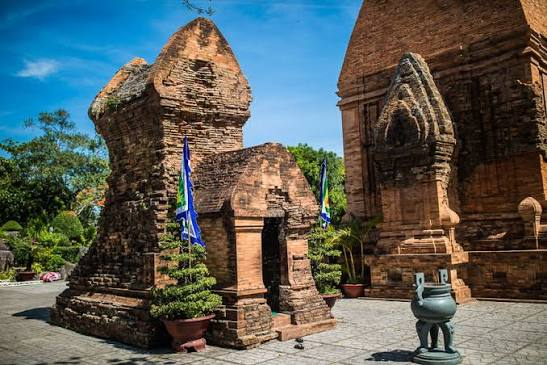
Located along the fertile banks of the Thu Bồn River in present-day Quảng Nam Province, Vietnam, Trà Kiệu is one of the most significant archaeological sites associated with the early Champa Kingdom. Known in ancient Sanskrit inscriptions as Simhapura, meaning "City of the Lion," Trà Kiệu served as the kingdom's political and administrative capital from approximately the 4th to the 8th century CE. Its strategic location near the Thu Bồn River allowed the city to control important inland and maritime trade routes that connected central Vietnam with the South China Sea, facilitating commerce with neighboring kingdoms as well as merchants from India, China, and other parts of Southeast Asia. As the seat of Cham rulers, Trà Kiệu became a thriving center of government, religion, diplomacy, and economic activity. The city also played a crucial role in introducing and spreading Indian cultural influences, particularly Hinduism, Sanskrit literature, and Indian artistic traditions, while simultaneously developing a unique Cham identity reflected in its architecture, sculpture, and urban organization.
Urban Planning and Masterpiece Art
The city of Trà Kiệu was carefully designed to function as both a fortified capital and an important religious center. It was enclosed by massive earthen embankments reinforced with brick ramparts, providing strong defenses against invasion and demonstrating the advanced engineering capabilities of the Cham people. Defensive water channels and moats surrounded sections of the city, serving both military and practical purposes by strengthening the fortifications, improving drainage, and helping regulate water supplies. Within these protective walls were royal residences, administrative buildings, religious sanctuaries, workshops, marketplaces, and residential neighborhoods that supported a vibrant urban population. The city's well-planned layout illustrates the sophisticated political organization of the early Champa Kingdom and its ability to manage both defense and commerce along one of central Vietnam's most important river systems.
Trà Kiệu also became renowned for producing some of the finest examples of Cham sandstone sculpture, reflecting the kingdom's extraordinary artistic achievements and the influence of Indian religious traditions. Among its greatest masterpieces is the famous Trà Kiệu Pedestal, a single monolithic sandstone block intricately carved with continuous narrative friezes illustrating scenes from the Hindu epic Ramayana. The carvings portray episodes involving Prince Rama, Princess Sita, Hanuman, and other legendary figures, demonstrating the sculptors' remarkable ability to transform religious stories into detailed visual narratives. The pedestal not only served a ceremonial function within Hindu temples but also symbolized the close relationship between royal authority and Hindu religious beliefs in Champa society.
Another outstanding work is the Dancers' Frieze, a beautifully carved high-relief sandstone panel depicting graceful apsaras, or celestial dancers from Hindu mythology. The figures are shown in elegant, fluid poses that convey movement and rhythm despite being carved from solid stone. Each dancer is adorned with elaborate necklaces, bracelets, belts, earrings, and intricately detailed conical crowns, reflecting both artistic sophistication and the luxurious ceremonial attire of the Cham court. The exceptional craftsmanship displayed in the delicate facial expressions, flowing garments, and finely executed jewelry demonstrates the maturity of Cham sculpture and its ability to blend Indian artistic inspiration with local creativity. These masterpieces reveal not only technical excellence but also the spiritual and cultural ideals that shaped the Champa Kingdom.
Conclusion
Trà Kiệu stands as one of the most important archaeological and historical sites of the early Champa Kingdom, illustrating the civilization's achievements in urban planning, military engineering, religion, and artistic expression. Its fortified walls, brick ramparts, and defensive water systems demonstrate how the Cham rulers protected and administered one of Southeast Asia's earliest urban capitals, while its magnificent sandstone sculptures reveal a highly developed artistic tradition deeply influenced by Hindu culture yet uniquely Cham in style. As the political heart of Simhapura, Trà Kiệu served as a center of royal authority, religious worship, international trade, and cultural exchange along the strategic Thu Bồn River corridor. Today, the site's remarkable architecture, urban remains, and sculptural masterpieces continue to provide valuable insights into the political power, religious devotion, and artistic brilliance that defined early Champa civilization and secured its place in the history of Southeast Asia.