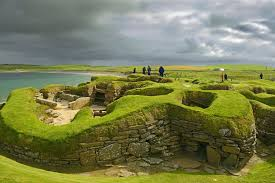
Skara Brae, located on the Bay of Skaill in the Orkney Islands, is one of the most perfectly preserved Neolithic settlements in Europe. Inhabited between 3180 BCE and 2500 BCE, it is older than both the Great Pyramids and Stonehenge.
The site earned the nickname "The Scottish Pompeii" because it was buried by sand dunes for millennia, protecting its stone structures and even its furniture until a massive storm in 1850 stripped away the grass and revealed the village.
1. The Subterranean Design
The people of Skara Brae did not build "on" the earth; they built "into" it. The village consists of eight clustered houses connected by low, roofed-over passages.
Midden Insulation: The houses were sunk into mounds of midden (prehistoric domestic waste, including shells, bones, and ash). This wasn't because they were messy; the midden acted as a powerful layer of insulation against the brutal North Atlantic winds.
The Passageways: The stone-lined tunnels between houses allowed residents to move through the village without ever being exposed to the elements, creating a true "indoor" community.
2. Stone Furniture: A Domestic Time Capsule
Because the Orkney Islands were largely treeless during the Neolithic, the residents used the local flagstone (which naturally splits into flat planks) to build everything. This has left us with an unprecedented look at "interior design" from 5,000 years ago.
The Dresser: Each house features a stone shelving unit, or "dresser," positioned directly opposite the entrance. These were likely used to display prized possessions or ritual objects.
Box Beds: Stone slabs formed the frames of beds on either side of a central hearth. These would have been filled with heather or straw for comfort.
The Hearth: A large square fire pit sat in the center of the room, serving as the only source of light and heat.
3. Ancient "Indoor Plumbing"
One of the most shocking discoveries at Skara Brae was a sophisticated drainage system.
Stone Sewers: Small channels lined with stone and covered with slabs ran underneath the houses.
The Toilets: Several houses feature a small cell with a drain leading to the main sewer line. It appears the villagers used a constant flow of water (likely diverted from a nearby stream) to flush waste out to the sea.
4. The Neolithic Diet and Economy
Forensic analysis of the site provides a clear picture of how these "Orkney Grooved Ware" people survived.
Pastoralists: They were primarily cattle and sheep farmers.
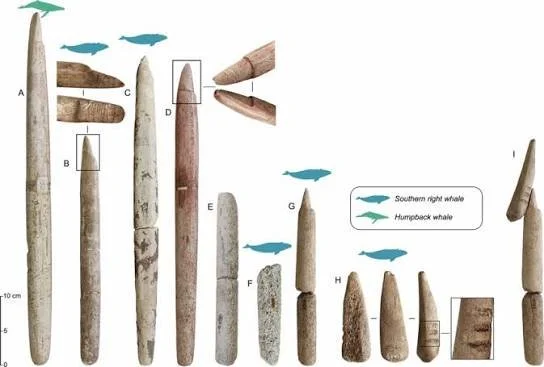
Seafood and Stranded Whales: While they fished, they also utilized "drift" resources. Large whale bones were found used as roof rafters, as timber was scarce.
Barley and Wheat: They grew cereal crops, which were likely ground into flour using the stone querns found in the houses.
5. The Mystery of Abandonment
For years, it was believed the villagers fled a sudden, catastrophic storm (the "Pompeii" narrative). However, modern archaeology suggests a more gradual departure.
Changing Climate: Over centuries, the encroaching sand dunes likely made farming more difficult and threatened to bury the homes.
Social Evolution: By 2500 BCE, the social structure of Orkney was shifting toward more individualistic farming and larger monumental sites like the Ring of Brodgar. Skara Brae may have simply become "old-fashioned" or impractical to maintain against the rising sands.
6. Artistic and Ritual Life
The people of Skara Brae were not just survivalists; they were artists.
Carved Stone Balls: Archaeologists found mysterious, intricately carved stone balls with geometric patterns. Their purpose is still unknown—they may have been weapons, symbols of authority, or even weights for fishing nets.
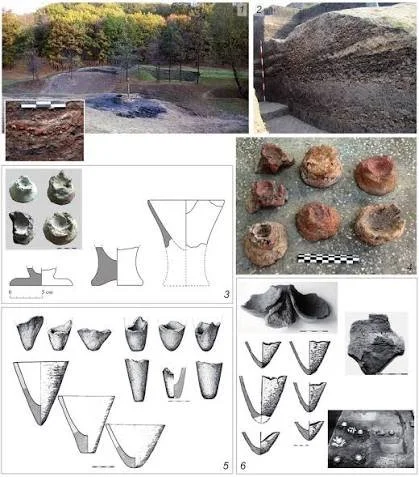
Pottery: The village is the type-site for Grooved Ware pottery, characterized by flat bottoms and decorative incisions, which later spread throughout all of Britain.
Skara Brae offers a rare "human" perspective on the Stone Age. Walking through the ruins, you don't just see a site of worship or a tomb; you see a home where people cooked, slept, and stayed warm together while the winds howled outside.