• MAIN PAGE
  • LATEST NEWS
    • Lost Cities
    • Archaeology's Greatest Finds
    • Underwater Discoveries
    • Greatest Inventions
    • Studies
    • Blog
  • PHILOSOPHY
  • HISTORY
  • RELIGIONS
    • Africa
    • Anatolia
    • Arabian Peninsula
    • Balkan Region
    • China - East Asia
    • Europe
    • Eurasian Steppe
    • Levant
    • Mesopotamia
    • Oceania - SE Asia
    • Pre-Columbian Civilizations of America
    • Iranian Plateau - Central Asia
    • Indus Valley - South Asia
    • Japan
    • The Archaeologist Editor Group
    • Scientific Studies
    • Aegean Prehistory
    • Historical Period
    • Byzantine Middle Ages
    • Predynastic Period
    • Dynastic Period
    • Greco-Roman Egypt
  • Rome
  • PALEONTOLOGY
  • About us
Menu

The Archaeologist

  • MAIN PAGE
  • LATEST NEWS
  • DISCOVERIES
    • Lost Cities
    • Archaeology's Greatest Finds
    • Underwater Discoveries
    • Greatest Inventions
    • Studies
    • Blog
  • PHILOSOPHY
  • HISTORY
  • RELIGIONS
  • World Civilizations
    • Africa
    • Anatolia
    • Arabian Peninsula
    • Balkan Region
    • China - East Asia
    • Europe
    • Eurasian Steppe
    • Levant
    • Mesopotamia
    • Oceania - SE Asia
    • Pre-Columbian Civilizations of America
    • Iranian Plateau - Central Asia
    • Indus Valley - South Asia
    • Japan
    • The Archaeologist Editor Group
    • Scientific Studies
  • GREECE
    • Aegean Prehistory
    • Historical Period
    • Byzantine Middle Ages
  • Egypt
    • Predynastic Period
    • Dynastic Period
    • Greco-Roman Egypt
  • Rome
  • PALEONTOLOGY
  • About us

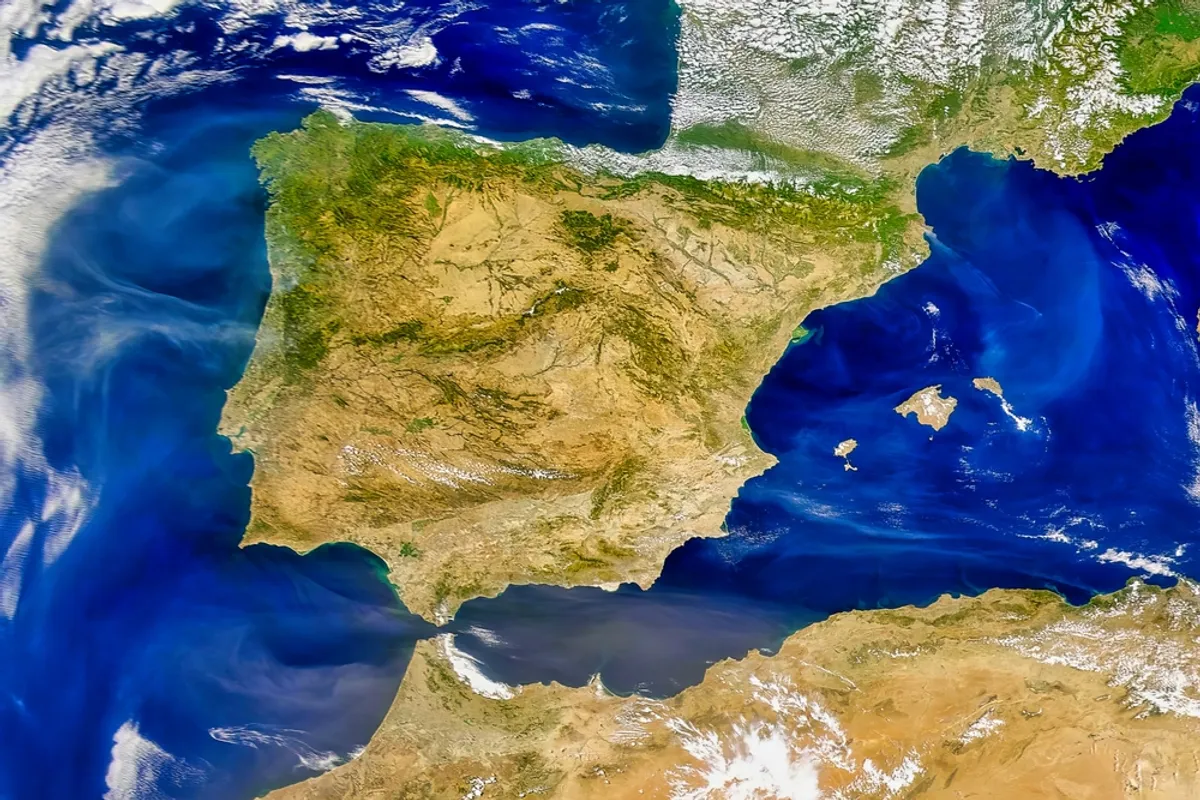
Aerial view of the Iberian Peninsula. There's a small chance that modern humans and Neanderthals ever met here, according to new research.

New Models Reveal If Neanderthals and Modern Humans Ever Met on the Iberian Peninsula During the Old Stone Age

December 30, 2025

Travel back about 100,000 years to Paleolithic Europe, and Neanderthals were building fires, making jewelry, and hunting mammoths.

Neanderthals dominated Europe for hundreds of thousands of years, but between roughly 50,000 and 38,000 years ago, anatomically modern humans began expanding into the region. Neanderthal populations then sharply declined, eventually becoming extinct.

A new study in PLOS One examines potential interactions between Neanderthals and Homo sapiens on the Iberian Peninsula during the Old Stone Age. Researchers built a human dispersal model to simulate encounters under different climatic conditions. “By linking climate, demography, and culture, our dynamic model offers a broader framework to interpret archaeological and genomic data,” said Gerd-Christian Weniger from the University of Cologne.

The Middle to Upper Paleolithic Transition saw dramatic climate swings, with short warming periods, long cooling periods called Dansgaard-Oeschger events, and sudden cold snaps known as Heinrich events. Evidence shows modern humans and Neanderthals met and interbred in parts of Eurasia, contributing 1–4 percent of DNA in non-African populations. However, fossil evidence for interactions on the Iberian Peninsula is scarce.

To address this, researchers ran computer simulations testing scenarios for Neanderthal extinction. Lead author Yaping Shao explained that repeated simulations allowed assessment of early Neanderthal extinction, small populations at high risk, or prolonged survival that could enable mixing.

Most simulations suggested no contact occurred between Neanderthals and modern humans in Iberia. By the time modern humans arrived, Neanderthals were likely declining and confined to coastal refuges. The Heinrich Event 5 (~48,000 years ago) likely accelerated their extinction. Only about 1 percent of scenarios suggested limited interaction, producing a small population (2–6 percent) with mixed genes, probably in northwestern coastal areas like Cantabria, where modern humans may have arrived around 42,000 years ago.

The team plans to refine the model by adding factors such as prey availability, which could affect population stability and spread. They conclude that the approach offers a powerful alternative for studying human origins and dispersal, complementing traditional archaeological and genomic research.
← Rare Roman-Era enamelled fibula found near GrudziądzArchaeologists Are Using Lasers to Clean Decades of Grime Off a Towering 1,800-Year-Old Marble Column in Rome →
Featured
image_2025-12-31_002257277.png
Dec 30, 2025
Silver necklace depicting Assyrian goddess Ishtar unearthed in southwestern Türkiye
Dec 30, 2025
Read More →
Dec 30, 2025
image_2025-12-31_001924708.png
Dec 30, 2025
Humans cared for wolves long before dogs emerged, study finds
Dec 30, 2025
Read More →
Dec 30, 2025
image_2025-12-31_000800442.png
Dec 30, 2025
Ancient Buddhist Site Unearthed in Kashmir’s Baramulla District Highlights Region’s Kushan-Era Past
Dec 30, 2025
Read More →
Dec 30, 2025
image_2025-12-31_000438961.png
Dec 30, 2025
Horrifically Disfigured Skeleton Known As “The Prince” Was Likely Mauled To Death By A Bear 27,000 Years Ago
Dec 30, 2025
Read More →
Dec 30, 2025
image_2025-12-30_235800075.png
Dec 30, 2025
An Ancient Portal to the Underworld Was Found in Denver
Dec 30, 2025
Read More →
Dec 30, 2025
image_2025-12-30_235042591.png
Dec 30, 2025
Rare Roman-Era enamelled fibula found near Grudziądz
Dec 30, 2025
Read More →
Dec 30, 2025
read more

Powered by The archaeologist