Extraordinary story of Captain Francisco de Cuéllar who was shipwrecked at Streedagh but survived is told in new joint Irish/Spanish publication
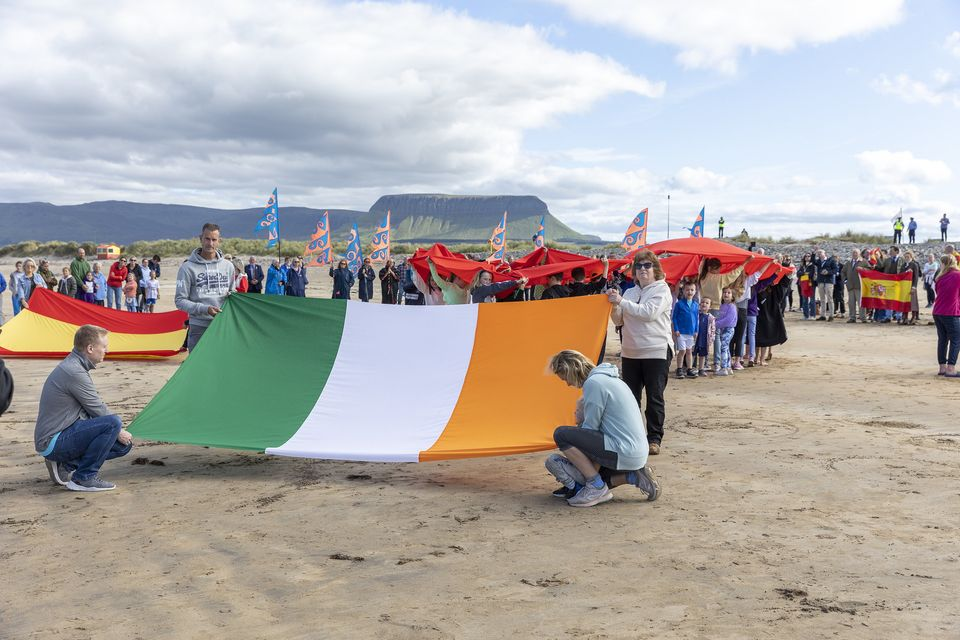
The Spanish Armada is commemorated each year at Streedagh
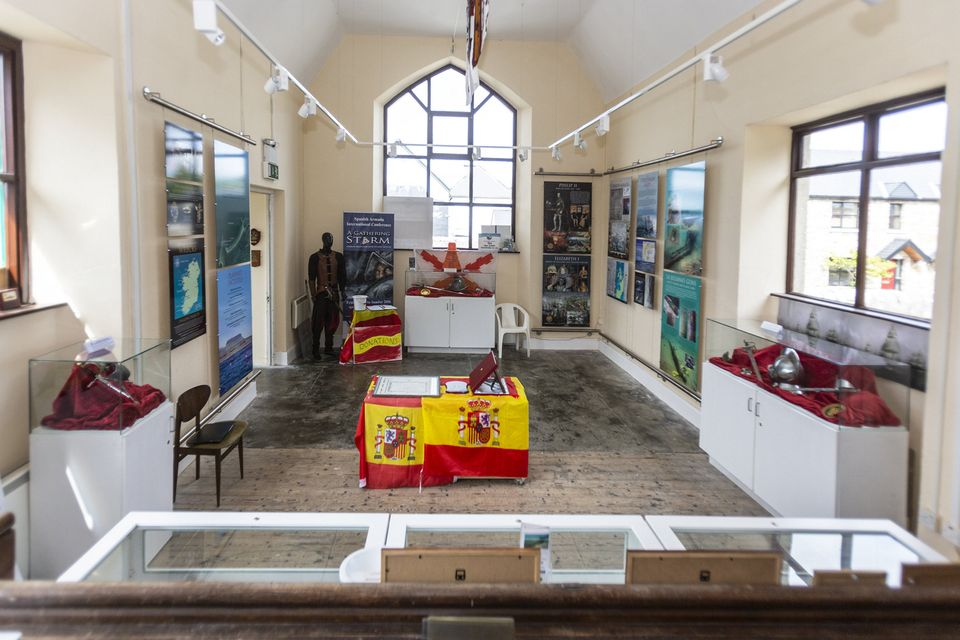
Spanish Armada museum at the former courthouse in Grange
The National Monuments Service of Ireland, in collaboration with the Spanish Ministry of Culture, has released a new publication titled “The Letter from Captain Cuéllar – Shipwrecks of the Spanish Armada in Ireland”. The book examines Captain Francisco de Cuéllar’s firsthand account of surviving the wreck of three Spanish Armada ships—La Juliana, La Lavia, and Santa Maria de Visón—off Streedagh Bay, Sligo, in 1588. It includes contributions from experts in both Ireland and Spain, incorporating contemporary historical records and recent archaeological findings. A facsimile of Cuéllar’s letter, La Carta, is also presented alongside an English translation.
Cuéllar’s letter vividly recounts his extraordinary experiences following the shipwreck. He describes Ireland’s geography, inhabitants, language, and society in the late 16th century, as he navigated a hostile and unfamiliar land after losing his crew and ship. His journey involved traveling through northwestern Ireland, seeking shelter with Gaelic chieftains, evading English forces, and ultimately securing passage to Scotland, then the Spanish Netherlands, and finally back to Spain. In 1589, he wrote a detailed account of these events in a letter to King Philip, offering one of the most valuable firsthand perspectives of the period.
Minister of State for Heritage, Nature and Biodiversity, Christopher O’Sullivan, praised the work of the National Monuments Service in preserving and highlighting Ireland’s Armada heritage. He noted that Ireland’s ratification of the 2001 UNESCO Convention on the Protection of Underwater Cultural Heritage demonstrates a commitment to safeguarding submerged archaeology and fostering international cooperation with Spain.
The archaeological remains of the Armada lie off Streedagh beach. In response to winter storms in 2015, the National Monuments Service recovered nine bronze guns and a cauldron from La Juliana, along with carriage wheels and ship timbers. These artifacts represent the largest collection of Armada guns recovered from a single wreck worldwide.
The Spanish Ambassador to Ireland, Teresa Lizaranzu, highlighted the shared history between the two nations and the courage of Captain Cuéllar and his comrades. Carmen Cabrera, Assistant Deputy Director of Spain’s Ministry of Culture, emphasized that the publication underscores the importance of underwater cultural heritage and promotes ongoing collaboration between Ireland and Spain.
La Juliana, La Lavia, and Santa Maria de Visón sank on 21 September 1588, resulting in over 1,100 fatalities. La Juliana, a 860-ton ship, carried 325 soldiers and 70 crew. Survivors like Pedro Blanco went on to serve in Ireland, while Cuéllar’s detailed letter from 1589 offers insight into his survival and travels across northwest Ireland. He encountered both friend and foe, found refuge under Gaelic lords, and eventually reached Derry, from where he secured passage home.
Cuéllar’s Carta provides a vivid description of Ireland at the time:
“The custom of these savages is to live as the brute beasts among the mountains, which are very rugged in this part of Ireland where we lost ourselves. They live in huts made of straw. The men are all large bodied, and of handsome features and limbs; and as active as the roe-deer. The most of the women are very beautiful, but badly dressed up…wearing no more than a chemise, and a blanket, with which they cover themselves, and a linen cloth, much doubled, over the head and tied in front.” — Captain Cuéllar, Antwerp, October 1589.