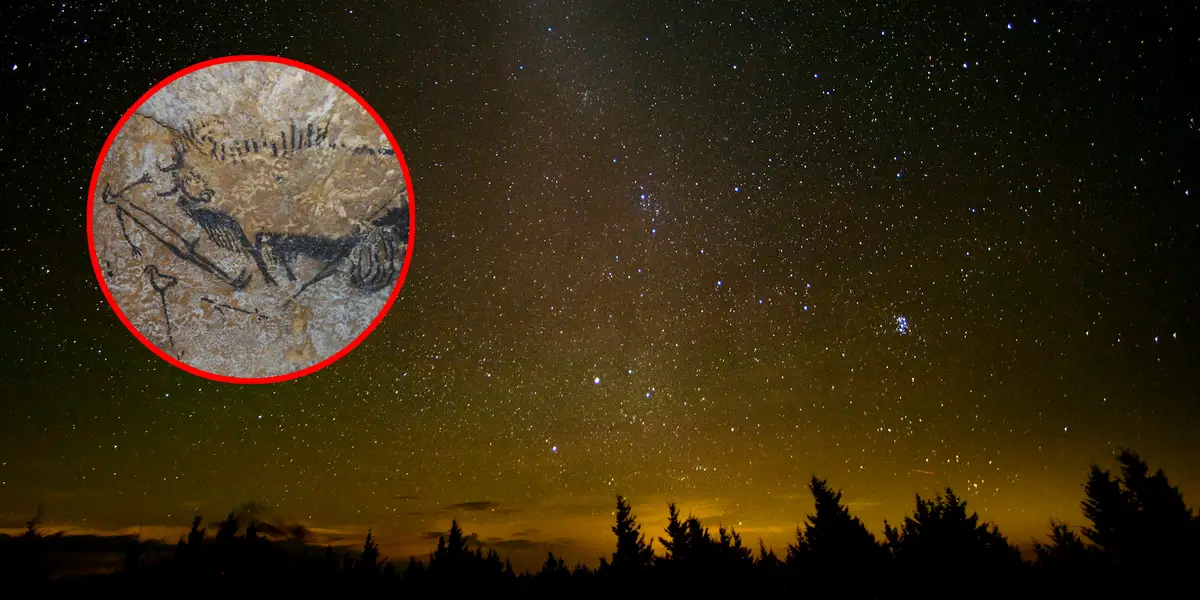
Deep inside caves, far from daylight, early humans painted animals, symbols—and possibly the stars. Some prehistoric artworks suggest that our ancestors observed and recorded astronomical events long before written calendars existed.
These paintings blur the line between art and science.
Cave Ceilings as Cosmic Canvases
In caves such as Lascaux, clusters of dots appear alongside animal figures. Some researchers propose that these dot patterns correspond to star clusters, including the Pleiades.
Similarly, in Chauvet Cave, geometric markings accompany painted animals. While interpretations vary, the possibility of celestial symbolism is compelling.
Recording Astronomical Events
Certain cave images may represent comets, meteor showers, or seasonal constellations. If accurate, this suggests that prehistoric communities tracked recurring sky patterns.
Recognizing seasonal star positions would have helped coordinate hunting, migration, and ritual gatherings.
Myth and Constellation
Stars often inspired mythological stories. Animals painted on cave walls may have been linked to constellations in the sky. Storytelling anchored celestial patterns in memory.
By painting these symbols underground, early artists may have created sacred spaces reflecting the cosmos.
Observation Before Writing
Mapping the sky did not require literacy. Careful observation and pattern recognition were enough.
These prehistoric artists demonstrated intellectual curiosity and symbolic thinking. They transformed cave walls into reflections of the heavens.
Humanity’s Earliest Astronomers
If these interpretations are correct, then some of the world’s first astronomers were also painters.
Their work reminds us that scientific observation and artistic expression have always been intertwined. Long before telescopes, humans were already studying the sky—and leaving traces of that wonder in stone.