Introduction
Samothrace, an island in the northern Aegean, is widely known for its Sanctuary of the Great Gods and its importance as a destination for ancient religious activity.
Pilgrims traveled to the island to participate in religious ceremonies associated with the sanctuary. Its sacred landscape included monumental buildings, ritual spaces, and natural features that shaped the experience of visitors.
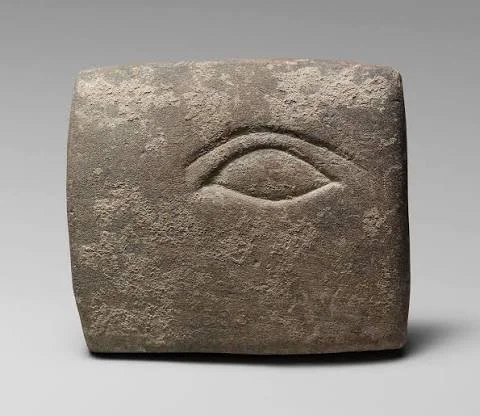
Among the many forms of ancient votive offerings were anatomical dedications: objects representing particular parts of the human body. Eyes were especially meaningful because of their connection to sight, healing, protection, and personal well-being.
The possibility of Hellenistic votive eyes discovered in a ravine on Samothrace offers an intriguing subject for archaeological investigation. However, a specific assemblage from such a location should not be treated as a verified discovery without published evidence.
This article examines anatomical votives, the religious landscape of Samothrace, and the methods used to interpret small offerings associated with healing and protection.
1. Samothrace as a Religious Center
Samothrace was an important religious destination in the ancient Greek world.
Its Sanctuary of the Great Gods attracted visitors from different parts of the Mediterranean. The sanctuary was associated with the Mysteries of Samothrace, religious rites whose precise details remain partly unknown.
The site's architectural remains demonstrate a complex religious environment that developed over several centuries.
Its location within a mountainous landscape also influenced the movement of visitors and the organization of sacred spaces.
2. The Hellenistic Period and Votive Practices
The Hellenistic period generally extends from the death of Alexander the Great in 323 BCE to the establishment of Roman imperial dominance in the eastern Mediterranean.
During this period, religious practices continued to evolve across the Greek world.
Votive offerings were objects dedicated to a deity or sacred location, often in response to a request, in gratitude for assistance, or as part of a personal religious obligation.
These offerings varied widely in material, value, and appearance.
They could include pottery, figurines, inscriptions, jewelry, weapons, and representations of body parts.
3. Understanding Anatomical Votives
Anatomical votives are objects representing human body parts.
Examples from the wider ancient Mediterranean include eyes, ears, hands, feet, limbs, and internal organs.
They are often interpreted as offerings associated with healing or requests for divine assistance.
A representation of an eye might have been dedicated by someone seeking improved eyesight or expressing gratitude following recovery from an eye-related problem.
However, anatomical objects could also carry broader symbolic meanings. Their interpretation depends on the context in which they were deposited.
4. The Symbolism of the Eye
Eyes have long held symbolic importance in Mediterranean cultures.
They were associated with vision, perception, awareness, and vulnerability.
In some traditions, images of eyes were also used for protection against harmful influences or the evil eye.
An ancient eye-shaped object could therefore represent a healing request, a protective symbol, or another form of religious dedication.
Archaeologists must examine its material, style, inscriptions, and archaeological context before identifying its specific purpose.
5. Materials and Manufacturing Techniques
Votive eyes could be produced from different materials, including clay, bronze, silver, gold, stone, and other substances.
Terracotta examples could be modeled by hand or produced using molds.
Metal examples required different manufacturing techniques, including casting, hammering, and engraving.
The material chosen may reflect the donor's financial resources, the local craft tradition, or the requirements of the sanctuary.
Scientific analysis can help identify the composition and manufacturing history of surviving objects.
6. Why a Ravine Might Contain Votive Offerings
Natural features sometimes formed part of ancient sacred landscapes.
Caves, springs, mountain slopes, ravines, and unusual rock formations could acquire religious significance through local traditions and repeated human activity.
A ravine might have been associated with a route to a sanctuary, a water source, or a place where offerings were deposited.
However, the discovery of an ancient object in a ravine does not automatically establish a ritual function.
Objects can enter natural deposits through erosion, accidental loss, later disturbance, or the movement of soil.
7. Archaeological Evidence of Deliberate Deposition
The identification of a votive deposit requires careful attention to context.
Researchers investigate whether objects were arranged intentionally, concentrated within a particular layer, or associated with other ritual materials.
Repeated deposits of similar anatomical objects may indicate a specialized offering tradition.
Inscriptions, figurines, pottery, and other votive materials can strengthen the interpretation.
The chronological relationship between the objects is equally important because a deposit may have accumulated over an extended period.
8. Samothrace and the Broader Aegean Tradition
Anatomical votives are known from several ancient Mediterranean religious contexts.
Comparisons with other sanctuaries can help researchers understand how bodily representations were used in religious practices.
However, similar objects do not necessarily indicate identical beliefs or ceremonies.
Samothrace had distinctive religious traditions, and its votive practices should be interpreted within the specific historical and archaeological context of the island.
9. Conservation and Research
Small votive objects can be vulnerable to erosion, corrosion, and damage caused by improper handling.
Terracotta may fracture, while bronze and silver objects can suffer from corrosion and mineral deposits.
Conservation specialists document the condition of each object before applying treatment.
Three-dimensional recording, material analysis, and detailed photographic documentation can help preserve information about manufacturing techniques and surface details.
Research should also include the surrounding landscape rather than focusing exclusively on the artifact itself.
Conclusion
The possibility of Hellenistic votive eyes in a Samothrace ravine provides an interesting subject for exploring the relationship between bodily imagery, healing, and sacred landscapes.
Anatomical offerings reveal how ancient people expressed personal concerns through material objects dedicated to religious powers.
Although a specific ravine assemblage remains unverified without archaeological documentation, the broader evidence from ancient Greek religious sites demonstrates the importance of votive practices.
Studying such objects alongside their archaeological context, manufacturing techniques, and landscape setting can contribute to a deeper understanding of religious life in Hellenistic Samothrace.