Introduction
Tiryns, located in the Argolid region of the northeastern Peloponnese, is one of the most important archaeological sites associated with Mycenaean civilization. Its fortified citadel, monumental architecture, and administrative remains provide valuable evidence of Bronze Age political and economic organization.
Textile production was another important part of Mycenaean society. Wool and other fibers were processed into clothing, furnishings, and materials that could circulate through systems of household production and palace administration.
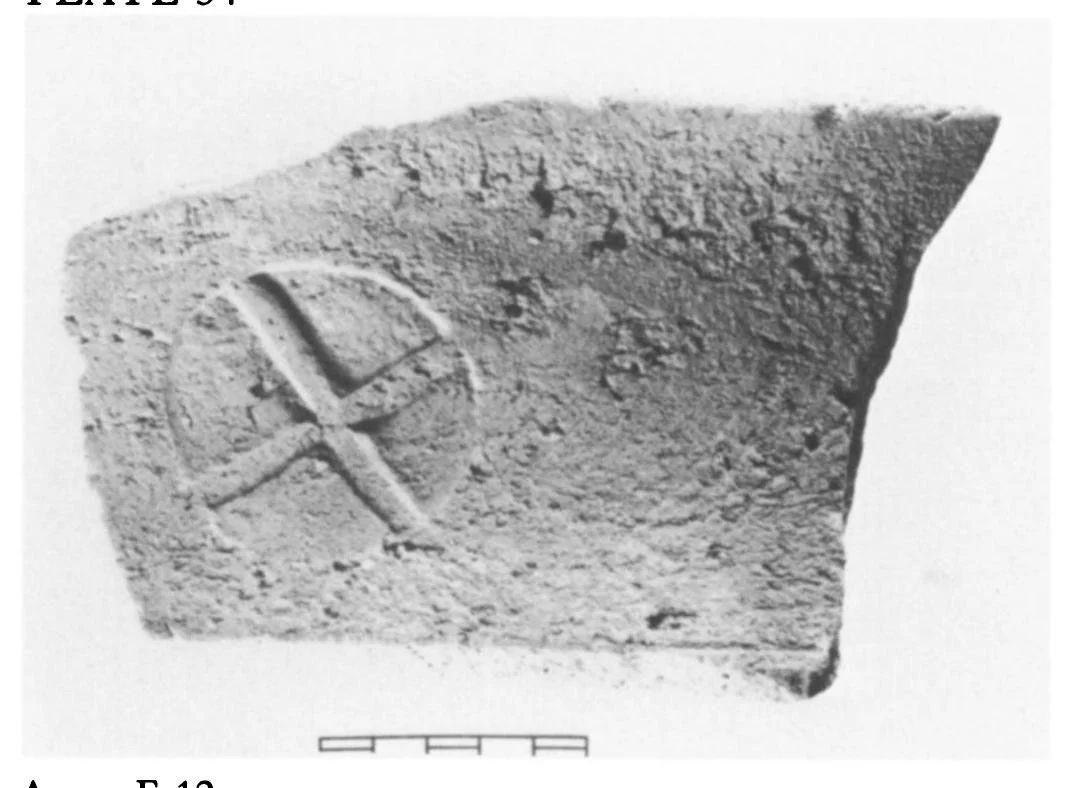
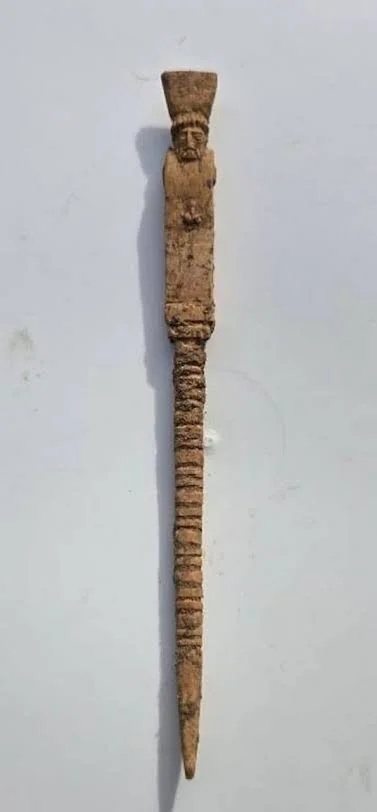
The possibility of weaving combs discovered in a pit at Tiryns raises questions about textile technology and the archaeological evidence for craft activities.
A specific assemblage of previously overlooked Mycenaean weaving combs in a particular pit should not be presented as a verified discovery without an excavation publication. Nevertheless, the site's archaeological context offers an excellent opportunity to examine Mycenaean textile production.
1. Tiryns and the Mycenaean World
Tiryns was an important center of Mycenaean civilization during the Late Bronze Age.
Its massive defensive walls, palace complex, storage areas, and administrative architecture demonstrate the importance of the settlement.
The site was part of a wider network of Mycenaean centers in the Aegean, including Mycenae, Pylos, and Thebes.
Archaeological research at Tiryns has contributed to understanding political authority, architecture, storage, and the organization of Bronze Age communities.
2. Textile Production in Mycenaean Society
Textiles were essential products in the Bronze Age.
They provided clothing, coverings, furnishings, and materials used in ceremonial and administrative contexts.
Wool was particularly important in Mycenaean textile economies, although other fibers could also be used.
Textile production involved several stages, including shearing, cleaning, carding or combing, spinning, weaving, finishing, and sometimes dyeing.
Each stage required different tools and skills.
3. Understanding Weaving Combs
A weaving comb is a tool used to manipulate or compact threads during textile production.
The term can refer to different forms of equipment depending on the weaving tradition and the stage of production.
In loom weaving, a beater or comb-like implement may help position the weft threads tightly against the fabric already produced.
Other comb-shaped objects may be used to prepare fibers rather than weave cloth.
Archaeologists must therefore identify the specific tool type before assigning a function to an artifact.
4. Mycenaean Textile Technology
Mycenaean textile production was supported by specialized tools and organized labor.
Spindle whorls provide evidence for spinning, while loom weights are associated with certain types of weaving equipment.
These objects can help researchers reconstruct the technological processes involved in producing cloth.
Written records in Linear B also provide important information about wool, textile workers, and textile-related administration at Mycenaean centers.
The tablets demonstrate that textiles were significant within palace economies, although they do not document every stage of household production.
5. Why a Pit Context Matters
A pit can contain a wide range of archaeological materials.
It may have been used for storage, refuse disposal, construction activity, or the deposition of objects following a particular event.
Artifacts found together in a pit do not necessarily belong to one activity or one chronological phase.
Researchers must examine the pit's stratigraphy, fill composition, associated pottery, and relationship to nearby buildings.
If weaving-related tools were recovered from a secure context, they could help identify production activities or the disposal of equipment.
6. Identifying Textile Tools Archaeologically
Small textile tools can be difficult to distinguish from objects used for other purposes.
Researchers examine dimensions, material, wear patterns, and manufacturing characteristics.
Wooden combs may preserve tooth patterns and evidence of repeated contact with fibers, although wood rarely survives in ordinary burial conditions.
Bone, ivory, or ceramic objects may survive more readily, depending on the burial environment.
Microscopic examination can reveal polishing, abrasion, and other traces associated with use.
7. Linear B and the Organization of Textile Labor
The Linear B tablets provide important evidence for the administration of Mycenaean economies.
Some records refer to textile production, workers, and quantities of wool or finished goods.
These documents suggest that textile manufacture could involve organized labor and administrative oversight.
However, the existence of palace-managed production does not mean that all textiles were manufactured within palace workshops.
Households and smaller craft groups may also have contributed to the wider textile economy.
8. What Weaving Tools Can Reveal About Daily Life
Textile tools provide evidence of activities that were essential but are often underrepresented in monumental archaeological remains.
The distribution of spindle whorls, loom weights, and related objects may reveal where textile work took place.
Differences in artifact concentration between domestic and administrative buildings can help investigate the relationship between household production and centralized organization.
The study of textile equipment also highlights the technical knowledge and labor involved in producing everyday clothing and furnishings.
9. Future Research at Tiryns
Further research into textile production at Tiryns could combine artifact analysis, microscopic examination, spatial mapping, and comparisons with other Mycenaean sites.
If suspected weaving combs are identified, researchers could compare them with known textile tools from the Aegean and eastern Mediterranean.
Scientific analysis may also reveal whether the objects were made from wood, bone, ivory, or another material.
The most reliable interpretation would depend on their archaeological context and evidence of actual use.
Conclusion
The study of possible Mycenaean weaving combs from a pit at Tiryns provides an opportunity to investigate the technological and social organization of Bronze Age textile production.
Although the specific discovery described in the title requires verification, the broader evidence demonstrates that textiles were important to Mycenaean households, craft specialists, and palace economies.
Combining archaeological tools, Linear B records, and microscopic analysis can help reconstruct the production processes that supported everyday life in one of the most significant centers of Mycenaean Greece.