Introduction
Olbia Pontica was one of the major Greek settlements of the northern Black Sea.
Established by Greek colonists during the sixth century BCE near the modern Ukrainian Black Sea region, Olbia developed into an important commercial and cultural center.
Its history provides exceptional evidence for the interaction between Greek communities and the peoples of the Pontic steppe.
Greek Colonization of the Black Sea
Greek expansion into the Black Sea created a network of coastal settlements.
These communities were established for several reasons:
trade;
access to agricultural resources;
fishing;
maritime expansion;
political and commercial opportunity.
Olbia became one of the important links in this network.
The Name Olbia
The name is connected with the Greek concept of prosperity or blessedness.
The settlement was sometimes described in ancient sources as Olbia Pontica, distinguishing it from other places with similar names.
Urban Development
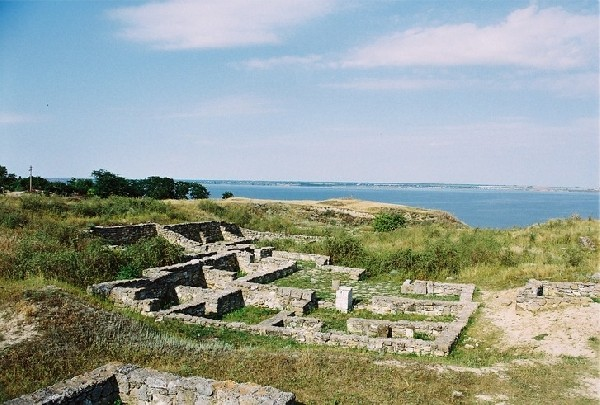
Olbia developed a complex urban landscape.
Archaeological investigations have uncovered:
residential areas;
streets;
workshops;
temples;
public buildings;
defensive walls;
burial grounds.
The city therefore followed recognizable Greek urban traditions while adapting to its Black Sea environment.
Trade With the Steppe
Olbia's greatest importance came from its relationship with surrounding peoples.
Greek merchants interacted with Scythian communities and other populations of the Pontic steppe.
Trade involved commodities such as:
grain;
fish;
animal products;
pottery;
wine;
metals;
luxury goods.
Scythian Connections
The relationship between Olbia and the Scythians was not simply one of warfare.
There was extensive economic and cultural exchange.
Greek objects found in steppe contexts demonstrate the reach of Black Sea trade.
Likewise, steppe artistic influences appear in material culture associated with Greek settlements.
Religion
Olbia possessed temples and sanctuaries dedicated to Greek gods.
Religious practices were adapted to the local environment while maintaining connections with Greek traditions.
The archaeological discovery of inscriptions and votive objects provides valuable information about religious life.
Coinage
Olbia produced its own coinage.
Some of its early monetary forms are particularly distinctive and demonstrate the city's economic independence.
Coins are also valuable historical evidence because they contain images, symbols, inscriptions, and references to political authority.
Democracy and Political Institutions
Ancient evidence indicates that Olbia possessed civic institutions based on Greek political traditions.
Citizens participated in political life, although—as in other Greek communities—citizenship was restricted and did not extend equally to every resident.
This distinction is important when discussing ancient Greek political systems.
Decline and Transformation
Olbia experienced periods of political instability, economic change, and external pressure.
Its importance declined and revived at different points.
The city was ultimately transformed by broader changes affecting the Black Sea world.
Archaeological Importance
Olbia is especially valuable because archaeologists can study an entire ancient community rather than a single monument.
Its remains reveal how Greek colonists adapted their institutions and economic systems to a frontier environment.
Conclusion
Olbia was far more than an isolated Greek colony.
It was a major node connecting the Mediterranean world with the societies of the Pontic steppe.
Its history demonstrates that ancient Greek civilization extended beyond mainland Greece and the Aegean, creating diverse communities whose identities were shaped by continuous interaction with neighboring cultures.
Olbia therefore occupies an important position in the archaeology of the Black Sea and in the wider history of ancient Mediterranean globalization.