• MAIN PAGE
  • LATEST NEWS
    • Lost Cities
    • Archaeology's Greatest Finds
    • Underwater Discoveries
    • Greatest Inventions
    • Studies
    • Blog
  • PHILOSOPHY
  • HISTORY
  • RELIGIONS
    • Africa
    • Anatolia
    • Arabian Peninsula
    • Balkan Region
    • China - East Asia
    • Europe
    • Eurasian Steppe
    • Levant
    • Mesopotamia
    • Oceania - SE Asia
    • Pre-Columbian Civilizations of America
    • Iranian Plateau - Central Asia
    • Indus Valley - South Asia
    • Japan
    • The Archaeologist Editor Group
    • Scientific Studies
    • Aegean Prehistory
    • Historical Period
    • Byzantine Middle Ages
    • Predynastic Period
    • Dynastic Period
    • Greco-Roman Egypt
  • Rome
  • PALEONTOLOGY
  • About us
Menu

The Archaeologist

  • MAIN PAGE
  • LATEST NEWS
  • DISCOVERIES
    • Lost Cities
    • Archaeology's Greatest Finds
    • Underwater Discoveries
    • Greatest Inventions
    • Studies
    • Blog
  • PHILOSOPHY
  • HISTORY
  • RELIGIONS
  • World Civilizations
    • Africa
    • Anatolia
    • Arabian Peninsula
    • Balkan Region
    • China - East Asia
    • Europe
    • Eurasian Steppe
    • Levant
    • Mesopotamia
    • Oceania - SE Asia
    • Pre-Columbian Civilizations of America
    • Iranian Plateau - Central Asia
    • Indus Valley - South Asia
    • Japan
    • The Archaeologist Editor Group
    • Scientific Studies
  • GREECE
    • Aegean Prehistory
    • Historical Period
    • Byzantine Middle Ages
  • Egypt
    • Predynastic Period
    • Dynastic Period
    • Greco-Roman Egypt
  • Rome
  • PALEONTOLOGY
  • About us
No results found

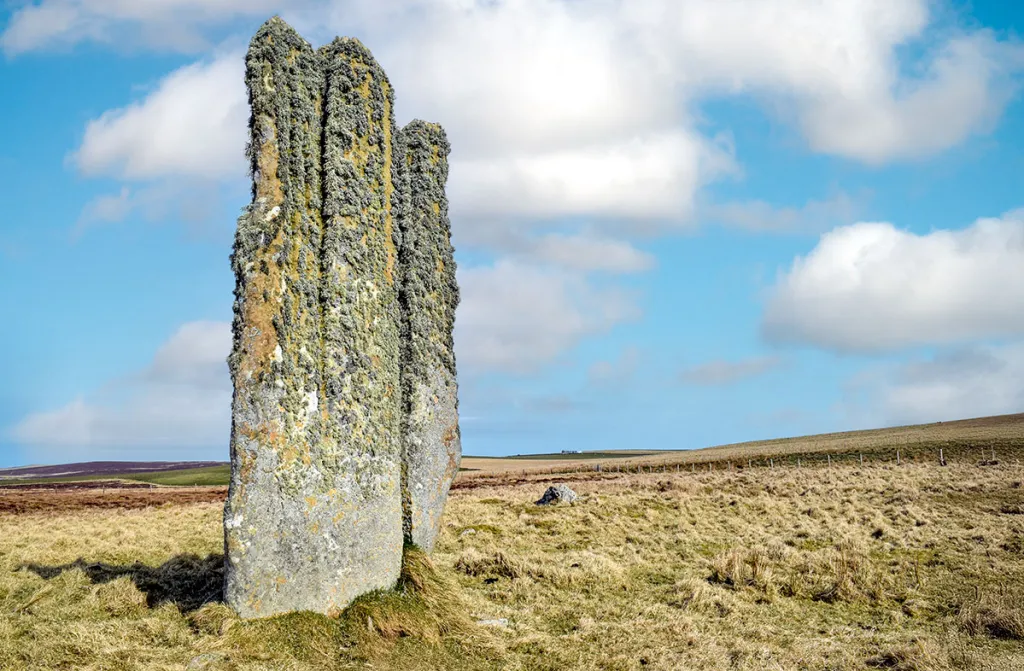
Onziebust: Eday's Standing Stone

September 9, 2026

Onziebust represents another aspect of Eday's prehistoric landscape: the standing stone.

Unlike chambered cairns, which primarily contain internal burial architecture, standing stones transform the landscape through a single monumental vertical element.

Standing Stones in Neolithic Orkney

Standing stones are among the most recognizable prehistoric monuments in Britain.

They could stand individually or form part of larger arrangements.

In Orkney, standing stones occur alongside:

  • chambered cairns;

  • stone circles;

  • henges;

  • settlements;

  • and ceremonial centers.

Monumental Simplicity

A standing stone may appear simple.

Yet placing a large stone upright required substantial effort.

Builders had to:

  1. locate a suitable stone;

  2. extract or collect it;

  3. transport it;

  4. prepare the ground;

  5. and raise it vertically.

Social Cooperation

Such activities required cooperation.

The project could involve groups working together with ropes, wooden supports, levers, and prepared pits.

The monument therefore represents social organization as much as physical labor.

Landscape Meaning

The exact meaning of an individual standing stone is rarely known.

Possible functions include:

  • territorial marking;

  • ceremonial activity;

  • commemorative purposes;

  • astronomical observation;

  • or participation in wider ritual landscapes.

However, these interpretations must be evaluated individually.

Eday's Monumental Landscape

Onziebust should be considered within Eday's wider archaeological environment.

The island contains:

  • chambered cairns;

  • settlements;

  • standing stones;

  • and other prehistoric remains.

This demonstrates that the landscape was repeatedly organized and reinterpreted by prehistoric communities.

The Human Dimension

Standing stones also reveal something about prehistoric social life.

A monument required people to agree upon:

  • where it should be placed;

  • how it should be constructed;

  • and what it represented.

It therefore created a physical expression of shared ideas.

Conclusion

Onziebust: Eday's Standing Stone represents the enduring monumental traditions of prehistoric Orkney.

Although we cannot know with certainty what ceremonies took place around the stone, its construction demonstrates the ability of Neolithic communities to organize labor and transform their environment.

Together with Eday's chambered cairns and settlements, it forms part of a landscape in which farming, ancestry, ceremony, architecture, and geography were deeply interconnected.
← Braeside: Eday's Neolithic SettlementMill Lade: Eday's Neolithic House →
Featured
image_2026-09-01_150407961.png
September 9, 2026
Dunadd Fort: Argyll's Inauguration Rock Carvings
September 9, 2026
Read more →
September 9, 2026
image_2026-09-01_150445885.png
September 9, 2026
Kilmartin Glen: Argyll's 5,000-Year Megalithic Landscape
September 9, 2026
Read more →
September 9, 2026
image_2026-09-01_150523753.png
September 9, 2026
Nether Largie: Argyll's Clyde Tomb Alignment
September 9, 2026
Read more →
September 9, 2026
image_2026-09-01_150612586.png
September 9, 2026
Ri Cruin: Argyll's Bronze Age Cairn Circle
September 9, 2026
Read more →
September 9, 2026
image_2026-09-01_150753980.png
September 9, 2026
Barnaluasgan: Argyll's Standing Stones
September 9, 2026
Read more →
September 9, 2026
image_2026-09-01_150644895.png
September 9, 2026
Ballymeanoch: Argyll's Kerbed Cairn
September 9, 2026
Read more →
September 9, 2026
read more

Powered by The archaeologist