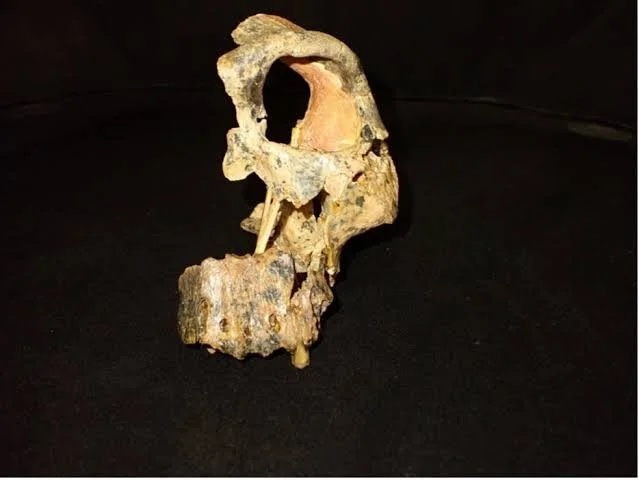
Ancient Egyptians and Etruscans are often credited with pioneering orthodontics, supposedly using delicate gold wires and catgut to straighten teeth. This idea has appeared in dentistry textbooks for decades, portraying our ancestors as surprisingly modern in their pursuit of the perfect smile.
But when archaeologists and dental historians closely examined the evidence, they found that much of this story is a myth.
Take the El-Quatta dental bridge from Egypt, dated to around 2500 BC. The gold wire discovered with the remains was not used to move teeth into alignment. Instead, it stabilized loose teeth or secured replacement ones. In other words, it functioned as a prosthesis, not a brace.
Gold bands found in Etruscan tombs tell a similar story. These were likely dental splints designed to support teeth loosened by gum disease or injury, rather than devices intended to reposition teeth.
There are also practical reasons why these ancient tools could not have worked as braces. Tests on Etruscan appliances show the gold used was about 97% pure—and pure gold is extremely soft. It bends and stretches easily, making it unsuitable for orthodontics. Braces require continuous, controlled pressure over long periods, which demands strong, springy metal. Pure gold would simply deform or break.
Another clue lies in who wore these gold bands. Many were found with the skeletons of women, suggesting they may have served as status symbols or decorative items rather than medical devices. Notably, none were found on children or adolescents—the age group most likely to receive orthodontic treatment.
Perhaps most revealing of all is that ancient people rarely needed braces. Malocclusion, or crowded and misaligned teeth, was uncommon in the past. Studies of Stone Age skulls show little to no crowding. The key difference lies in diet.
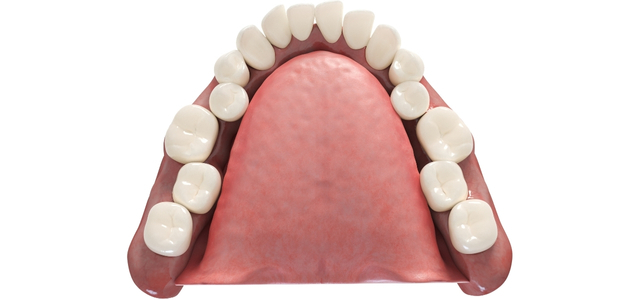
Malocclusion is far more common today than it was in the ancient past.
In ancient times, crooked teeth were extremely rare, so there was little need to develop techniques to straighten them.
Even so, people in antiquity sometimes tried simple ways to address dental irregularities. The Romans offer one of the earliest dependable accounts of orthodontic treatment.
Aulus Cornelius Celsus, a Roman medical writer from the first century AD, wrote that if a child’s tooth erupted out of alignment, it should be gently pushed into place with a finger each day until it moved into the correct position. Although very basic, this approach relies on the same principle used today: steady, gentle pressure can shift a tooth.
After the Roman period, progress in this area was minimal for many centuries. By the 18th century, interest in straightening teeth returned, though the methods were often quite painful.
People without access to advanced dental instruments used wooden “swelling wedges” to create space between crowded teeth. A small piece of wood was placed between the teeth, where it absorbed saliva and expanded, gradually forcing them apart. While crude and uncomfortable, this technique showed a growing understanding that pressure could be used to move teeth.
Scientific orthodontics
The foundations of scientific orthodontics were laid in 1728 by the French dentist Pierre Fauchard. Widely regarded as the father of modern dentistry, Fauchard published a groundbreaking two-volume work, The Surgeon Dentist, which included the first detailed explanation of how to treat malocclusions.
He also invented the “bandeau,” a curved metal strip fitted around the teeth to expand the dental arch. This was the first appliance specifically designed to move teeth using controlled force.