Introduction
Pereyaslav, corresponding to modern Pereiaslav, was an important fortified center of medieval Rus'.
Its strategic importance derived largely from its location on the Dnieper frontier and its relationship with territories inhabited by steppe peoples.
The city therefore occupied a position between agricultural settlements to the north and the increasingly dangerous steppe frontier to the south.
A Frontier City
Medieval Rus' faced repeated threats from nomadic groups.
The southern frontier was particularly vulnerable.
Pereyaslav formed part of a defensive network intended to protect the political and agricultural heartlands of Rus'.
Its fortifications included earthworks and defensive structures.
The Fortified Settlement
The city's defenses were designed to control movement and protect inhabitants.
Earth ramparts were particularly effective because they could be constructed using locally available materials.
Timber palisades and gates could be placed on top of these earthworks.
Political Importance
Pereyaslav became a major princely center.
Its ruler was often a member of the wider Rurikid dynasty.
Control over the city therefore had political as well as military importance.
Religious Development
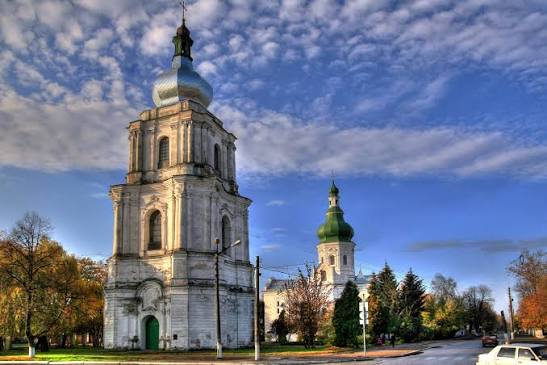
Like other major Rus' centers, Pereyaslav became an important Christian center after the conversion of Rus'.
Church construction and ecclesiastical administration reinforced the city's role within the developing medieval political order.
Trade and Economy
Despite its frontier position, Pereyaslav participated in economic networks.
Farmers supplied food.
Craft workers produced tools and household goods.
Merchants moved goods along river routes.
The military character of the city did not prevent economic development.
Relations with the Steppe
The frontier environment produced both conflict and interaction.
Nomadic peoples were not simply enemies.
Trade, diplomacy, warfare, intermarriage, migration, and cultural exchange all occurred across the frontier.
Archaeology can reveal these interactions through artifacts and burial practices.
The Mongol Period
Like many cities of Rus', Pereyaslav suffered severely during the Mongol invasions.
The destruction of urban infrastructure weakened its earlier political importance.
Nevertheless, the settlement continued to exist and retained historical significance.
Conclusion
Pereyaslav illustrates the complex nature of medieval frontier society.
It was simultaneously:
a military center;
a princely residence;
a Christian settlement;
an agricultural market;
a trading location;
a frontier community.
Its history demonstrates how geography shaped political and military development in medieval Eastern Europe.