Introduction
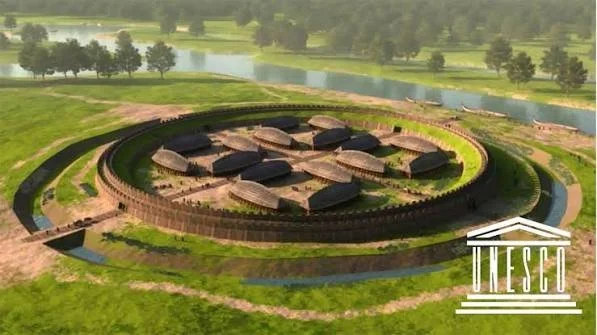
Located in Madison County, western Tennessee, the Pinson Mounds State Archaeological Park preserves one of the largest and best-preserved ceremonial mound complexes of the Middle Woodland Period in North America. Constructed primarily between 100 and 500 CE, approximately 1,700 years ago, the site is closely associated with the Hopewell cultural tradition, a network of societies connected through shared religious beliefs, artistic styles, and long-distance trade. Covering more than 400 acres (160 hectares), Pinson Mounds contains at least 15 earthworks, including platform mounds, conical burial mounds, embankments, and ceremonial enclosures. Unlike later Mississippian cities, Pinson was not a permanent urban settlement but served primarily as a regional ceremonial and pilgrimage center where communities gathered for rituals, feasts, trade, and social events.
Monumental Earthworks
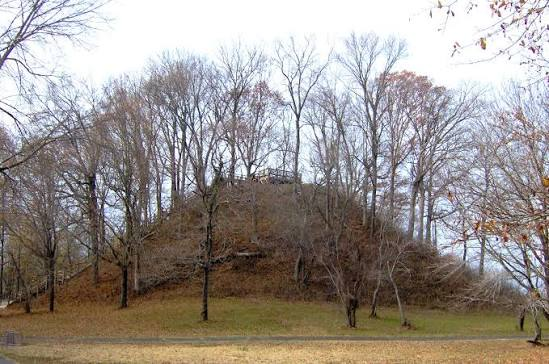
The most impressive structure at Pinson is Sauls Mound, the tallest surviving Native American mound in Tennessee. Rising approximately 22 meters (72 feet) above the surrounding landscape, the mound dominates the ceremonial complex and remains one of the largest earthen monuments built during the Woodland Period. Archaeologists believe it served as an important ceremonial platform rather than a residential structure.
The site also includes numerous conical burial mounds, rectangular platform mounds, and broad earthen embankments connected by carefully planned open spaces. These earthworks were constructed by transporting thousands of basket loads of soil over many generations, demonstrating extraordinary cooperation and organizational ability among Woodland communities.
Religious and Ceremonial Activities
Pinson Mounds functioned as a major ceremonial center where people from surrounding regions gathered for religious festivals, seasonal celebrations, and communal feasts. The large plazas between the mounds provided open spaces for public ceremonies, dances, and ritual processions, while burial mounds honored important individuals and reinforced ancestral traditions.
Excavations have uncovered ceremonial objects, stone tools, pottery, pipes, and ornaments made from exotic materials obtained through extensive trade networks. These discoveries indicate that Pinson participated in the broader Hopewell Interaction Sphere, which connected communities across much of eastern North America.
Engineering and Social Organization
The construction of Pinson Mounds required careful planning and long-term cooperation. Builders selected elevated terrain to minimize flooding and shaped the earthworks using layered soils that improved stability and resisted erosion. The alignment of certain mounds suggests that astronomical observations may have influenced their placement, possibly marking important seasonal events associated with agricultural cycles and ceremonial calendars.
The ability to organize large labor forces without centralized states demonstrates the complexity of Woodland societies and their capacity to undertake ambitious public works projects through cooperation and shared religious traditions.
Conclusion
The Pinson Mounds represent one of the finest examples of Woodland Period ceremonial architecture in North America. Its towering earthworks, sacred plazas, burial mounds, and participation in the Hopewell cultural network reveal a society with advanced engineering skills, extensive trade connections, and deeply rooted religious traditions. Today, Pinson Mounds continues to provide invaluable insight into the social, spiritual, and architectural achievements of Native American communities approximately 1,700 years ago.