• MAIN PAGE
  • LATEST NEWS
    • Lost Cities
    • Archaeology's Greatest Finds
    • Underwater Discoveries
    • Greatest Inventions
    • Studies
    • Blog
  • PHILOSOPHY
  • HISTORY
  • RELIGIONS
    • Africa
    • Anatolia
    • Arabian Peninsula
    • Balkan Region
    • China - East Asia
    • Europe
    • Eurasian Steppe
    • Levant
    • Mesopotamia
    • Oceania - SE Asia
    • Pre-Columbian Civilizations of America
    • Iranian Plateau - Central Asia
    • Indus Valley - South Asia
    • Japan
    • The Archaeologist Editor Group
    • Scientific Studies
    • Aegean Prehistory
    • Historical Period
    • Byzantine Middle Ages
    • Predynastic Period
    • Dynastic Period
    • Greco-Roman Egypt
  • Rome
  • PALEONTOLOGY
  • About us
Menu

The Archaeologist

  • MAIN PAGE
  • LATEST NEWS
  • DISCOVERIES
    • Lost Cities
    • Archaeology's Greatest Finds
    • Underwater Discoveries
    • Greatest Inventions
    • Studies
    • Blog
  • PHILOSOPHY
  • HISTORY
  • RELIGIONS
  • World Civilizations
    • Africa
    • Anatolia
    • Arabian Peninsula
    • Balkan Region
    • China - East Asia
    • Europe
    • Eurasian Steppe
    • Levant
    • Mesopotamia
    • Oceania - SE Asia
    • Pre-Columbian Civilizations of America
    • Iranian Plateau - Central Asia
    • Indus Valley - South Asia
    • Japan
    • The Archaeologist Editor Group
    • Scientific Studies
  • GREECE
    • Aegean Prehistory
    • Historical Period
    • Byzantine Middle Ages
  • Egypt
    • Predynastic Period
    • Dynastic Period
    • Greco-Roman Egypt
  • Rome
  • PALEONTOLOGY
  • About us

Possible Anglo-Saxon Royal Burial Discovered in England News January 14, 2026

January 15, 2026

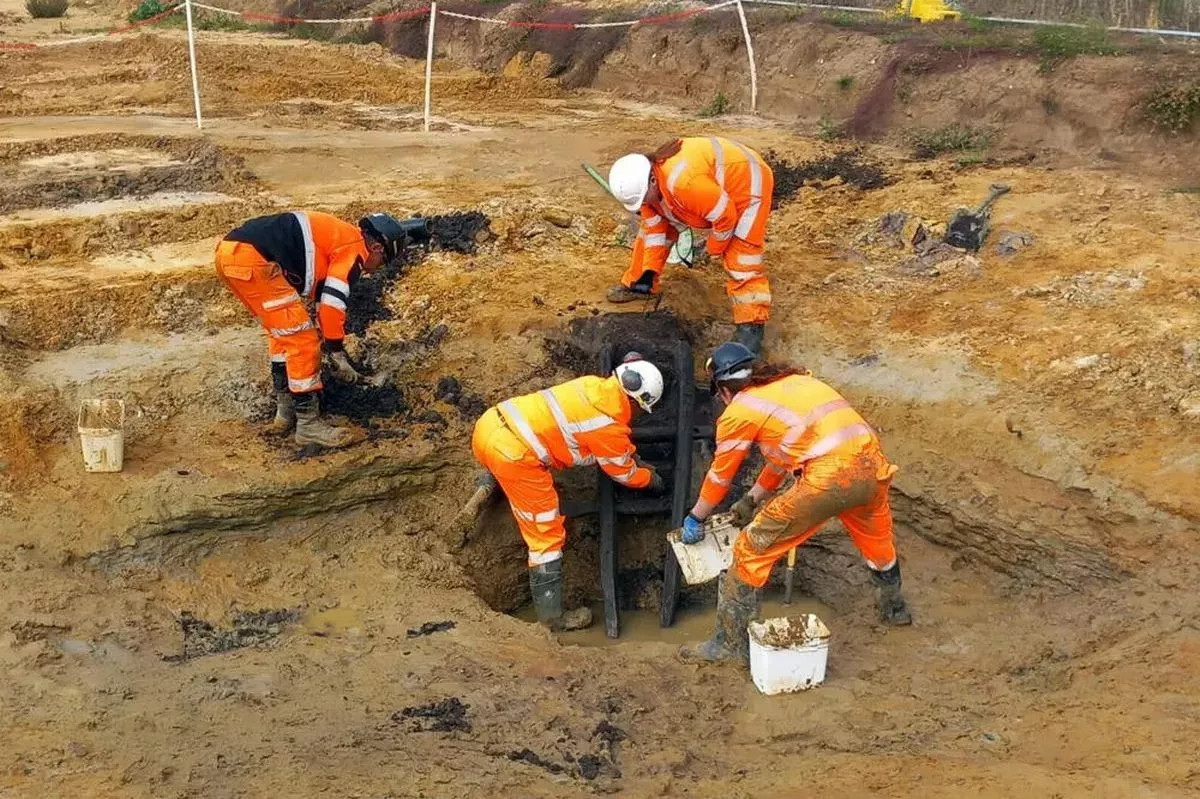
SUFFOLK, ENGLAND—Archaeologists have uncovered an Anglo-Saxon cemetery near the East England coast, about 15 miles from the famous Sutton Hoo ship burial site. The site, planned for a nuclear power plant, contains at least 11 burial mounds.

At the center of the cemetery, researchers found the poorly preserved remains of two people and a horse, buried with full tack. Artifacts recovered from the sixth- or seventh-century A.D. burial include weapons and items made of bronze, iron, copper, and amber.

Len Middleton of Oxford Cotswold Archaeology noted the similarities to Sutton Hoo: “We have two individuals here, whereas Sutton Hoo [mound 17] has just one, but the arrangement of grave goods and their placement in the mound suggest kinship groups. It’s almost as if those attending these burials might also have been present at the others. The layout is strikingly similar. Sutton Hoo is just a day’s ride by horse, and if important people were being buried, kinship groups would certainly visit each other during these ceremonies.”

← The Archeological Menagerie: China Uncovers 3,000-Year-Old ‘Zoo’The First Americans May Not Have Crossed Beringia at All — Hokkaido Could Be the Starting Point →
Featured
image_2026-02-27_171558757.png
Feb 27, 2026
Prehistoric Toolkits That Shouldn’t Exist
Feb 27, 2026
Read More →
Feb 27, 2026
image_2026-02-27_165950329.png
Feb 27, 2026
The Oldest Evidence of Organized Sports
Feb 27, 2026
Read More →
Feb 27, 2026
image_2026-02-27_163102381.png
Feb 27, 2026
The Forgotten Woodlands Civilizations
Feb 27, 2026
Read More →
Feb 27, 2026
image_2026-02-27_161538661.png
Feb 27, 2026
The World’s First Secret Societies
Feb 27, 2026
Read More →
Feb 27, 2026
image_2026-02-27_161134911.png
Feb 27, 2026
The Lost Stone Calendars That Measured Eternity
Feb 27, 2026
Read More →
Feb 27, 2026
image_2026-02-27_154831730.png
Feb 27, 2026
Ancient Children’s Toys That Survived Millennia
Feb 27, 2026
Read More →
Feb 27, 2026
read more

Powered by The archaeologist