The findings shed light on an ancient system of acquiring and keeping captive a variety of wild animals, likely for use as sacrifices by ancient elites.
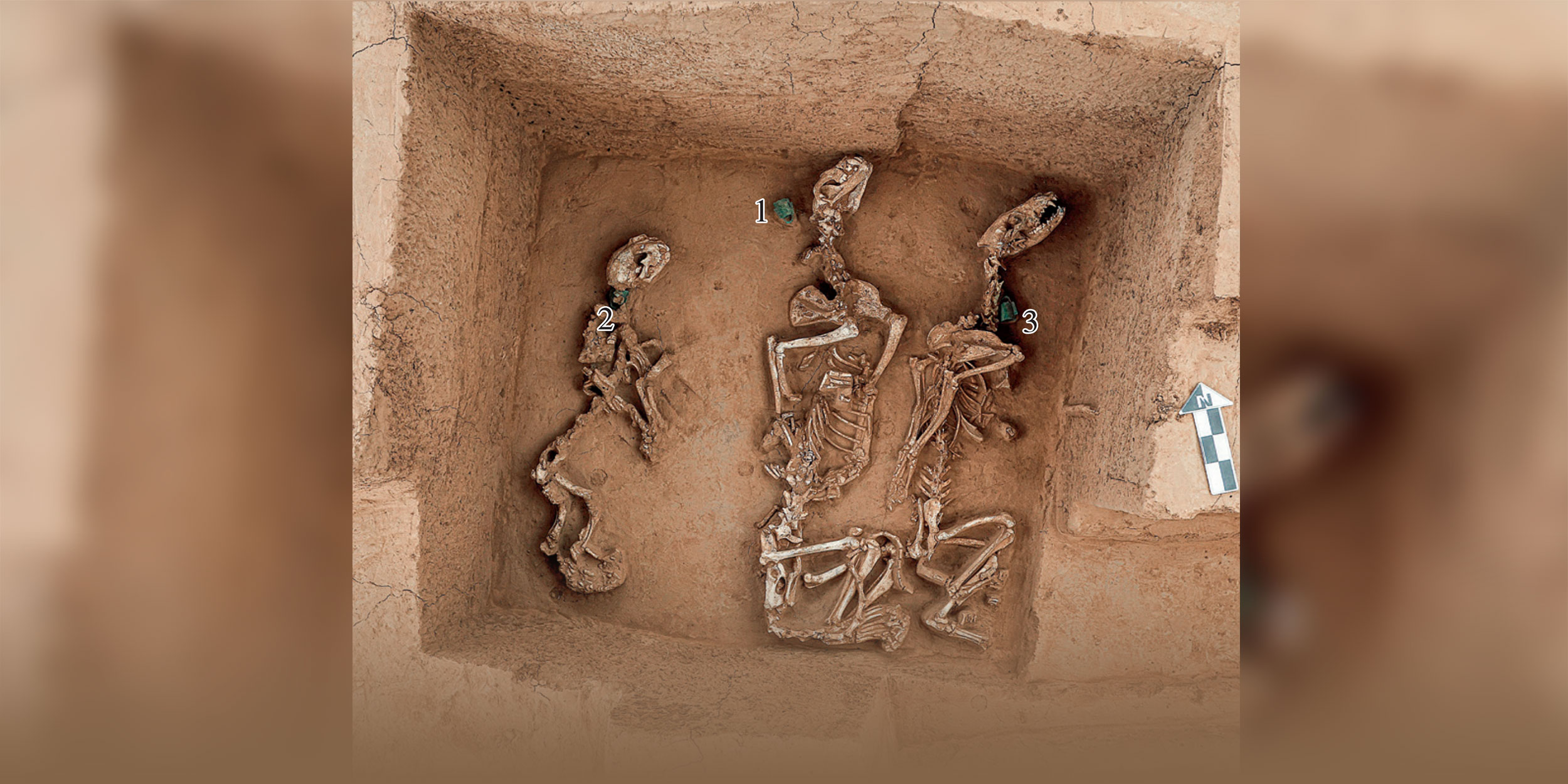
Archaeologists in China have discovered what may be the country’s oldest known collection of captive wild animals at a site in central Henan province. The 3,000-year-old sacrificial pits contain remains of big cats, Asian water buffalo, and other species.
The find, announced on January 9 by researchers from the Chinese Academy of Social Sciences (CASS), comes from Yinxu, the last capital of the Shang dynasty (c. 1600–1046 B.C.), a site already famous for royal tombs, oracle bones, and ritual artifacts.
Excavations conducted between 2023 and 2024 covered roughly 1,240 square meters, revealing 19 small and medium-sized sacrificial pits. Archaeologists recovered remains of mammals including deer, wolves, tigers, leopards, foxes, serows, and wild boars, along with birds such as swans, cranes, and geese. “What’s most unusual is that some animals were found with bronze bells hanging from their necks,” said Niu Shishan, a CASS researcher who has worked at Yinxu for over 20 years.
A total of 29 bronze bells were recovered. Niu explained that the presence of the bells indicates the animals were not hunted but kept alive as “exotic creatures” in enclosures managed by the Shang king or other elites.
“The concentration of wild animals and the standardized way they were handled point to a relatively advanced system for acquiring, raising, and managing wild animals during the Shang dynasty,” Niu added. He also noted that the variety of species could provide valuable insights into climate and ecological conditions during the late Shang period.
Similar pits containing captive animals have been found at later sites from the Warring States period (475–221 B.C.). One such pit, believed to belong to the grandmother of Qin Shi Huang, China’s first emperor known for the Terracotta Army, contained remains of an extinct gibbon species, leopards, Asiatic black bears, and lynxes.