Introduction
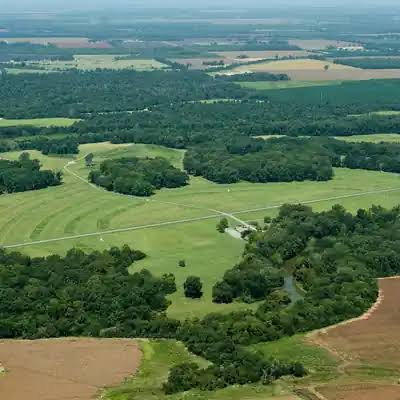
Located in present-day northeastern Louisiana, Poverty Point is one of the most remarkable archaeological sites in North America and a UNESCO World Heritage Site. Constructed between approximately 1700 and 1100 BCE, or about 3,700 years ago, the site was built by Native American hunter-gatherer societies long before the development of agriculture in the region. Contrary to earlier assumptions that only farming societies could build monumental architecture, Poverty Point demonstrates that highly organized hunter-gatherer communities possessed the engineering knowledge, labor organization, and social complexity necessary to create massive earthworks. Covering more than 900 acres (365 hectares), it served as a major ceremonial, trading, and residential center that attracted people from across the eastern United States.
Earthwork Engineering
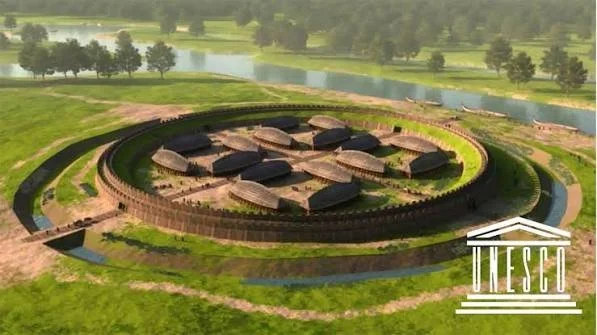
The most distinctive feature of Poverty Point is its enormous arrangement of six concentric C-shaped earthen ridges, separated by broad corridors that converge toward a central plaza. Together, the ridges stretch for more than 1.2 kilometers (0.75 miles) and surround an open area that likely functioned as a gathering place for ceremonies, markets, and public events.
Several massive earthen mounds were constructed around the complex, the largest being Mound A, often called the Bird Mound because of its bird-shaped outline when viewed from above. Standing approximately 22 meters (72 feet) high, Mound A is among the largest prehistoric earthworks in North America. Archaeological evidence suggests it may have been completed in only a few months through the coordinated labor of thousands of workers carrying baskets filled with soil.
The builders carefully selected different types of soil and clay to ensure structural stability. Layers of earth were compacted to reduce erosion and improve drainage, allowing many of the earthworks to survive for nearly four millennia.
Trade and Economic Importance
Poverty Point was also one of the largest trade centers in prehistoric North America. Excavations have uncovered artifacts made from raw materials transported hundreds or even thousands of kilometers from their original sources. These include copper from the Great Lakes, soapstone from the Appalachian Mountains, chert from the Ohio and Tennessee valleys, quartz crystals from Arkansas, and marine shells from the Gulf Coast.
These imported materials were transformed into tools, ornaments, beads, spear points, and ceremonial objects before being redistributed through extensive exchange networks. The diversity of artifacts demonstrates that Poverty Point connected numerous Indigenous communities across eastern North America, making it one of the continent's earliest long-distance trade centers.
Daily Life and Society
Despite constructing monumental earthworks, the people of Poverty Point remained primarily hunter-gatherers. They relied on hunting deer, fishing in nearby rivers, gathering nuts and fruits, and collecting wild plants. Archaeologists have also discovered thousands of Poverty Point Objects (PPOs)—small clay balls believed to have been heated and used for cooking food by transferring heat to pits or containers before pottery became widespread.
The ability to organize massive construction projects without intensive agriculture demonstrates an advanced level of political cooperation and social organization. Seasonal gatherings likely brought together thousands of people who participated in construction, trade, religious ceremonies, and communal celebrations.
Conclusion
Poverty Point stands as one of the greatest engineering achievements of prehistoric North America. Its monumental earthworks, sophisticated construction techniques, extensive trade networks, and organized hunter-gatherer society challenge traditional views of early Indigenous cultures. Today, the site remains one of the most important archaeological landmarks in the Americas, providing valuable insight into the ingenuity, cooperation, and cultural achievements of Native peoples nearly 3,700 years ago.