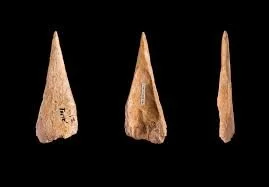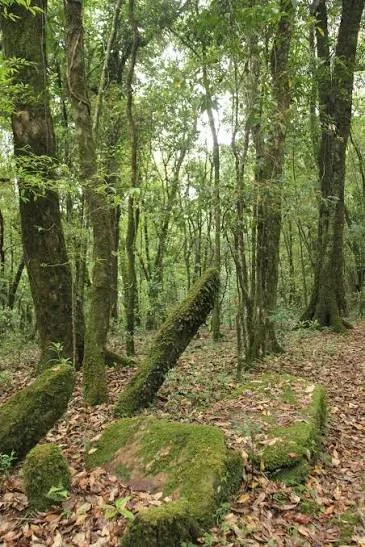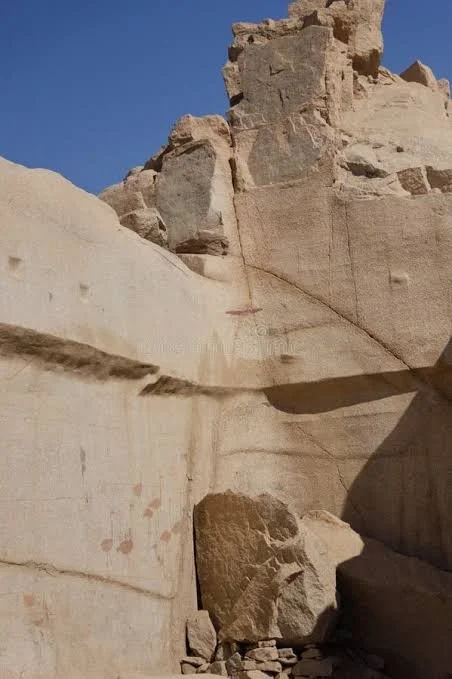
Introduction
Granite has been used in many regions for monuments, buildings, tools, and other durable objects. Its hardness makes it difficult to work compared with softer stone, but its strength and appearance can make it valuable for particular purposes.
A prehistoric granite quarry is a place where people extracted stone before or during the construction of buildings, monuments, or other objects. The title's reference to sanctuaries raises a further question: could certain extraction sites also have held sacred significance?
This is possible in principle, because resource gathering and ritual activity can overlap in human societies. However, a quarry should not be described as a sanctuary merely because it contains unusual stone features or lies near a ceremonial monument. The interpretation requires evidence that distinguishes ordinary extraction from culturally significant practices.
Granite and Its Geological Properties
Granite is an igneous rock composed primarily of minerals such as quartz and feldspar, often with mica and other components. Its properties vary according to geological formation and mineral composition.
The stone's hardness and durability can make it useful for long-lasting structures. However, working granite requires appropriate tools, considerable effort, and knowledge of how fractures develop.
The location of granite outcrops therefore influences where extraction could occur. A quarry may be situated close to the intended construction site or at a distance if the stone's quality justified the effort of transport.
Recognizing a Prehistoric Quarry
Archaeologists may identify quarries through extraction scars, unfinished blocks, discarded fragments, tool marks, and patterns of stone removal.
The surrounding landscape can provide additional clues. Routes leading away from an outcrop may indicate how blocks were transported, while nearby workshops may contain evidence of shaping and finishing.
However, an exposed granite outcrop is not automatically a quarry. Natural fractures and weathering can resemble human extraction features.
A reliable interpretation requires careful examination of the stone surfaces, associated artifacts, and the geological processes that shaped the outcrop.
Extraction Techniques
Prehistoric quarrying methods varied according to the stone, available tools, and desired block size. Workers could exploit natural fractures, remove unwanted material, or use repeated percussion to separate stone.
Some extraction methods leave distinctive marks, but weathering can obscure them. Later quarrying may also damage earlier features, making it difficult to distinguish different periods of activity.
Experimental studies can help researchers understand how particular marks might have been produced. Comparisons with known quarry sites may also clarify the sequence of extraction.
From Quarry to Monument
The relationship between a quarry and a nearby monument can reveal aspects of planning and labor organization.
If the stone types match, researchers may investigate whether the quarry supplied the monument. Geological comparison can help identify the source of stone, although visually similar granite may occur at multiple locations.
Transporting large blocks may require sledges, rollers, boats, ropes, or other equipment, depending on the terrain and historical period. The precise methods should be inferred from evidence rather than assumed.
A quarry associated with a monument may demonstrate a coordinated building project, but it does not necessarily reveal the political structure behind that project.
Why Might a Quarry Be Sacred?
A quarry can occupy a culturally important position because it is the place where material for a significant monument originated. The act of extracting stone may also have been governed by customs or ceremonies.
In some societies, natural features such as mountains, springs, caves, and distinctive rock formations are associated with ancestors or spiritual beings. A quarry located within such a landscape might have acquired religious significance.
Nevertheless, this possibility must not be projected onto every prehistoric extraction site. Practical work and sacred meaning can coexist, but their relationship varies across cultures.
Archaeological Evidence for Ritual Activity
Researchers may investigate several kinds of evidence when considering whether a quarry had ritual significance:
Repeated deposits of selected objects in particular locations.
Distinctive arrangements of stones that are not easily explained by extraction.
Evidence of structured gatherings or repeated ceremonial activity.
Human or animal remains deposited in unusual contexts.
Historical or ethnographic evidence connecting similar places with ritual practices.
None of these indicators is decisive in isolation. A deposit might represent ordinary disposal, while an unusual stone arrangement might have served a practical function.
The interpretation becomes stronger when several independent lines of evidence converge.
Quarries and Social Organization
Large-scale stone extraction may require cooperation among workers, transport specialists, craftspeople, and people responsible for supplying food and other necessities.
This can reveal the capacity of a community to coordinate labor. However, labor organization does not necessarily imply a centralized state or a permanent professional workforce.
People may have participated in quarrying during particular seasons, as part of communal obligations, or under the direction of local leaders.
Archaeologists must consider the scale of extraction, the duration of activity, the tools used, and the settlement context before reconstructing the social system.
The Symbolic Value of Stone
Stone can acquire significance through its color, texture, durability, geological origin, or association with a particular place.
A community might select granite because it was strong, readily available, visually distinctive, or connected with a meaningful landscape.
These explanations are not mutually exclusive. Practical suitability may have influenced the choice of stone even when the finished monument carried cultural or religious significance.
The challenge is to identify which aspects can be demonstrated through material evidence and which remain interpretive possibilities.
Dating Quarry Activity
Dating a quarry is difficult because extraction surfaces are often exposed and contain few organic materials. Researchers may use associated deposits, tools, unfinished objects, or evidence linking the quarry to a dated structure.
A quarry may have been used repeatedly over centuries. Different extraction scars could therefore belong to different periods.
Stone provenance can connect an outcrop with an artifact or monument, but it does not independently establish when the extraction occurred.
Chronology requires contextual evidence that links the quarry with specific phases of activity.
Conservation of Quarry Landscapes
Historic quarries can be damaged by modern extraction, construction, vegetation growth, erosion, and uncontrolled access. Quarry marks and unfinished blocks may be lost before researchers document them.
Recording should include mapping, photography, geological analysis, and information about nearby archaeological features.
If a site is considered culturally significant by a local or Indigenous community, that relationship should be respected in research and management decisions.
Conclusion
Prehistoric granite quarries provide valuable evidence of stone technology, labor organization, resource selection, and the relationship between geological landscapes and monumental construction. Their extraction scars and unfinished blocks can reveal how people worked difficult materials and transported them into wider landscapes of human activity.
The possibility that some quarries also functioned as sanctuaries is worth investigating, but it should not be treated as a universal feature of prehistoric stone extraction. Sacred significance must be supported by contextual evidence rather than inferred from the monumentality of the stone alone.
By studying quarrying practices alongside ritual deposits, landscape relationships, and the history of nearby monuments, archaeologists can explore how practical work and cultural meaning may have intersected. A quarry may ultimately tell a story not only about where stone came from, but also about how people organized labor and understood the places from which important materials were taken.