Introduction
Hawaiian fishponds were among the most sophisticated forms of traditional aquaculture in the Pacific.
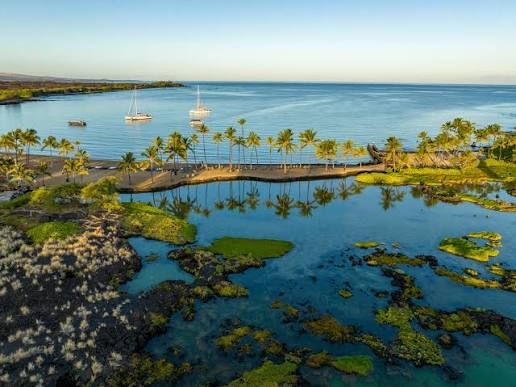
The complex associated with Pu'u o Kai can be understood within this broader tradition of Hawaiian coastal resource management.
Fishponds allowed communities to manipulate coastal environments to increase the availability of edible fish.
They were therefore not merely passive fishing locations.
They represented carefully managed food-production systems.
The Hawaiian Fishpond
Traditional Hawaiian fishponds came in several forms.
They could involve:
stone walls;
earthen embankments;
tidal channels;
gates;
enclosed coastal areas.
Different types were adapted to local environments.
How Fishponds Worked
A coastal pond could allow small fish to enter through controlled openings while limiting their ability to escape.
As fish grew, they could be harvested.
The system effectively transformed a natural coastal ecosystem into a managed food reserve.
Species Management
Fishponds could contain multiple species.
Management practices involved understanding:
tides;
water circulation;
fish behavior;
seasonal cycles;
plant growth;
freshwater inputs.
This required extensive ecological knowledge.
Labor
Construction and maintenance were labor-intensive.
Workers had to repair:
stone walls;
channels;
gates;
embankments.
The continued productivity of a fishpond therefore depended on organized community labor.
Political Organization
Large fishponds could be associated with chiefly authority.
Control over productive resources was an important component of Hawaiian political power.
A chief's ability to provide food strengthened social relationships and political legitimacy.
Environmental Knowledge
Traditional fishpond systems demonstrate detailed understanding of coastal ecology.
Builders had to understand how:
waves affected walls;
tides moved water;
fish entered ponds;
freshwater interacted with seawater;
vegetation affected productivity.
Sustainability
Fishponds can be interpreted as a form of intensive resource management.
Rather than simply harvesting wild populations, communities created environments designed to increase predictable food supplies.
This does not mean all ponds were always ecologically sustainable. Their success depended on careful maintenance and appropriate management.
Cultural Importance
Fishponds were economically important but also connected to Hawaiian concepts of land stewardship and social responsibility.
Food production was integrated into wider relationships between families, chiefs, communities, and the environment.
Conclusion
Pu'u o Kai represents the sophisticated ecological engineering associated with traditional Hawaiian fishpond systems.
These complexes demonstrate that ancient Pacific communities possessed advanced knowledge of aquaculture, coastal ecology, labor organization, and resource management.