• MAIN PAGE
  • LATEST NEWS
    • Lost Cities
    • Archaeology's Greatest Finds
    • Underwater Discoveries
    • Greatest Inventions
    • Studies
    • Blog
  • PHILOSOPHY
  • HISTORY
  • RELIGIONS
    • Africa
    • Anatolia
    • Arabian Peninsula
    • Balkan Region
    • China - East Asia
    • Europe
    • Eurasian Steppe
    • Levant
    • Mesopotamia
    • Oceania - SE Asia
    • Pre-Columbian Civilizations of America
    • Iranian Plateau - Central Asia
    • Indus Valley - South Asia
    • Japan
    • The Archaeologist Editor Group
    • Scientific Studies
    • Aegean Prehistory
    • Historical Period
    • Byzantine Middle Ages
    • Predynastic Period
    • Dynastic Period
    • Greco-Roman Egypt
  • Rome
  • PALEONTOLOGY
  • About us
Menu

The Archaeologist

  • MAIN PAGE
  • LATEST NEWS
  • DISCOVERIES
    • Lost Cities
    • Archaeology's Greatest Finds
    • Underwater Discoveries
    • Greatest Inventions
    • Studies
    • Blog
  • PHILOSOPHY
  • HISTORY
  • RELIGIONS
  • World Civilizations
    • Africa
    • Anatolia
    • Arabian Peninsula
    • Balkan Region
    • China - East Asia
    • Europe
    • Eurasian Steppe
    • Levant
    • Mesopotamia
    • Oceania - SE Asia
    • Pre-Columbian Civilizations of America
    • Iranian Plateau - Central Asia
    • Indus Valley - South Asia
    • Japan
    • The Archaeologist Editor Group
    • Scientific Studies
  • GREECE
    • Aegean Prehistory
    • Historical Period
    • Byzantine Middle Ages
  • Egypt
    • Predynastic Period
    • Dynastic Period
    • Greco-Roman Egypt
  • Rome
  • PALEONTOLOGY
  • About us

Underwater Secrets of Alexandria: Exploring the Royal Quarters of Cleopatra

April 22, 2026

Beneath the waters of the Mediterranean Sea lie the submerged ruins of ancient Alexandria, including the legendary royal quarters of Cleopatra VII. These underwater remains offer a glimpse into one of the most famous cities of the ancient world.

The city of Alexandria was founded by Alexander the Great in 331 BCE. It quickly became a center of culture, learning, and trade. However, over time, natural disasters such as earthquakes and rising sea levels caused parts of the city to sink beneath the sea.

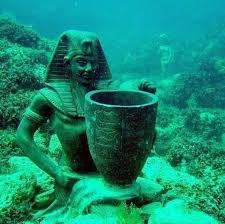
Modern underwater archaeology has uncovered significant portions of these lost structures. One of the most important discoveries is the royal quarter, where Cleopatra is believed to have lived and ruled. This area includes the remains of palaces, statues, and harbor installations.

The work of underwater archaeologist Franck Goddio has been crucial in exploring these submerged ruins. His team has used advanced diving techniques and technology to map and document the site.

Among the findings are massive stone blocks, statues of Egyptian gods, and fragments of columns that once formed grand buildings. These discoveries provide valuable insights into the architecture and urban planning of ancient Alexandria.

The underwater site also includes parts of the ancient harbor, which was a hub of trade and naval activity. Ships from across the Mediterranean would have docked here, making Alexandria one of the busiest ports of its time.

Studying these underwater ruins is challenging due to factors such as limited visibility, currents, and the need for specialized equipment. However, the rewards are significant, as each discovery helps reconstruct the history of this important city.

The submerged ruins also highlight the impact of natural forces on human civilization. Earthquakes and subsidence gradually caused parts of Alexandria to collapse into the sea, preserving them in an underwater environment.

Today, efforts are being made to protect and preserve these underwater heritage sites. They are not only valuable for research but also have potential for tourism, allowing people to explore history in a unique way.

The underwater secrets of Alexandria continue to reveal new information about Cleopatra’s world, offering a fascinating glimpse into the past.
← The Nazca Lines: New Geoglyphs Discovered via High-Resolution Satellite ImageryThe Lion Man of Hohlenstein-Stadel: The World’s Oldest Anthropomorphic Art →
Featured
image_2026-04-22_233214202.png
Apr 22, 2026
The Vinland Map Controversy: Is It a Genuine Viking Map of America?
Apr 22, 2026
Read More →
Apr 22, 2026
image_2026-04-22_233110401.png
Apr 22, 2026
Medieval Bio-Warfare: The Siege of Caffa and the Spread of the Black Death
Apr 22, 2026
Read More →
Apr 22, 2026
image_2026-04-22_232239754.png
Apr 22, 2026
The Nazca Lines: New Geoglyphs Discovered via High-Resolution Satellite Imagery
Apr 22, 2026
Read More →
Apr 22, 2026
image_2026-04-22_231412946.png
Apr 22, 2026
Underwater Secrets of Alexandria: Exploring the Royal Quarters of Cleopatra
Apr 22, 2026
Read More →
Apr 22, 2026
image_2026-04-22_231314191.png
Apr 22, 2026
The Lion Man of Hohlenstein-Stadel: The World’s Oldest Anthropomorphic Art
Apr 22, 2026
Read More →
Apr 22, 2026
image_2026-04-22_232133769.png
Apr 21, 2026
Prehistoric Surgery: Evidence of Amputation and Healing 30,000 Years Ago
Apr 21, 2026
Read More →
Apr 21, 2026
read more

Powered by The archaeologist