The Roman Baths in the city of Bath, England, represent one of the best-preserved ancient religious and bathing complexes in the world. Built over the UK's only natural thermal springs, the site was a unique fusion of Roman engineering and local Celtic spirituality, centered around the goddess Sulis Minerva.
1. A Fusion of Cultures: Sulis Minerva
Before the Romans arrived in 43 AD, the local Iron Age Britons worshipped a goddess named Sulis at the thermal spring. Rather than suppressing this local deity, the Romans identified her with their own goddess of wisdom and craft, Minerva.
The resulting "Sulis Minerva" became the patron of the site. This hybridization was a classic Roman tactic called interpretatio romana, designed to integrate conquered peoples into the empire by blending their religious identities. The temple built at the site was one of only two truly classical temples in Roman Britain.
2. The Great Bath: Engineering the Thermal Spring
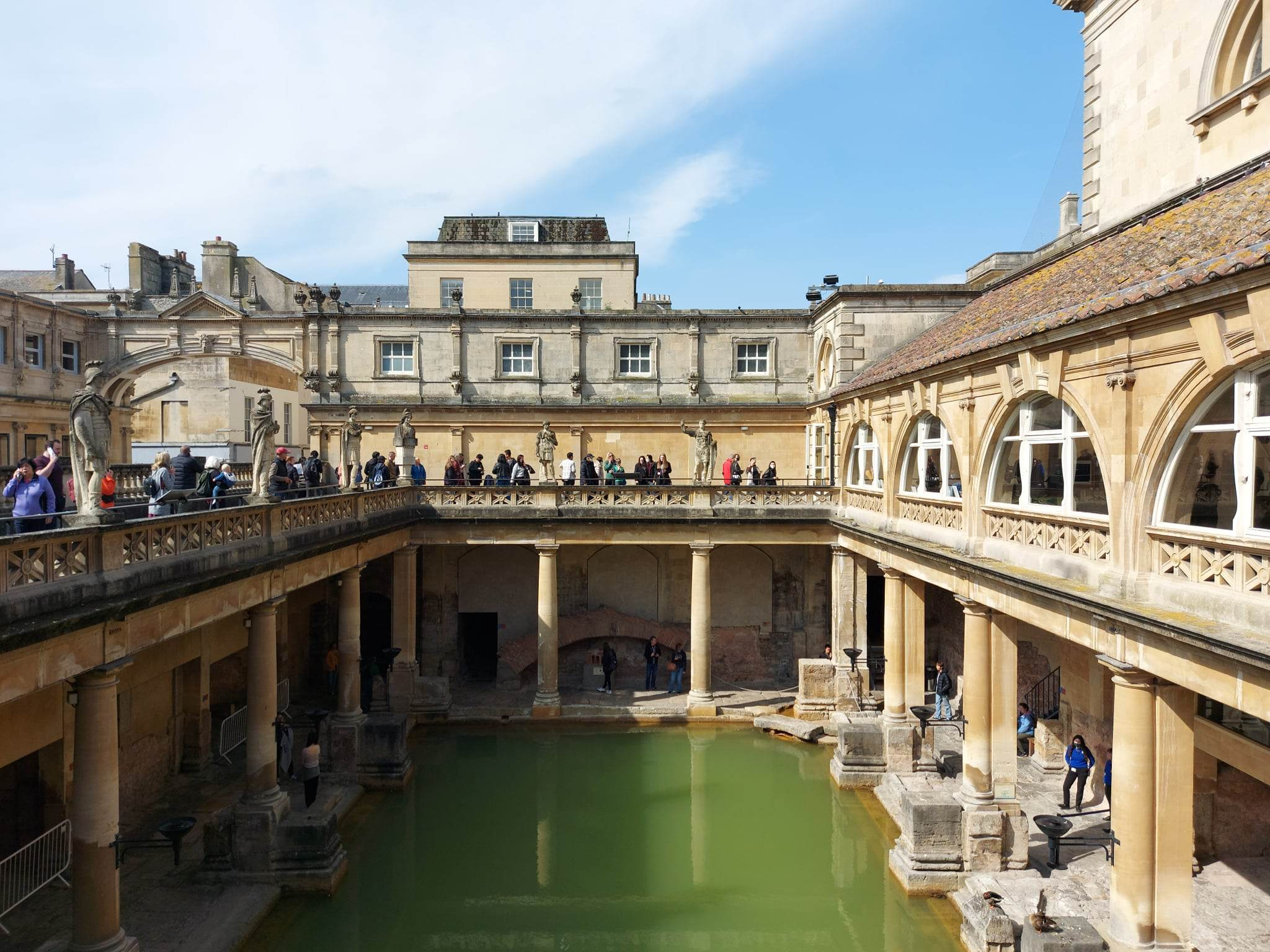
The centerpiece of the complex is the Great Bath, a massive rectangular pool lined with 45 sheets of local lead to keep it watertight.
The Source: The water rises from the earth at a constant 46°C (115°F). In Roman times, the natural heat was so intense that the "Sacred Spring" was surrounded by a vaulted building to trap the steam, creating a mystical atmosphere.
The Design: The pool is 1.6 meters deep, surrounded by a colonnaded walkway. While it is open to the sky today, in the 2nd century AD, it was covered by a massive barrel-vaulted roof that stood 20 meters high.
Mineral Content: The water contains 42 different minerals, including calcium, silica, and iron, which gave the spring its ancient reputation for miraculous healing properties.
3. The Bathing Ritual
The complex wasn't just a single pool; it was a sophisticated sequence of rooms designed to move the body through different temperatures, much like a modern spa.
The Apodyterium: The changing room where bathers would leave their clothes (and hope they weren't stolen).
The Tepidarium: A warm room designed to start the sweating process and prepare the body for higher heat.
The Caldarium: The hot room, featuring a hot plunge bath and underfloor heating (the hypocaust system) fueled by wood-burning furnaces.
The Frigidarium: A cold circular plunge pool used to close the pores and invigorate the bather after the heat.
4. Curses and Offerings: The Sacred Spring
Archaeologists have recovered thousands of items thrown into the Sacred Spring as offerings to the goddess. These provide a rare, intimate look at the lives of ordinary people in Roman Britain.
Curse Tablets (Defixiones): Over 130 small lead or pewter sheets have been found, inscribed with messages to Sulis Minerva. Most concern the theft of clothing or jewelry at the baths. A typical tablet might ask the goddess to "strike the thief blind" until the stolen cloak was returned.
Coins and Jewelry: More than 12,000 Roman coins were found in the spring, spanning the entire period of Roman rule. Additionally, a famous Gilt Bronze Head of Minerva was discovered in 1727, likely belonging to the cult statue that stood inside the temple.
5. Medicine or Magic?
In the Roman world, the line between medicine and religion was blurred. People traveled from across Gaul (France) and Germany to visit the "Aquae Sulis" (Waters of Sulis). While the heat and minerals likely provided genuine relief for skin conditions and arthritis, the visitors believed it was the divine intervention of Minerva that cured them. Physicians were often on-site, but their "prescriptions" usually involved rituals and prayers alongside the physical bathing.
6. The End and Rediscovery
As Roman authority in Britain collapsed in the early 5th century, the complex fell into disrepair. The pumps and drainage systems failed, and the site eventually flooded and silted over, effectively preserving it beneath the mud for centuries.
The "King’s Bath" was built over the ruins in the 12th century, and the city became a fashionable spa town again in the 18th century. However, it wasn't until the 1880s that the full extent of the Roman remains was excavated and revealed to the public, allowing us to see the original "Sacred Spring" once more.