Introduction: The Lifeline of the Empire
For the Roman Empire, power did not just depend on the strength of its legions; it depended on the stability of its bread supply. By the 1st century AD, the city of Rome had swollen to a population of nearly one million people. Feeding this massive urban populace required an extraordinary administrative, logistical, and maritime operation known as the Annona (the state-controlled grain dole).
Because the Italian countryside could not produce enough grain to sustain the capital, Rome became entirely dependent on overseas imports, primarily from Egypt, North Africa, and Sicily. The bottleneck and vital gateway for this massive supply chain was Ostia Antica, Rome’s official harbor city located at the mouth of the Tiber River. Together, the bureaucratic engine of the Annona and the engineering marvels of Ostia’s ports formed the literal metabolism of the Roman state, where a single delay in the shipping season could trigger urban riots and topple emperors.
1. The Bureaucracy of the Annona
The term Annona originally referred to the yearly harvest, but it evolved into a highly complex department of state welfare and supply-chain management.
The Prefect (Praefectus Annonae): Established as a permanent imperial office by Augustus, this high-ranking equestrian official was responsible for the entire grain network. He negotiated prices with provincial farmers, contracted merchant fleets, managed state granaries, and oversaw the distribution of free grain.
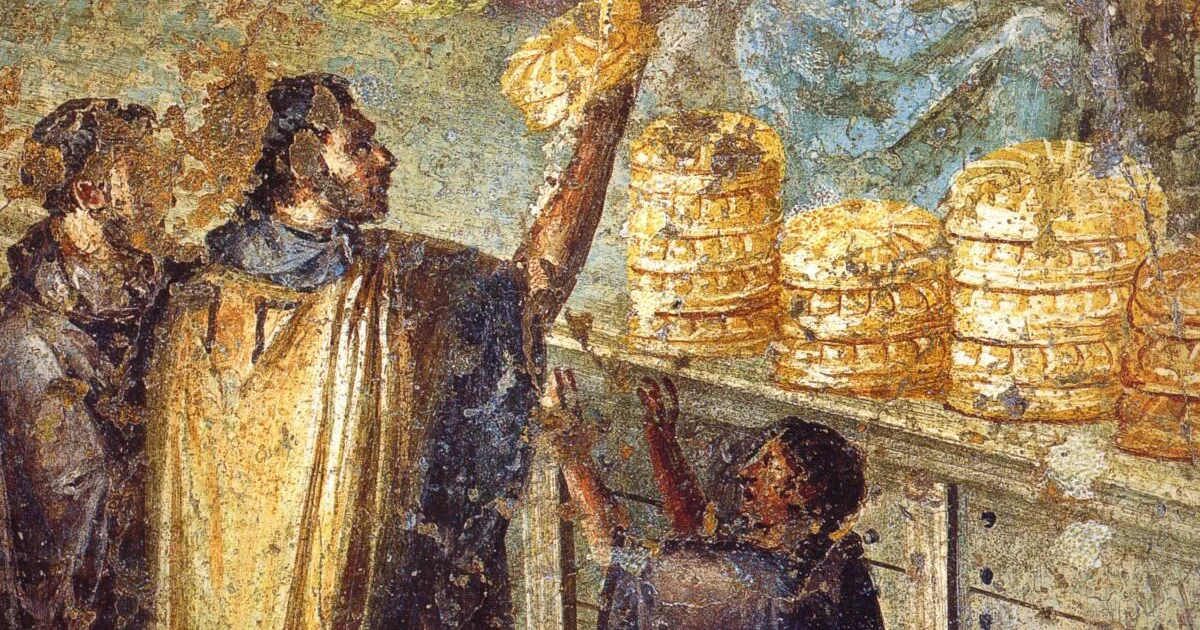
The Dole (Frumentatio): Every month, roughly 200,000 adult male Roman citizens were issued a wooden token (tessera) which they exchanged for approximately 35 kilograms of unground grain at the Porticus Minucia in Rome. This free ration sustained up to half the city's population.
The Shipping Corporations (Navicularii): The state did not own the cargo ships. Instead, the Prefect contracted private merchant shippers. To ensure their cooperation during treacherous sea seasons, the emperors granted these navicularii immense privileges, including exemptions from taxes, property duties, and civil obligations.
2. Ostia Antica: The Logistical Bottleneck
Located 15 miles southwest of Rome, Ostia was the transshipment hub where deep-sea cargo met the shallow waters of the Tiber River.
The Siltation Crisis: The natural mouth of the Tiber was notoriously dangerous. It constantly silted up, creating treacherous sandbars. Massive grain freighters (onorariae) drawing deep drafts could not enter the river mouth safely.
Offloading at Sea: Before the construction of artificial harbors, these giant grain ships had to anchor out in the open sea. Smaller, shallow-draft lighters (codicariae) would row out to the ships, unload the heavy grain sacks bale by bale, and ferry them back to the riverbank—a slow, dangerous process vulnerable to sudden Mediterranean storms.
3. The Port Engineering of Claudius and Trajan
To resolve this bottleneck, two emperors undertook some of the greatest civil engineering projects of antiquity, constructing a massive, artificial harbor complex just north of Ostia, known simply as Portus.
Claudius’s Basin (c. 42 – 54 AD): Claudius dug a massive, 200-hectare harbor basin directly into the coastline. He constructed two long, curving moles out into the sea to form a protective bay. To create a stable foundation for the harbor's towering lighthouse, engineers purposely sank a giant, 104-meter-long merchant ship—previously used to transport an obelisk from Egypt—and packed it with concrete.
Trajan’s Hexagon (c. 100 – 112 AD): Claudius's harbor was still vulnerable to severe storms; in 62 AD, a single storm destroyed 200 grain ships inside the basin. Trajan fixed this by digging a secondary, perfectly hexagonal inner basin behind Claudius's harbor. This 32-hectare basin acted as an impenetrable safety vault for ships. It was lined with massive brick-faced concrete docks and could shelter more than 100 giant freighters simultaneously.
4. The Grand Supply Chain
The movement of grain from an Egyptian farm to a Roman bakery was an assembly line of ancient labor.
[ Egypt / North Africa ]  ──►  [ Grain Freighters ]  ──►  [ Portus / Ostia Basins ]
                                                                   │
                                                                   ▼
[ Rome (Horrea Granaries) ] ◄── [ Tiber Towpaths ] ◄── [ Codicariae Lighters ]
The Ocean Crossing: Giant freighters loaded with loose grain or stitched sacks departed Alexandria or Carthage, riding the summer winds across the Mediterranean to Portus.
The Hexagon Offloading: Once docked inside Trajan's safe hexagonal basin, armies of porters (saccarii) carried the grain bags off the ships.
The Tiber Transfer: The grain was loaded onto codicariae (river barges). Because the Tiber’s current was too strong for rowing or sailing upstream to Rome, these barges were hitched to oxen teams walking along riverside towpaths, pulling the grain up to the capital.
The Granaries (Horrea): In Rome, the grain was stored in massive, state-of-the-art warehouses like the Horrea Galbae. These structures featured thick concrete walls, raised floors to prevent moisture buildup, and sophisticated ventilation shafts to keep the grain cool and free from rot and weevils.
5. The Corporate Hub: The Square of the Corporations
The economic heart of Ostia was the Piazzale delle Corporazioni, a grand, colonnaded square located directly behind the city's theater. It served as a commercial stock exchange and central directory for the ancient world's shipping industries.
The Offices (Stationes): The square contained over 60 individual offices belonging to different trade guilds and shipping companies from across the Roman world.
The Mosaic Advertisements: In front of each office, detailed black-and-white floor mosaics served as visual business cards for illiterate sailors and merchants. A mosaic featuring an elephant indicated shippers from Sabratha in North Africa; a mosaic showing grain being poured between jars advertised the weighers (mensores) of Ostia; others depicted ships, lighthouses, and delta waves, showcasing exactly which routes and commodities that office controlled.
6. Geopolitical Impact and Legacy
The system of the Annona represents one of history's earliest examples of state-sponsored food security and market manipulation.
AspectThe Market Impact of the AnnonaEconomic ControlPrivate merchant shipping was essentially nationalized through tax incentives, creating the largest trade network in the pre-industrial world.Geopolitical VulnerabilityRome's reliance on Egypt and North Africa turned those provinces into strategic targets; whoever controlled the grain ports controlled the empire.Socio-Political StabilityFree food pacified an otherwise volatile, unemployed urban underclass, birthing Juvenal’s famous critique of Roman society: "Bread and Circuses" (panem et circenses).
When the Western Empire began to fracture in the 5th century, the system collapsed. The Vandal conquest of North Africa in 439 AD cut off Rome’s primary grain pipeline, crippling the Annona. Without the artificial life support managed through the docks of Ostia Antica, the population of Rome plummeted from hundreds of thousands to a mere fraction of its size within a few decades, proving that the grandeur of Roman civilization was built entirely on a foundation of grain.