Roman Londinium: The Archaeology of the Mithraeum and Hidden Temples
The archaeology of London has revealed an intricate web of religious and civic architecture beneath the modern streets of the City of London. Among the most striking discoveries is the London Mithraeum, a secret underground sanctuary that provides insight into the spiritual and cultural life of the Roman Empire.
1. The London Mithraeum
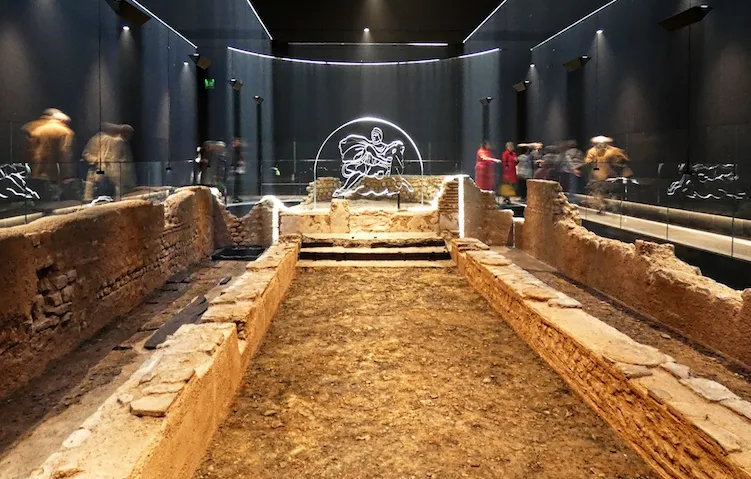
The London Mithraeum was discovered in 1954 during post-World War II reconstruction along the River Walbrook, an ancient stream that once flowed through the city.
The Cultic Setting: The temple, constructed in the 3rd century CE, served as the sanctuary for the secretive cult of Mithras, which was particularly favored by soldiers, merchants, and civil servants.
Archaeological Finds: Excavations uncovered exceptional marble sculptures of gods including Minerva, Mercury, and Serapis, as well as the Bloomberg tablets—the earliest written documents and financial records from Roman Britain.
The Reconstruction: The ruins have been returned to their original site and integrated into a multi-sensory, daylight-lit exhibition that recreates the mystery and atmosphere of the original temple.
2. Hidden Temples and Sacred Sites
Beyond the Mithraeum, archaeological work has uncovered evidence of other sacred and public spaces that reflect the diverse and cosmopolitan nature of ancient London.
Roman Amphitheatre: Located beneath the Guildhall Art Gallery, this site was once used for gladiatorial combat, animal fights, and public executions in front of thousands of spectators.
The Roman Fort: Built around 110–120 CE to house a garrison of up to 1,000 soldiers, its surviving structures near the Barbican complex include portions of the northern and western walls.
Domestic Shrines: Excavations across various building foundations have yielded household figurines of Venus and small altars, indicating private and family-level religious practices.
3. The Technology of Roman Construction
Archaeologists studying the foundations of these structures have uncovered advanced engineering techniques used in damp, waterlogged ground conditions.
Timber Frameworks: To build near the water's edge, Roman engineers laid heavy timber foundations and drains to divert water and stabilize the masonry.
Ashlar Masonry: The use of finely cut stone blocks and bonded red tiles reveals a high level of construction proficiency and architectural tradition imported from the Mediterranean.
Anaerobic Preservation: The wet, oxygen-poor soil conditions along the riverbanks preserved organic items, such as leather shoes and wooden writing tablets, that would have normally decayed.