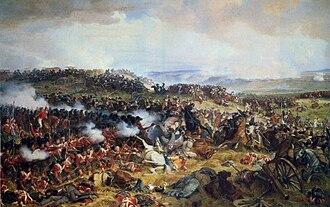
The Battle of the Nations: Finding the Missing Warriors of the Napoleonic Era
The Napoleonic Wars claimed the lives of millions across Europe. While large-scale battles left thousands dead, many warriors went "missing," their burial sites lost to time and changing landscapes. Over the last two decades, advancements in forensic archaeology and bioarchaeology have unearthed these forgotten soldiers, offering an intimate look into their final days and struggles.
1. The Vilnius Mass Grave: The 1812 Retreat from Russia
In autumn 2001, construction workers in Vilnius, Lithuania, uncovered one of the largest mass graves of Napoleonic soldiers ever found.
The Site: Located on a former Soviet military base, the site holds the remains of at least 3,200 soldiers from Napoleon’s Grande Armée who died during the disastrous 1812 retreat from Moscow.
Forensic Findings: Anthropological analysis revealed that many soldiers died from severe cold and starvation, validating contemporary accounts. Skeletons were found huddled in fetal positions, indicating the extreme temperatures—dropping as low as -28°C (-18°F)—they faced while marching.
Demographics: The remains included young recruits (15–20 years old) and female camp followers, offering new perspectives on the makeup of the military contingent.
2. The Brno Mass Grave: The Aftermath of Austerlitz (1805)
During cellar reconstruction work in Brno, Czech Republic, a mass grave containing the skeletons of 12 young men was discovered in 2021.
The Context: Historians determined that these soldiers were wounded at the 1805 Battle of Austerlitz (the Battle of the Three Emperors) and transported to an overcrowded field hospital in the city.
War Wounds and Medicine: Analysis showed signs of field surgery, including a femur with clear saw marks indicating an amputation.
Micro-wear Evidence: Dental analysis of the tartar revealed traces of nitrogen and sulfur, suggesting that the soldiers opened gunpowder bags with their teeth before battle.
3. The Waterloo Soldier: Unearthing an Individual Story
While mass graves present the collective tragedy of war, single graves offer personal, highly individualized details. In 2012, an intact skeleton was unearthed on the battlefield of Waterloo just before the bicentenary.
The Artifacts: The skeleton lay in an undisturbed trench near a former Allied field hospital. Scientists found a French musket ball embedded in the soldier's ribs and a fragment of British-made uniform fabric.
Identification: Historians cross-referenced the soldier’s physical characteristics and historical records to identify the remains, which belong most likely to Friedrich Brandt, a 23-year-old soldier from Hanover fighting in the King's German Legion.
4. The Archaeological Toolkit of Napoleonic Research
Bioarchaeologists use a range of scientific tools to give a voice to the missing warriors whose stories were omitted from official military dispatches:
Isotopic Analysis: Testing tooth enamel and bone collagen reveals the soldier's diet and geographic origins before recruitment.
Osteological Trauma Analysis: Examining healed versus unhealed injuries shows the harsh physical conditions of service, from scurvy and joint inflammation to fatal wounds.
Artifact Correlation: Buttons, shako plates, and coins help identify nationality and military units when written records are scarce.