The Minoan Thalassocracy: Mapping the Bronze Age Naval Empire
The term thalassocracy (from the Greek thalassa, meaning "sea," and kratein, meaning "to rule") defines a state with primarily maritime dominance. For the Minoans of the Bronze Age (c. 2700–1450 BCE), their maritime network was not merely a commercial enterprise but the foundation of an expansive economic and cultural empire centered on the island of Crete.
1. The Geography of the Sea Empire
Crete’s strategic location at the southern edge of the Aegean Sea placed the Minoans at the crossroads of early civilization.
The Palatial Centers: Knossos, Phaistos, Malia, and Zakros served as the administrative and economic hubs, redistributing imported resources and organizing local production.
Absence of Fortifications: Unlike mainland civilizations, Minoan palaces and cities lacked defensive walls. Historians attribute this lack of defensive architecture to the security provided by their dominant navy, which deterred potential invaders.
The Mare Internum: Their maritime network stretched across the Aegean, effectively turning the sea into a Minoan sphere of influence rather than a rigid land-based empire.
2. Mapping the Minoan Trade Network
The Minoans built an intricate web of trade routes connecting distant points of the Mediterranean, ensuring a steady supply of raw materials not native to Crete.
Cyprus: A crucial source of raw copper used to create bronze. Archaeological excavations at Kommos and Zakro have uncovered Cypriot copper ingots and distinctive pottery.
Egypt: Traded Cretan textiles, wine, and olive oil for Egyptian ivory, gold, and fine linen. Minoan-style frescoes have even been discovered at Avaris (Tell el-Dab'a) in the Nile Delta.
The Cycladic Islands: Islands like Akrotiri (Santorini), Melos, and Keos acted as vital stepping stones that linked Crete to the Greek mainland and the wider Mediterranean.
3. Fleet Capabilities and Shipbuilding
To sustain this naval empire, the Minoans developed advanced maritime technology and infrastructure.
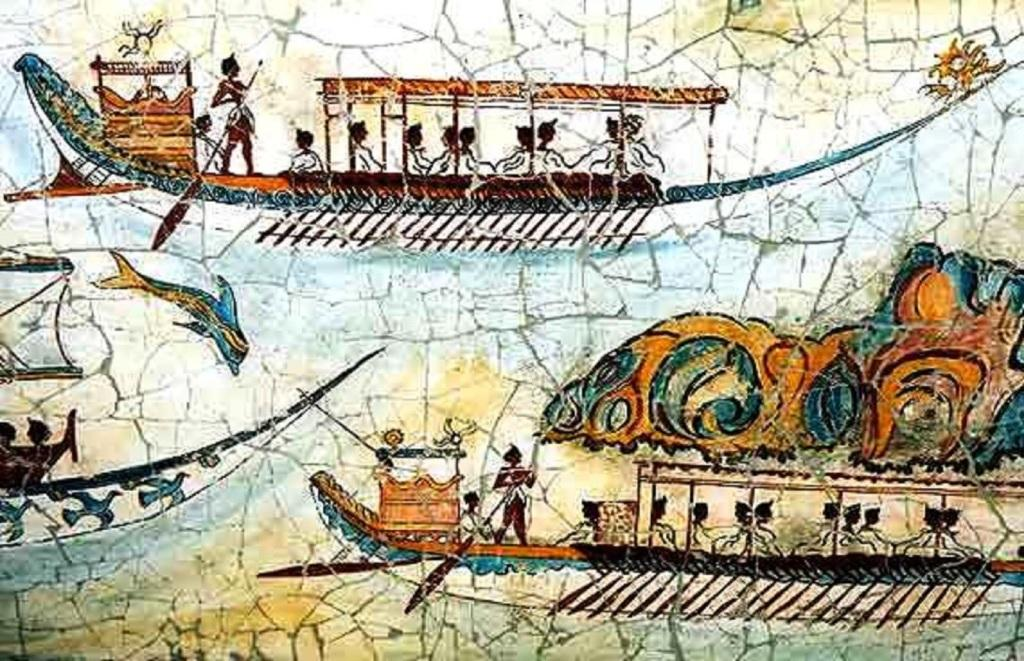
Sleek Vessels: Frescoes (such as those found in Akrotiri) depict swift, oared, and sailing galleys capable of handling both coastal and open-sea conditions with heavy cargo.
Harbor Engineering: Ports such as Kommos, Nirou Chani, and Amnisos were built with slipways and stone warehouses to support merchant fleets.
Anti-Piracy: According to the historian Thucydides, King Minos was the first person to organize a navy to clear the Aegean of piracy, creating a protected zone for commercial traffic.
4. Strategic Outposts and Colonies
Beyond trading posts, the Minoans established key settlements that acted as logistical hubs throughout the Aegean.
Cythera: An island off the Peloponnese that served as a transshipment point for goods moving between Crete, the mainland, and the western Mediterranean.
Miletus (Anatolia): A Minoan settlement that controlled access to the Aegean from western Asia Minor.
Kastelli (Chania): Served as a major administrative node in western Crete, organizing the collection and processing of valuable resources.