Viking Runes in Constantinople: The Graffiti of the Varangian Guard
The Hagia Sophia in Istanbul (historically Constantinople) is widely known for its grand Byzantine architecture and Islamic heritage. However, hidden among its ancient walls and upper galleries are silent signatures left by the Varangian Guard—the elite Norse and Anglo-Saxon mercenaries who served as the personal bodyguards of the Byzantine emperors.
1. The Runic Inscriptions of Hagia Sophia
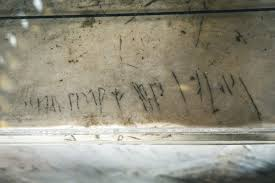
Scratched into the marble parapets of the upper southern and northern galleries, these runic inscriptions serve as some of the most unusual physical traces of the Viking Age in the Eastern Mediterranean.
The Halfdan Inscription: Discovered in 1964 on the southern gallery's marble screen. It measures about 23 cm in length, and the visible letters spell -ftan, which runologists identify as the Norse name Halfdan ($\text{ᚼᛅᛚᚠᛏᛅᚿ}$). It is widely believed to follow a standard runic formula such as “Halfdan carved these runes” or “Halfdan was here.”
The Árni (or Ári) Inscription: Discovered in 1975 in a niche on the northern gallery. The inscription consists of a name read as either Árni or Ári ($\text{ᛆᚱᚿᛁ}$), indicating the presence of another Norse warrior.
The Arinbárðr Inscription: A longer, though worn, inscription was discovered on a marble windowsill on the eastern wall of the northern gallery. The text transliterates to a͡rịṇba͡rþrr͡aṣṭruna͡rþasi, which translates to “Arinbárðr carved these runes.”
2. The Varangian Guard in Constantinople
The Varangian Guard was established in the late 10th century under Emperor Basil II (r. 976–1025).
Origin: Seeking a fiercely independent and loyal bodyguard unaffected by domestic political strife or mutinies, Basil II employed thousands of Norse and Kievan Rus mercenaries.
Service and Duty: Serving through the 11th century, the guardsmen were highly visible in the capital. They spent their off-duty time acting as a garrison force, taking part in imperial campaigns, and attending services at the city's great cathedral, the Hagia Sophia.
Cultural Impact: Military service in Miklagard (the "Great City" – the Norse name for Constantinople) was so highly valued that many runestones back in Scandinavia commemorate warriors who journeyed there.
3. Viking Ship Graffiti
In addition to runes, the Hagia Sophia contains graffiti illustrating Norse watercraft, providing a direct link to the seafarers' origins.
Dragon-Headed Ships: Scratched into the northwestern column of the south gallery, there are depictions of Viking warships with characteristic tall, slender, dragon-head prows.
Fleet Representation: Another overlapping carving depicts the stems of three ships in a line, suggesting a fleet arrangement or a display of military status by the guards.