Last year, maritime archaeologists revisited the “Northerner” in Lake Michigan and captured hundreds of still images, which they stitched together to create a digital replica of the vessel
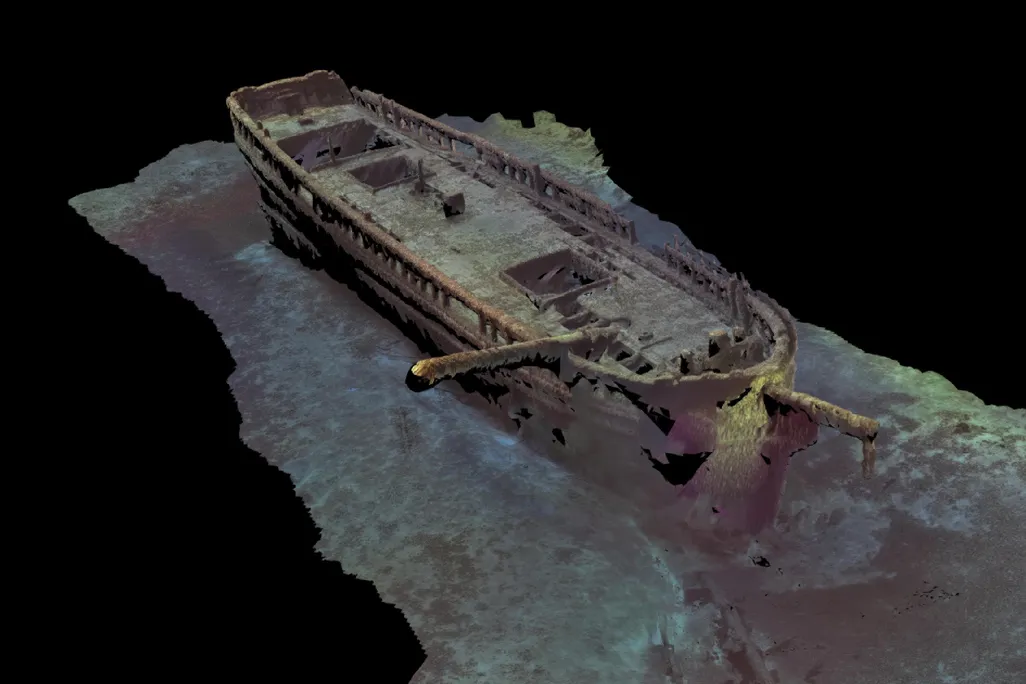
The Northerner sank in 1868 and has been resting upright on the lakebed of Lake Michigan off the coast of Wisconsin ever since.
On November 28, 1868, an American schooner named Northerner was taking on cargo near Cedar Grove, Wisconsin, when its hull was severely damaged. The following day, while being towed to Milwaukee for repairs, the vessel began taking on water and ultimately sank to the bottom of Lake Michigan. Although the crew survived, the ship was never salvaged.
More than 150 years later, specialists have created a highly detailed 3D digital model that allows people to virtually explore the wreck as it lies on the lakebed. The model was produced using 1,670 stitched photographs and even reveals the ship’s final cargo of cordwood still inside the hull.
The 81.1-foot schooner was built in Clayton, New York, in 1850 by veteran shipbuilder John Oades. It originally operated on Lake Ontario, transporting goods to settlements along both the American and Canadian shores, before later being used to carry lumber on Lake Michigan. During one of these lumber runs, the vessel suffered fatal damage. According to a November 1868 report in the Milwaukee Sentinel, the ship “pounded heavily upon the bottom” while loading cordwood at a pier in Amsterdam.
With the hull leaking badly, the captain sailed south to Port Washington and unloaded the deck cargo. The attempt failed to save the ship. While being towed by the vessel Cuyahoga, Northerner filled with water and capsized near Port Ulao, a historic harbor about 20 miles north of Milwaukee.
Divers first located the wreck in the early 1970s, but its position was officially documented by the Wisconsin Historical Society’s Maritime Preservation and Archaeology Program in 2009. The schooner was added to the National Register of Historic Places in 2010 and became part of the Wisconsin Shipwreck Coast National Marine Sanctuary in 2021.
The wreck remains largely intact today, resting upright about 135 feet below the surface, and has become a popular site for recreational divers. In 2024, crews installed buoys and permanent mooring lines at 19 of the sanctuary’s most visited wrecks, including Northerner, improving safety and accessibility while preventing damage to the lakebed from anchors and grappling equipment.
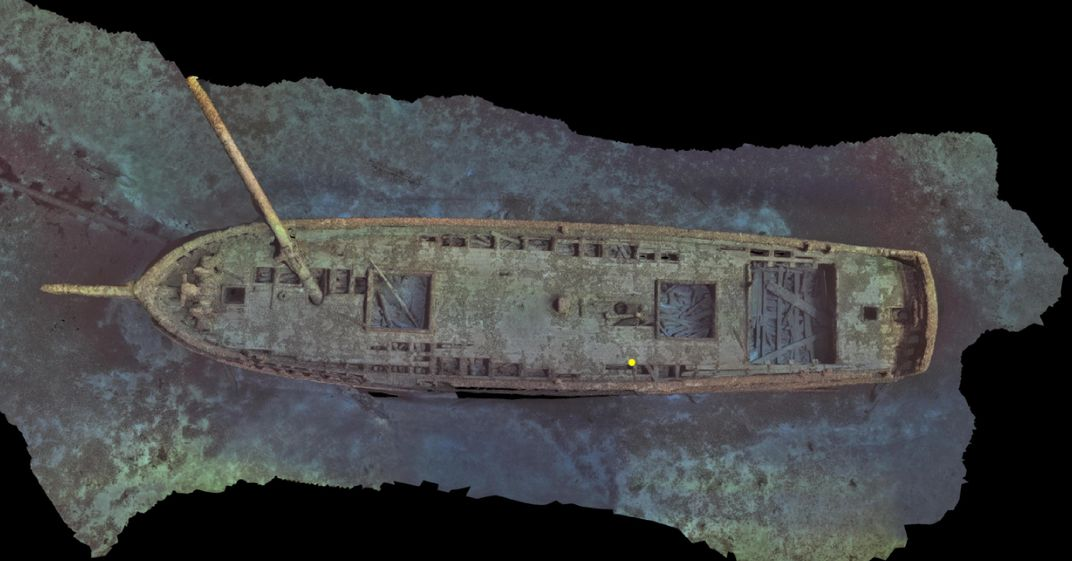
In the detailed scan, the Northerner's final load of cordwood is still visible in its hold.
Last year, maritime archaeologists and engineers set out on a weeklong mission to examine some of the deepest shipwrecks in the Great Lakes, many of which are quickly degrading due to invasive quagga mussels. Their first survey focused on the comparatively shallow Northerner, where they tested an autonomous underwater vehicle fitted with advanced imaging technology.
Using the Saab Sabertooth robotic system, the team recorded extremely detailed photographs of the wreck. These images were later combined to produce the new 3D digital model.
The visuals also led to new discoveries. For the first time, researchers identified the Northerner’s rigging, which lies about 60 feet away from the main body of the ship, as reported by Caitlin Looby for the Milwaukee Journal Sentinel. “We know less about Lake Michigan than we thought we did,” said sanctuary superintendent Russ Green. “As we explore deeper areas of Lake Michigan, autonomous technology is essential for understanding what’s happening below.”
Similar 3D reconstructions have been created for other historic vessels, including Ernest Shackleton’s Endurance. The ship sank on November 21, 1915, after becoming trapped in pack ice and has remained on the seabed near Antarctica ever since. In 2024, researchers released a 3D model built from more than 25,000 high-resolution images taken after the wreck was discovered in 2022. The scan is detailed enough to show everyday objects used by the crew, such as plates and a boot.
In addition, the public can explore 3D models of dozens of shipwrecks located within Thunder Bay National Marine Sanctuary, a protected 4,300-square-mile area of Lake Huron.