A City Lost Beneath the Sea
Once a thriving port city at the mouth of the Nile, Thonis-Heracleion was long believed to be a myth—until its rediscovery beneath the Mediterranean Sea.
For centuries, it existed only in ancient texts. Today, it is one of the most remarkable underwater archaeological sites ever found.
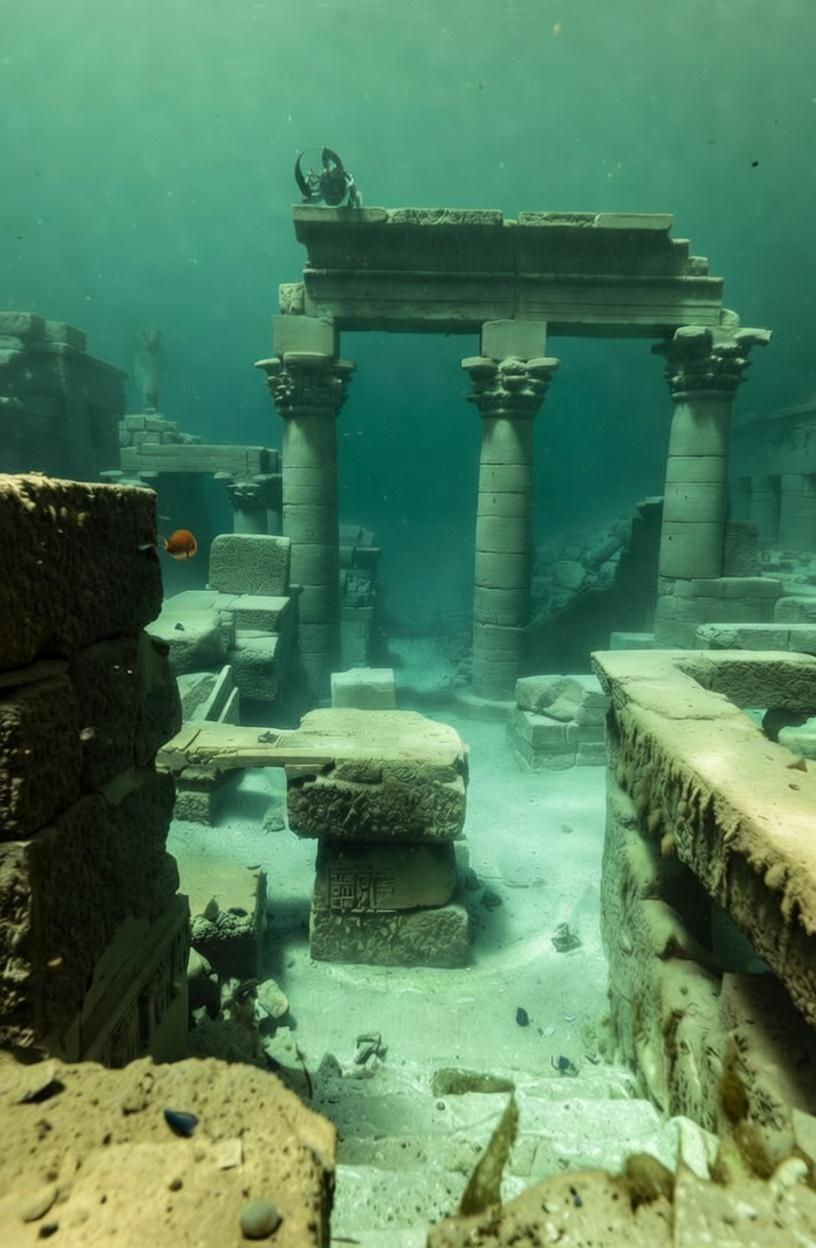
The Flooded Metropolis
Thonis-Heracleion was once a major trade hub controlling access to Egypt. It featured:
Temples dedicated to gods like Amun-Gereb
Massive stone statues of pharaohs
Canals and harbor infrastructure
Residential districts and docks
Over time, the city was submerged due to a combination of rising sea levels, earthquakes, and soil liquefaction.
Rediscovery Beneath the Waves
Modern underwater archaeology revealed extraordinary remains:
Giant statues still standing on the seabed
Inscribed stelae describing royal decrees
Shipwrecks preserved in sediment
Gold artifacts and ritual objects
The preservation conditions underwater helped protect many objects for over a thousand years.
Ritual and Trade Center
Thonis-Heracleion was not only a commercial hub but also a religious center. Pilgrims traveled there to worship, making it both economically and spiritually significant.
The Power of Water and Time
The city’s fate reflects the fragile relationship between human civilization and natural forces. What was once a powerful port is now a silent underwater landscape.
Conclusion: A City Reclaimed by the Sea
Thonis-Heracleion reminds us that history is not always lost—it is sometimes simply hidden. Beneath the waves lies a frozen moment of ancient life waiting to be rediscovered.