Ancient Monuments and the Sky
Across prehistoric Europe, massive stone structures reveal a fascinating truth: ancient people carefully observed the heavens. Two of the most famous examples are Stonehenge in Britain and Newgrange in Ireland.
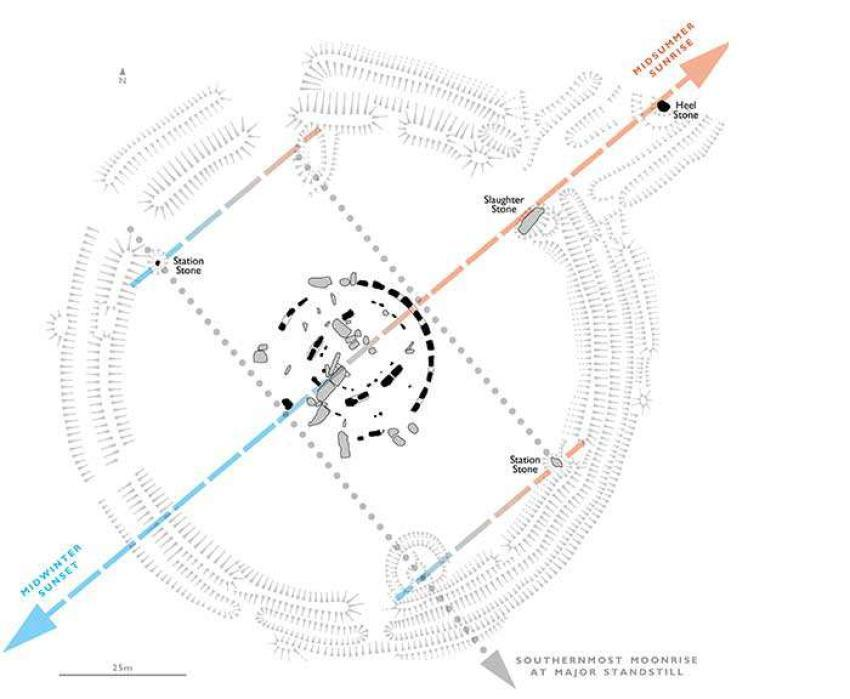
Stonehenge and the Solstice
Stonehenge is aligned with the movements of the sun, particularly the summer and winter solstices. During the summer solstice, the sun rises in alignment with the Heel Stone, creating a dramatic visual effect.
This suggests the site was used for:
Astronomical observation
Ritual gatherings
Seasonal celebrations
Newgrange and the Winter Light
Newgrange is even more precise. During the winter solstice, sunlight enters a narrow passage and illuminates the inner chamber for only a few minutes.
This alignment indicates advanced knowledge of solar cycles.
Why Astronomy Mattered
For prehistoric societies, astronomy was essential for:
Agriculture planning
Seasonal migration
Religious ceremonies
Timekeeping
The sky was both a calendar and a spiritual guide.
Engineering and Precision
The construction of these monuments required careful planning. Builders had to understand:
Solar movement patterns
Landscape positioning
Structural stability of large stones
A Shared Cultural Idea
Similar astronomical alignments appear in other ancient cultures, suggesting that early humans across regions independently developed sophisticated sky knowledge.
Conclusion: Stones That Track the Sun
Stonehenge and Newgrange show that prehistoric societies were deeply connected to the cosmos. These monuments are not random structures—they are ancient instruments built to track time itself.