Digital reconstruction of Ethiopian fossil shows a mix of primitive, classic features, says research team
ISTANBUL
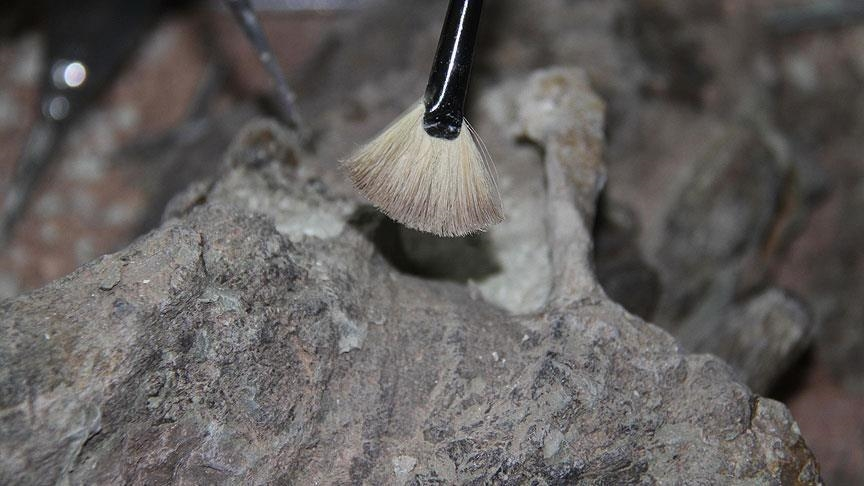
Scientists have digitally reconstructed the face of a 1.5-million-year-old Homo erectus fossil from Ethiopia, revealing unexpectedly primitive features that challenge previous ideas about early human evolution.
The fossil, designated DAN5, was uncovered at the Gona site in Ethiopia’s Afar region and is estimated to be around 1.5 to 1.6 million years old, according to a study published Tuesday in Nature.
An international team led by paleoanthropologist Karen Baab of Midwestern University in Illinois used advanced 3D imaging to reconstruct the individual’s face by combining preserved facial fragments with a previously described braincase.
The reconstruction reveals a surprising combination of traits. While the braincase aligns with classic Homo erectus features, the face and teeth appear much more primitive, resembling earlier human ancestors. This mix suggests that early Homo erectus populations in Africa were more anatomically diverse than previously believed.
Scientists say the findings raise new questions about the origins and evolutionary history of Homo erectus. The primitive facial characteristics may indicate that some African populations retained ancestral traits long after the species began spreading across the continent and into Eurasia.
The study also emphasizes the importance of Ethiopia’s Gona region, which has produced some of the oldest hominin fossils and stone tools ever discovered. The DAN5 individual is associated with both simple Oldowan tools and early Acheulian handaxes, demonstrating early humans’ technological flexibility and adaptability.
This reconstruction provides a rare window into the variability and complexity of Homo erectus, offering new insights into how early human populations evolved and interacted with their environments.