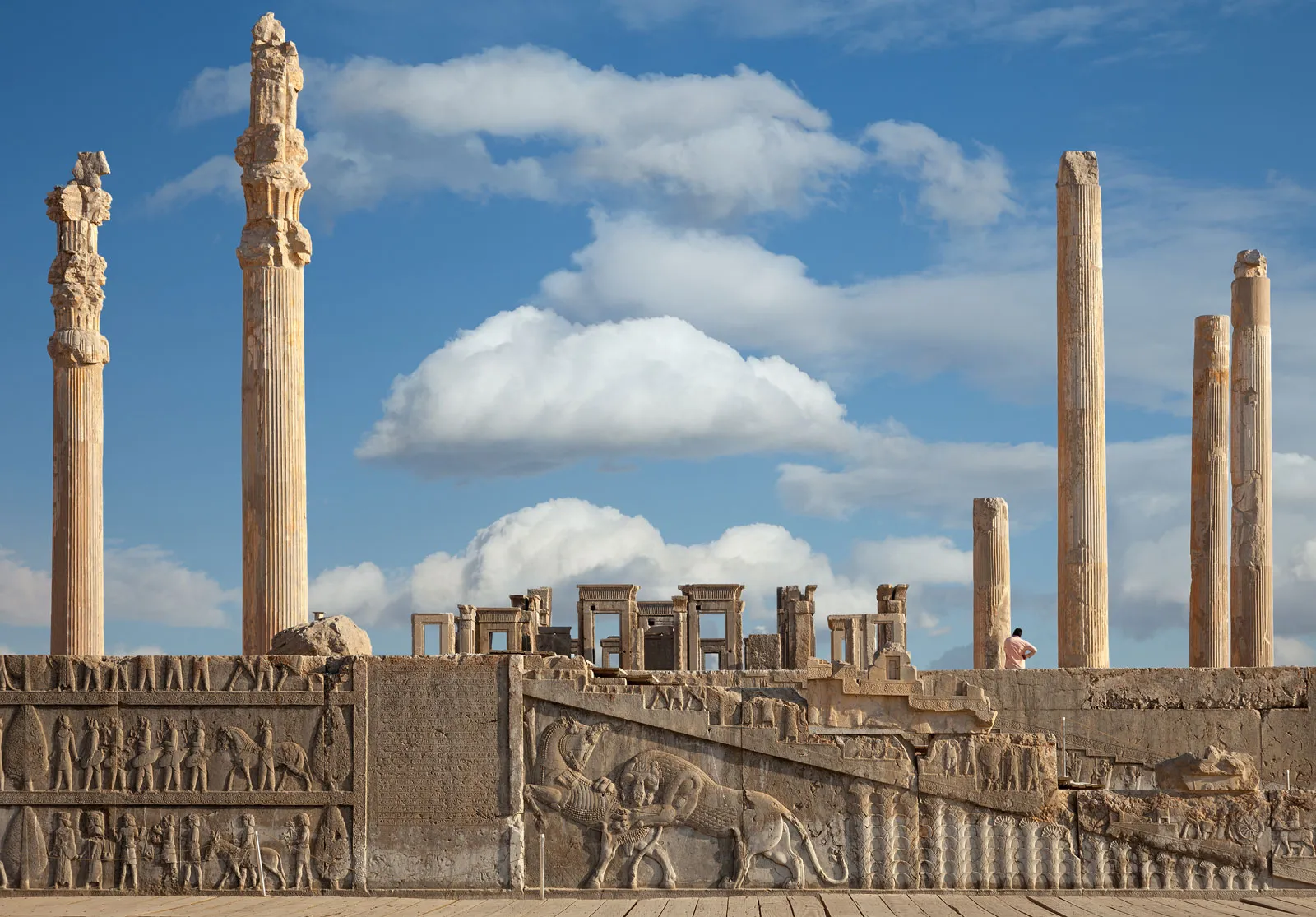
Persepolis was the ceremonial capital of the Achaemenid Persian Empire, founded by Darius I around 518 BCE. Built on a massive stone terrace, the city was designed to showcase imperial power and unity. It was not a residential capital but a ceremonial center used for important events such as Nowruz, the Persian New Year.
The architecture of Persepolis combined artistic influences from across the empire, including Mesopotamian, Egyptian, and Greek styles. Grand staircases, towering columns, and intricately carved reliefs depicted tribute-bearing delegations from different regions. These images symbolized harmony, diversity, and loyalty within the empire.
Reliefs also emphasized order rather than violence, presenting the Persian king as a just and benevolent ruler. This contrasted with Assyrian art, which often depicted warfare. Persepolis thus served as a visual statement of imperial ideology and political legitimacy.
Although destroyed by Alexander the Great in 330 BCE, Persepolis remains one of the most important archaeological sites in Iran. Its ruins provide insight into Persian governance, artistry, and the cultural integration that sustained one of the ancient world’s largest empires.