Definition and Context
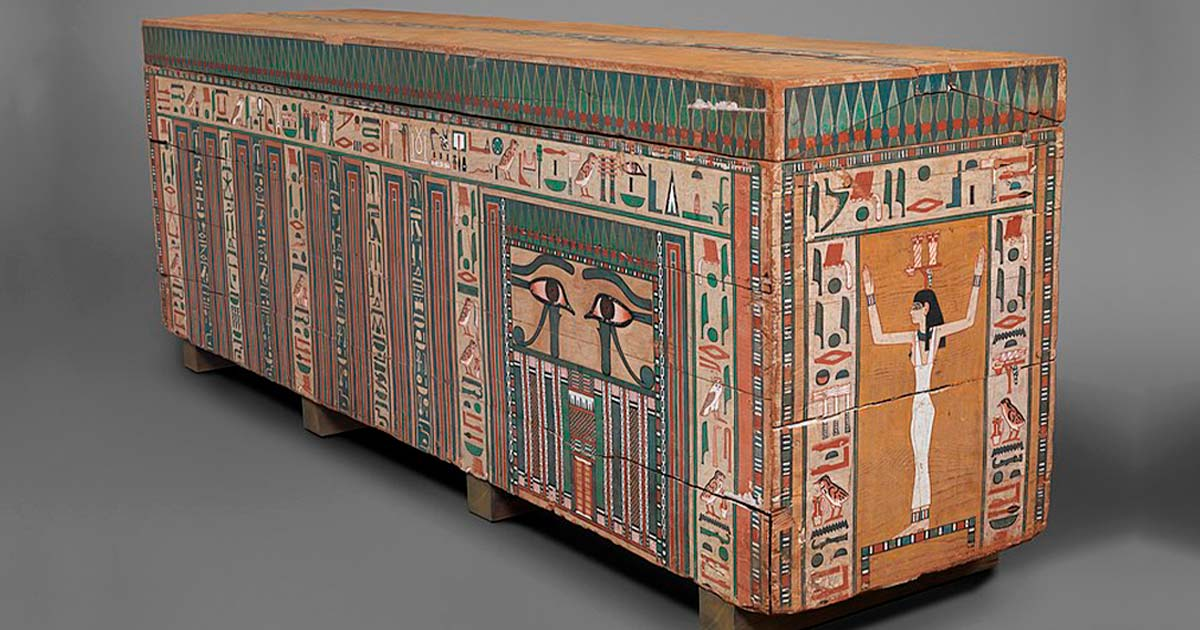
The Coffin Texts are a collection of funerary spells inscribed on coffins during the First Intermediate Period and Middle Kingdom (c. 2100–1600 BCE). They evolved from the earlier Pyramid Texts and were intended to protect the deceased in the afterlife, guiding them safely through the Duat, the Egyptian underworld.
Purpose and Function
These texts provided magical instructions for navigating obstacles, warding off demons, and ensuring rebirth. Spells addressed both practical and spiritual concerns, such as ensuring sustenance, preserving identity, and enabling transformation into divine forms.
Themes and Content
Common themes include resurrection, judgment before Osiris, protection against serpents, and acquiring magical powers. The texts also reflect the democratization of the afterlife; unlike earlier Pyramid Texts, Coffin Texts were used not only by pharaohs but also by nobles and priests.
Artistic and Religious Significance
Inscriptions often include vignettes depicting gods, protective symbols, and the deceased interacting with divine beings. These images reinforced the spells’ efficacy and reflected a worldview where art and writing were intertwined with spiritual protection.
Impact and Legacy
The Coffin Texts influenced later Book of the Dead traditions, cementing Egypt’s reputation as a civilization deeply concerned with life after death. They offer invaluable insight into religious beliefs, funerary practices, and the evolution of Egyptian literacy.