Origins and Strategic Location
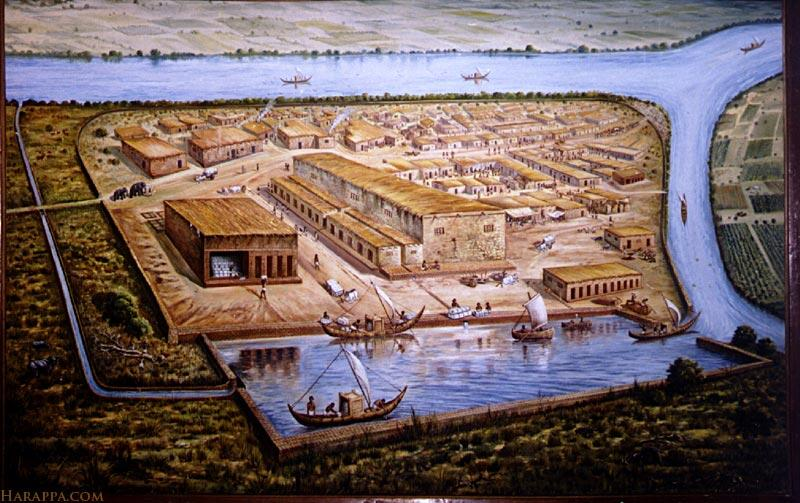
Lothal, located in present-day Gujarat, India, was a prominent city of the Indus Valley Civilization around 2400–1900 BCE. Its location near the Sabarmati River and proximity to the Arabian Sea made it a key hub for maritime trade. The city’s planners ingeniously adapted their urban design to support trade, with docks, warehouses, and a sophisticated drainage system that highlights their engineering skills.
The Dockyard and Maritime Trade
One of Lothal’s most remarkable features is its dockyard, considered one of the earliest known in the ancient world. This semi-circular dock could accommodate large ships, facilitating trade with Mesopotamia, Oman, and other distant regions. Archaeological evidence shows that Lothal’s traders exported beads, gemstones, ivory, and cotton textiles, while importing precious metals and luxury items. The city became a central node in a vast network connecting the Indus Valley to the Middle East and beyond.
Urban Planning and Economic Significance
Lothal’s streets were laid out in a grid pattern, and its residential and commercial areas were clearly separated. The city featured well-constructed warehouses, suggesting systematic storage and inventory management. Standardized weights and measures discovered at the site indicate regulated trade and economic sophistication. The city’s prosperity relied on both land and sea trade, reflecting the advanced organization of Indus Valley society.
Cultural and Technological Contributions
The people of Lothal were skilled in bead-making, metallurgy, and pottery. Artifacts found at the site, such as carnelian beads, seals, and tools, reveal a high level of craftsmanship. Lothal also demonstrates early knowledge of hydraulic engineering, including a brick-built drainage system and water management structures to prevent flooding. These innovations reflect a civilization that integrated commerce, technology, and urban planning in a remarkably advanced way.
Legacy of Lothal
Lothal provides critical insights into ancient trade networks and urban planning. Its maritime capabilities underscore the Indus Valley Civilization’s far-reaching influence, connecting South Asia to other early civilizations. Today, Lothal stands as a testament to early human ingenuity, trade innovation, and urban organization in the ancient world.