Introduction
Roads are often studied as engineering achievements, transportation corridors, or instruments of political control. Yet roads only function when they are maintained. Repeated traffic, rainfall, flooding, erosion, vegetation, and changes in vehicle technology can damage a road surface and require regular repair.
Archaeological evidence of road maintenance can reveal how communities organized labor, allocated resources, and managed transportation networks. Repair layers may show when a route was resurfaced, widened, drained, or redirected. They may also reveal the environmental pressures and economic priorities that influenced road use.
The archaeology of early road maintenance is therefore not simply about identifying an ancient road. It is about reconstructing the repeated work that kept the route usable over time.
Why Roads Require Maintenance
A road's condition depends on its materials, construction, location, and traffic.
A route built on poorly drained ground may become muddy during wet seasons. A stone-paved road may develop loose or displaced blocks. An unpaved track may be eroded by runoff, while heavy traffic can create ruts and depressions.
Maintenance addresses these problems through activities such as resurfacing, filling holes, replacing stones, clearing drains, reinforcing edges, and improving the roadbed.
The methods used vary widely. Some roads were maintained by organized state authorities, while others depended on local communities, landowners, merchants, or travelers.
Identifying Repair Layers
Roads often contain several layers of material.
A construction layer may include prepared soil, gravel, stone, or other material intended to create a stable surface. Later repairs may add new layers above the original road or replace damaged sections.
Archaeologists examine differences in texture, composition, compaction, and alignment to identify separate phases.
A gravel layer above an older surface may represent resurfacing, but it could also result from natural sediment deposition. A new stone arrangement may be a repair or a complete reconstruction.
The interpretation depends on the layer's relationship with the road edges, drainage features, artifacts, and surrounding deposits.
Stratigraphy and Road History
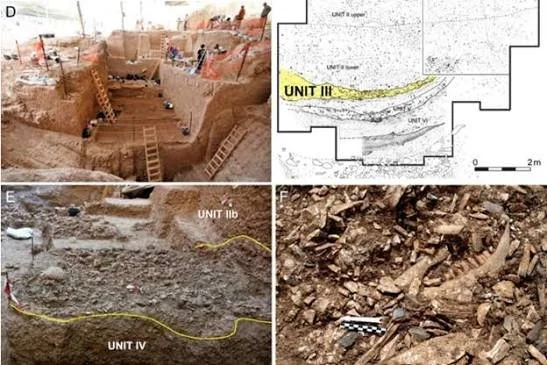
Stratigraphy is the study of the sequence of deposits and structures.
In a road context, the order of layers can reveal a sequence of construction and repair.
For example, a compacted roadbed may be covered by a worn surface, then by a later gravel layer. If the later layer seals the earlier surface, it may indicate a repair phase.
However, roads can be disturbed by erosion, later digging, utility work, or agricultural activity. The sequence must be documented carefully before a chronology is proposed.
Artifacts found within repair layers can sometimes help establish dates, but they may be older than the repair itself if reused or redeposited.
Drainage and Water Management
Water is one of the most important causes of road deterioration.
Runoff can wash away surface materials, undermine foundations, and create channels across the route. Standing water can soften soil and reduce the strength of the roadbed.
Early road builders addressed these problems in different ways.
They might construct ditches along the sides, raise the road above surrounding ground, install culverts, or use stone surfaces that allowed water to move away.
Drainage features are therefore important evidence of road engineering. Their design can reveal how builders responded to local rainfall, slope, and soil conditions.
Ruts, Wear, and Traffic
Road surfaces can preserve evidence of repeated movement.
Ruts may be produced by wheeled vehicles, although similar depressions can arise through other processes. Their width, depth, spacing, and relationship to the road surface can help researchers investigate traffic.
Wear patterns may also reveal where people and animals repeatedly passed.
However, ruts do not automatically identify a particular type of vehicle. Researchers must consider the width of wheels, the road's chronology, and the local history of transportation.
Repeated resurfacing can obscure earlier wear, making the road's full history difficult to reconstruct.
Who Maintained Early Roads?
Road maintenance depended on political and economic organization.
In some ancient states, authorities invested in roads to support administration, military movement, trade, and communication. Local populations might have been required to provide labor or materials.
In other contexts, maintenance was less centralized. Communities could repair paths that connected farms, settlements, markets, or water sources.
The presence of a well-engineered road does not automatically prove that a central government maintained it continuously. Construction and maintenance may have been managed by different groups at different times.
Written records, inscriptions, administrative documents, and settlement patterns can help identify who was responsible.
Road Maintenance and Labor Organization
Repair work required people, tools, and materials.
Gravel or stone might need to be quarried, transported, spread, and compacted. Drainage channels required cleaning, while damaged surfaces could need skilled construction work.
The scale of the road and the frequency of repair influenced the amount of labor required.
Archaeological evidence rarely identifies individual workers, but it can reveal the scale and organization of the project. Large quantities of standardized material may indicate coordinated supply, while localized repairs may reflect smaller-scale maintenance.
Researchers should avoid assuming that all work was performed by forced labor or that every road was maintained by professional engineers. Labor systems differed across societies.
Environmental Causes of Repair
Road maintenance often responds to environmental conditions.
Flooding may damage routes near rivers. Landslides can block mountain roads, while coastal erosion may threaten routes near shorelines. Seasonal freezing and thawing can also affect some road surfaces.
Environmental archaeology can help reconstruct these pressures.
Sediment deposits, pollen, soil analysis, and regional climate evidence may indicate whether the surrounding landscape was wetter, drier, more forested, or more exposed during a particular period.
Yet environmental evidence must be connected carefully with the road itself. A regional flood does not prove that a specific road was damaged unless the archaeological sequence supports that conclusion.
Economic Importance and Road Quality
Roads can reduce the cost and difficulty of transporting goods.
Their maintenance may therefore reflect the importance of trade, administration, agriculture, or military movement.
A route connecting a port with an inland market may require regular repairs because of heavy traffic. A local path may receive less investment but remain essential to the communities that use it.
Changes in maintenance can sometimes indicate shifts in economic priorities. A road that receives repeated resurfacing may have remained important, while a route that gradually deteriorates may have lost traffic or political support.
However, preservation conditions can create misleading impressions. A poorly preserved road may once have been heavily used, and a surviving road surface may owe its condition to favorable geology rather than superior maintenance.
Archaeological Survey and Remote Sensing
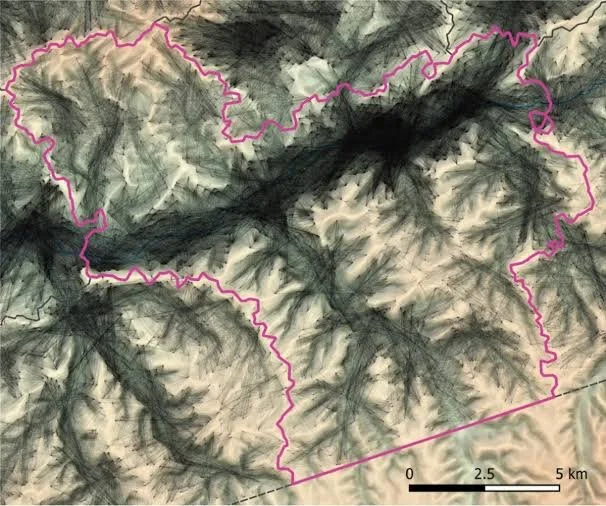
Road networks can be investigated through field survey, aerial photography, satellite imagery, LiDAR, and geophysical methods.
These tools can identify linear features, embankments, cuttings, drainage channels, and connections between settlements.
Remote sensing is particularly valuable when vegetation or modern land use obscures the route.
Nevertheless, a linear feature may be a boundary, canal, track, or natural formation rather than a road. Ground inspection and dating are needed to establish its function.
Repair, Reconstruction, and Reuse
A road may be maintained without changing its overall route. In other cases, repeated repairs gradually transform the original structure.
A route may be widened, raised, redirected, or reinforced. An older roadbed might be reused even after the road's original purpose has changed.
Some roads remained in use for centuries, while others were abandoned and later incorporated into fields or property boundaries.
Archaeologists should therefore distinguish between the original construction, subsequent repairs, and later reuse.
Conclusion
The archaeology of early road maintenance reveals the ongoing work required to keep transportation routes functioning. Repair layers, drainage systems, ruts, resurfacing materials, and changes in alignment can show how roads responded to traffic, environmental damage, and shifting economic priorities.
These traces also illuminate the organization of labor and the relationship between local communities and larger political systems. A road's history is not limited to its original construction; it includes the repeated decisions and practical efforts that allowed people to continue using it.
By combining stratigraphic excavation, environmental analysis, remote sensing, and historical evidence, archaeologists can reconstruct how early societies maintained the routes that connected settlements, markets, farms, and administrative centers.