Introduction
Coastal settlements are shaped by changing sea levels, sediment movement, storms, earthquakes, and other environmental processes. Harbors that once connected towns with maritime trade may become shallow, shift position, or disappear beneath the water. In some cases, stairways, quays, and other built features are now submerged, offering evidence of earlier shorelines and harbor use.
Tsunamis can cause severe coastal disruption, but not every submerged harbor structure was destroyed by a tsunami. Gradual sea-level change, tectonic movement, erosion, sediment accumulation, and changes in coastal engineering can produce similar outcomes.
Investigating submerged stairways therefore requires a combination of underwater archaeology, coastal geomorphology, sediment analysis, historical research, and precise dating. The goal is to determine when the structure was built, how it was used, why it became submerged, and whether a sudden event played a role in its transformation.
Harbor Stairways and Maritime Life
Stairways were useful features in ancient and historical harbors.
They could connect a quay or landing place with a higher street, public building, warehouse, or waterfront platform. Steps could also provide access to boats and facilitate the movement of people and goods between land and water.
The design depended on the local shoreline, the size of vessels, tidal conditions, and the engineering traditions of the community.
A stairway that appears submerged today may originally have been constructed beside the water at a different elevation. Its present position does not reveal the original sea level by itself.
Why Harbors Become Submerged
Several processes can place former harbor features underwater.
Relative sea-level rise occurs when the sea rises relative to the land. This can result from global sea-level change, local land subsidence, or a combination of factors.
Tectonic movement can raise or lower coastal land during earthquakes or through longer-term geological processes.
Sediment dynamics can change harbor depth and shoreline position. Rivers may deposit sediment, while waves and currents may remove it.
Coastal erosion can destroy or undercut structures, leaving fragments in shallow water.
Human modification can also alter harbors. Construction, dredging, drainage, and changes in waterfront use may leave earlier structures abandoned or submerged.
These processes may operate together, making it difficult to identify a single cause.
How Tsunamis Affect Harbors
A tsunami is a series of long waves generated by the displacement of a large volume of water, commonly due to an undersea earthquake, landslide, or volcanic event.
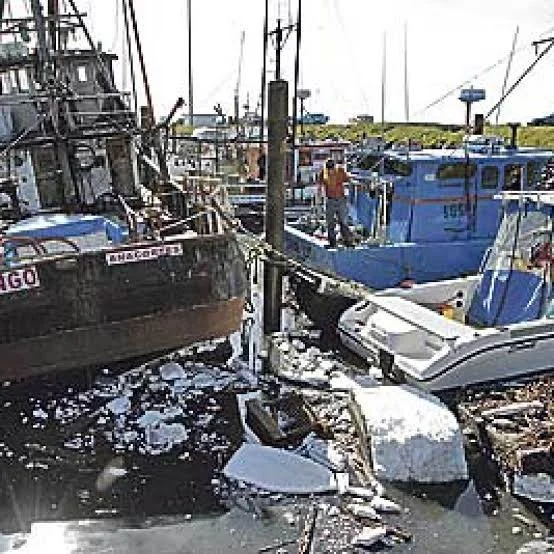
When a tsunami reaches a coast, it can produce strong currents, inundation, erosion, and sediment transport. It may damage buildings, move heavy objects, deposit marine material inland, or remove sediment from around existing structures.
A tsunami can therefore contribute to harbor reconfiguration, but the effects vary according to coastal shape, water depth, wave characteristics, and local geology.
A submerged stairway alone is not evidence of a tsunami. The event must be supported by independent geological, archaeological, or historical evidence.
Underwater Archaeological Survey
Underwater archaeologists use several methods to locate and document submerged structures.
Diving surveys can record visible masonry, construction techniques, and the relationship between structures and the seabed. Photogrammetry uses overlapping photographs to create three-dimensional models.
Sonar systems can map underwater topography, while other remote-sensing instruments may identify buried or partly buried features.
Each method has limitations. Visibility can be poor, currents can be dangerous, and sediment may conceal important details.
A complete survey may require multiple techniques to establish the structure's form and relationship to the former shoreline.
Reading Construction Features
The shape and construction of a stairway can provide clues about its original purpose.
Researchers examine step dimensions, masonry style, foundations, orientation, and connections with nearby quays or buildings.
A stairway aligned with a known harbor entrance may have served as part of a landing system. Another may have connected the waterfront with a public terrace or a private structure.
Repairs and rebuilding can complicate interpretation. A stairway may have been altered several times as the harbor changed.
Architectural analysis should therefore consider whether the visible remains belong to one construction phase or several.
Sediment Layers and Tsunami Evidence
Sediment analysis can help determine whether a coastal event produced a distinctive deposit.
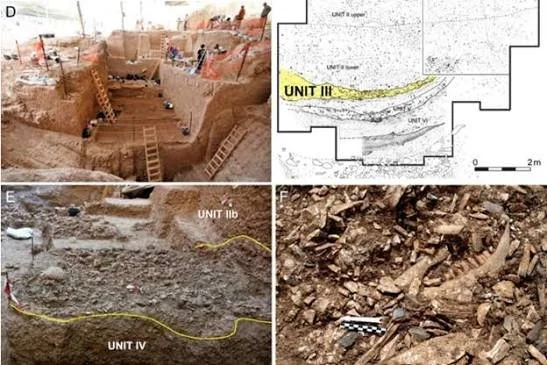
A candidate tsunami layer might contain marine sand, shells, microfossils, or other material transported into an unusual location. Researchers examine its grain size, composition, distribution, and relationship with surrounding sediments.
However, storms, floods, and other coastal processes can also deposit marine material inland. A single sandy layer does not automatically establish a tsunami.
The interpretation becomes stronger when sediment evidence matches a securely dated archaeological destruction layer or a historically documented event.
Dating Submerged Structures
Dating is central to reconstructing harbor change.
Archaeologists may use associated pottery, inscriptions, coins, building techniques, or radiocarbon dating of suitable organic material. Marine deposits can sometimes be dated through appropriate scientific methods, although contamination and reservoir effects may complicate the results.
The date of a stairway's construction may differ substantially from the date when it became submerged.
Researchers must establish the sequence of events: construction, use, repair, abandonment, flooding, and later sediment movement.
Without this sequence, it is difficult to attribute submergence to a particular tsunami.
Historical Records and Coastal Disasters
Written sources can provide important information about earthquakes, tsunamis, harbor damage, and rebuilding.
Historical accounts may describe unusual waves, destruction of coastal settlements, or changes in navigation.
However, descriptions can be imprecise. Terms used by historical writers do not always correspond exactly to modern scientific categories.
Researchers compare written testimony with geological evidence and archaeological dating rather than relying on a single narrative.
Harbor Reconfiguration and Economic Change
A harbor's decline may have economic as well as environmental causes.
Trade routes can shift, political authorities can invest in different ports, and new ships may require different harbor depths or facilities.
A stairway may become submerged or abandoned because the shoreline changed, but it may also fall out of use after a settlement's commercial importance declined.
The relationship between environmental change and human decisions is therefore important. Coastal communities often respond to disruption through repair, relocation, engineering, or the development of alternative landing places.
Sea-Level Change and Archaeological Interpretation
Relative sea-level history differs from one coast to another.
Global sea levels change over time, but local tectonics and land movement can produce very different conditions in neighboring regions.
A submerged feature must therefore be interpreted within its local geological setting.
Researchers may compare the elevation of ancient structures, coastal terraces, sediment cores, and other indicators to reconstruct past shorelines.
The results can reveal whether a harbor was inundated gradually or affected by more sudden changes.
Conservation of Submerged Heritage
Underwater archaeological sites are vulnerable to erosion, fishing activity, anchoring, construction, looting, and changing marine conditions.
Documentation is essential because some structures may deteriorate faster than they can be excavated.
Conservation does not always require removing objects from the water. In some cases, leaving remains in place while monitoring their condition is preferable.
Responsible management also requires attention to maritime laws, cultural heritage protections, and local community interests.
Conclusion
Submerged stairways provide valuable evidence for reconstructing former shorelines and understanding how harbors changed over time. Their present location may reflect sea-level rise, tectonic movement, erosion, sediment dynamics, human modification, or a combination of these processes.
Tsunamis can cause dramatic harbor disruption, but attributing a particular submerged structure to a tsunami requires independent evidence. Underwater survey, sediment analysis, architectural study, scientific dating, and historical records must be considered together.
By reconstructing the sequence of construction, use, damage, and submergence, researchers can reveal how coastal communities adapted to changing environments. These stairways are more than isolated architectural remains: they preserve evidence of the shifting relationship between human settlements and the sea.