The World’s First Writing System
Origins in Mesopotamia
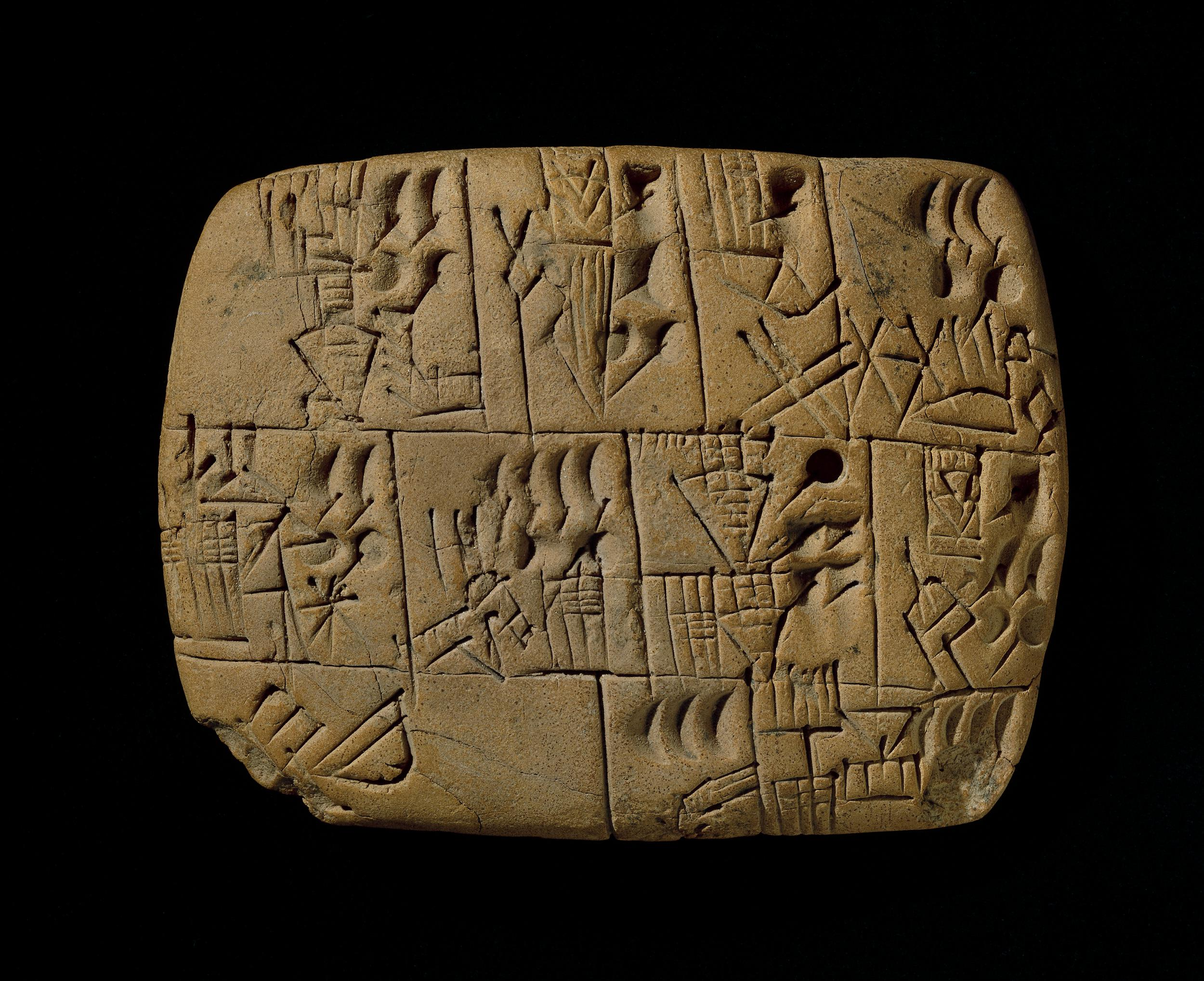
Cuneiform emerged around 3200 BCE in Mesopotamia, primarily among the Sumerians. Initially developed as a practical tool for record-keeping, it allowed early societies to manage agriculture, trade, and taxation. The earliest symbols were pictographs representing objects like grain, livestock, and tools.
From Pictures to Symbols
Over time, pictographs evolved into abstract wedge-shaped marks pressed into clay tablets using a reed stylus. This transformation made writing faster and more versatile. The term “cuneiform” comes from the Latin cuneus, meaning wedge. Symbols began to represent sounds and syllables, allowing scribes to record complex language rather than simple inventories.
Languages and Adaptation
Cuneiform was remarkably adaptable. It was used to write multiple languages, including Sumerian, Akkadian, Babylonian, Assyrian, and Elamite. Each culture modified the script to fit its linguistic needs, demonstrating the system’s flexibility and longevity. Cuneiform remained in use for over 3,000 years.
The Role of Scribes
Scribes were highly trained specialists who held prestigious positions in society. Learning cuneiform required years of education in scribal schools, where students practiced copying texts and mastering hundreds of signs. Literacy was limited to elites, reinforcing social hierarchies.
Literature, Law, and Science
Cuneiform preserved some of humanity’s earliest literature, including the Epic of Gilgamesh. It was also used for legal codes such as the Code of Hammurabi, astronomical observations, medical texts, religious hymns, and diplomatic correspondence. These writings provide invaluable insight into ancient thought and daily life.
Decline and Rediscovery
As alphabetic writing systems spread, cuneiform gradually fell out of use around the 1st century CE. Its secrets remained lost until the 19th century, when scholars successfully deciphered the script. Today, cuneiform stands as a foundation of recorded history.