Introduction
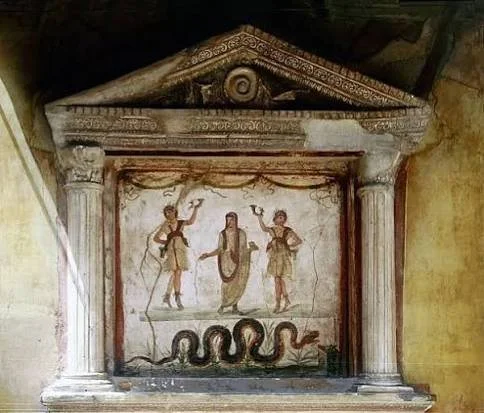
Religious activity in ancient societies was not confined to monumental temples and public sanctuaries. Many households maintained small spaces for prayer, offerings, family ceremonies, and the worship of domestic deities or protective figures.
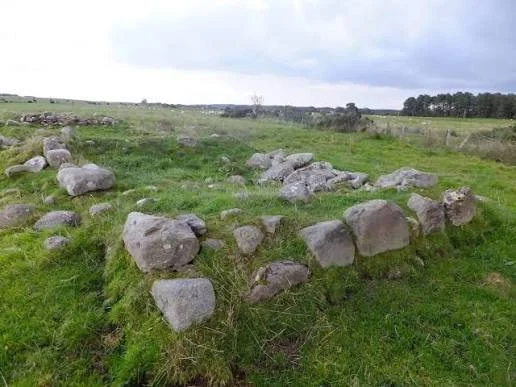
Miniature altars are particularly valuable archaeological objects because they provide evidence of religious activity within private environments. They may appear as small stone platforms, clay structures, decorated stands, or portable objects used for offerings.
Their distribution across domestic spaces can reveal how religious practices were organized within households and how beliefs differed between families, neighborhoods, and social groups.
What Are Miniature Altars?
A miniature altar is a small structure or object interpreted as having served a ritual function.
Some examples resemble larger monumental altars but are reduced in scale. Others have distinctive features such as offering surfaces, shallow basins, decorated sides, or spaces for burning incense and other substances.
They could be made from stone, clay, terracotta, or other available materials.
Not every small platform is an altar. Archaeologists must consider its shape, wear patterns, associated objects, and archaeological location before assigning a religious function.
Domestic Religion and Household Space
The household was an important setting for religious practice in many ancient societies.
Families could maintain small shrines, dedicate objects to protective deities, and conduct rituals connected with birth, marriage, illness, prosperity, and remembrance.
These practices were often integrated into ordinary domestic routines.
A household altar might occupy a corner of a room, a courtyard, a niche, or a location near an entrance.
Its position could reflect practical considerations as well as symbolic beliefs.
Distribution Within Houses
The location of miniature altars can help researchers understand how domestic space was organized.
An altar near an entrance might have been associated with protection of the household.
A shrine positioned in a central room could have served as a focus for family ceremonies.
Courtyard altars might have accommodated activities involving larger groups or the use of fire and smoke.
However, these interpretations are not universal. The meaning of a location must be established through comparison with other houses and relevant historical evidence.
Differences Between Households
The distribution of miniature altars across a settlement may reveal variations in religious practice.
Some households may contain several ritual objects, while others have very few.
These differences could reflect wealth, family traditions, household size, occupation, or the preservation conditions of the archaeological site.
A house without a surviving altar cannot automatically be considered nonreligious. Ritual activity may have taken place using objects made from perishable materials or in areas that were not preserved.
Materials and Craftsmanship
Miniature altars were produced from different materials depending on local resources and technical traditions.
Stone examples may show carving marks, polished surfaces, or inscriptions.
Terracotta altars could be molded or hand-built and sometimes decorated with painted designs.
The quality of workmanship may indicate whether an object was purchased from a specialist workshop or produced within the household.
Material analysis can also reveal whether the object was locally manufactured or imported.
Offerings and Residue Analysis
Small altars may preserve traces of substances used during rituals.
Burning can leave charcoal, ash, and heat-altered surfaces.
Residue analysis may identify traces of oils, fats, resins, or other substances, although contamination and later use can complicate interpretation.
Associated objects such as miniature vessels, figurines, lamps, and coins may provide additional evidence.
The combination of an altar-like object and a repeated pattern of offerings is generally more persuasive than the object's shape alone.
Social and Gender Dimensions
Domestic rituals involved family members and could be connected with household responsibilities.
In some societies, particular ceremonies were associated with women, men, elders, or heads of households.
However, archaeological objects rarely reveal exactly who performed a ritual.
Researchers should avoid assigning gender or social roles to miniature altars without supporting evidence.
Household size, room use, inscriptions, and comparisons with written sources may help establish a more complete picture.
Mapping Ritual Activity
Archaeologists can use spatial analysis to map the distribution of miniature altars within a settlement.
Comparing their locations with kitchens, storage rooms, courtyards, entrances, and workshops may reveal patterns.
If several neighboring houses contain similar objects, this could indicate shared traditions or access to the same craft producers.
Differences between residential districts might reflect social or cultural variation.
Chronology is essential because objects found in the same settlement may belong to different periods.
Conclusion
Miniature altars provide important evidence for the religious life of ancient households.
Their size and distribution can reveal how families incorporated ritual practices into ordinary domestic environments.
By studying their materials, locations, associated offerings, and relationship with household architecture, researchers can investigate how religious traditions operated beyond major public sanctuaries.
These modest objects demonstrate that ancient religion was often practiced in intimate spaces where family identity, daily routines, and beliefs intersected.
Subterranean Iron Ovens: Hidden Metalworking in Peripheral Villages
Introduction
Ironworking transformed ancient economies by providing materials for tools, weapons, agricultural equipment, and construction.
Although major metalworking centers are often associated with urban settlements and large industrial areas, smaller production sites also existed in villages and rural landscapes.
Some ironworking installations were constructed partly underground or incorporated into slopes and earthen structures. These furnaces could be difficult to identify because their remains may resemble ordinary pits, hearths, or collapsed building features.
The study of subterranean iron ovens offers insight into how peripheral communities participated in metal production and how specialized technologies operated outside major centers.
Understanding Ancient Iron Production
Iron production generally involved two major processes: extracting metal from ore and shaping the resulting iron into usable objects.
In many ancient technologies, smelting took place in furnaces where iron-bearing minerals were heated with charcoal.
The resulting material could form a solid mass known as a bloom, containing iron mixed with slag and other impurities.
The bloom then required repeated heating and hammering to produce workable metal.
These processes demanded knowledge of temperature, airflow, fuel preparation, and ore selection.
Why Build Furnaces Partly Underground?
A furnace built into a slope or partly surrounded by earth could benefit from the natural support provided by the surrounding ground.
Earth could help stabilize the structure and reduce heat loss in certain configurations.
A hillside location might also make it easier to construct air channels or arrange access to fuel and raw materials.
However, not every underground furnace was designed for iron smelting.
Some installations may have been used for cooking, pottery production, charcoal preparation, or other heating activities.
Their identification requires metallurgical evidence.
Furnace Structure and Design
Ancient iron furnaces varied considerably.
Some were shaft furnaces, with a vertical chamber where ore and charcoal were arranged in layers.
Others used bowl-shaped or low structures.
Air entered through openings or tuyères, which helped maintain the high temperatures required for smelting.
Subterranean or semi-subterranean examples may preserve only the lower chamber, making their original height difficult to reconstruct.
The arrangement of clay lining, stone supports, airflow openings, and slag deposits helps researchers identify their function.
Slag and Metallurgical Evidence
Slag is one of the most important indicators of ancient ironworking.
It forms when impurities in the ore and other materials separate during smelting or forging.
The composition and structure of slag can help distinguish smelting from later metalworking.
Researchers may examine iron-rich fragments, furnace lining, tuyère pieces, and hammer scale.
Microscopic and chemical analysis can reveal the temperatures and conditions under which production occurred.
A furnace containing slag and iron-bearing residues provides stronger evidence of metalworking than a simple burnt pit.
Village-Based Production
Small rural workshops could supply local communities with essential tools and repairs.
Agricultural settlements required iron sickles, knives, axes, plough components, and other equipment.
A local metalworker could maintain these objects without relying entirely on distant urban workshops.
Some villages may have specialized in particular stages of production, while others carried out complete smelting and forging operations.
The organization depended on access to ore, fuel, skilled labor, and transportation.
Fuel and Environmental Impact
Iron production required substantial quantities of charcoal.
Woodland resources were therefore important to the operation of furnaces.
Repeated charcoal production and timber harvesting could alter surrounding landscapes.
Archaeologists can investigate these effects through charcoal remains, pollen records, and evidence of vegetation change.
The availability of suitable wood may also explain why some production sites were located away from dense settlements.
Dating and Identifying Peripheral Workshops
Dating an ironworking site requires more than examining the furnace's appearance.
Researchers use associated pottery, stratigraphic relationships, radiocarbon dating of charcoal, and scientific analysis of production residues.
Charcoal dating must be interpreted carefully because old wood or reused fuel can produce dates earlier than the actual furnace operation.
The relationship between the installation and nearby buildings is also important.
Trade and Exchange
Even small workshops could participate in wider economic networks.
Iron tools and raw materials might be exchanged with neighboring villages or transported to regional markets.
The distribution of similar metal objects can help researchers investigate connections between production areas and consumer settlements.
Chemical analysis may sometimes identify differences in ore sources, although recycling and mixing of metals complicate provenance studies.
Conclusion
Subterranean iron ovens reveal the technological capabilities of communities beyond major urban and industrial centers.
Their construction, slag deposits, furnace lining, and associated artifacts can demonstrate how rural metalworkers produced and repaired essential equipment.
The identification of these installations requires careful distinction between metallurgical furnaces and other types of heating structures.
When securely identified, peripheral ironworking sites help reconstruct the economic networks, environmental resources, and technical knowledge that supported ancient village life.