• MAIN PAGE
  • LATEST NEWS
    • Lost Cities
    • Archaeology's Greatest Finds
    • Underwater Discoveries
    • Greatest Inventions
    • Studies
    • Blog
  • PHILOSOPHY
  • HISTORY
  • RELIGIONS
    • Africa
    • Anatolia
    • Arabian Peninsula
    • Balkan Region
    • China - East Asia
    • Europe
    • Eurasian Steppe
    • Levant
    • Mesopotamia
    • Oceania - SE Asia
    • Pre-Columbian Civilizations of America
    • Iranian Plateau - Central Asia
    • Indus Valley - South Asia
    • Japan
    • The Archaeologist Editor Group
    • Scientific Studies
    • Aegean Prehistory
    • Historical Period
    • Byzantine Middle Ages
    • Predynastic Period
    • Dynastic Period
    • Greco-Roman Egypt
  • Rome
  • PALEONTOLOGY
  • About us
Menu

The Archaeologist

  • MAIN PAGE
  • LATEST NEWS
  • DISCOVERIES
    • Lost Cities
    • Archaeology's Greatest Finds
    • Underwater Discoveries
    • Greatest Inventions
    • Studies
    • Blog
  • PHILOSOPHY
  • HISTORY
  • RELIGIONS
  • World Civilizations
    • Africa
    • Anatolia
    • Arabian Peninsula
    • Balkan Region
    • China - East Asia
    • Europe
    • Eurasian Steppe
    • Levant
    • Mesopotamia
    • Oceania - SE Asia
    • Pre-Columbian Civilizations of America
    • Iranian Plateau - Central Asia
    • Indus Valley - South Asia
    • Japan
    • The Archaeologist Editor Group
    • Scientific Studies
  • GREECE
    • Aegean Prehistory
    • Historical Period
    • Byzantine Middle Ages
  • Egypt
    • Predynastic Period
    • Dynastic Period
    • Greco-Roman Egypt
  • Rome
  • PALEONTOLOGY
  • About us

The Forgotten Language of the Etruscans

December 7, 2025

Unraveling the Mysterious Script of Ancient Italy

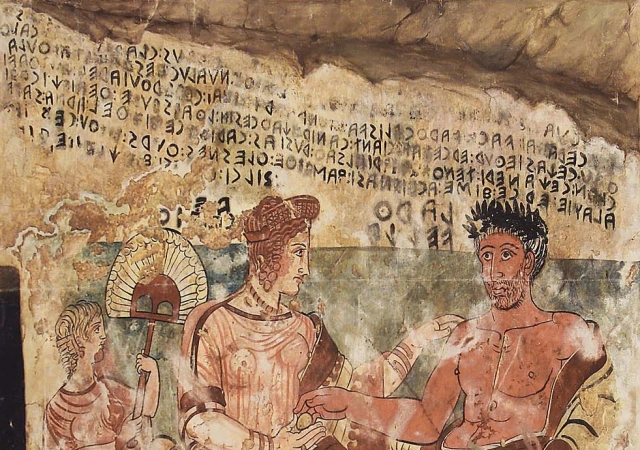
Before Rome rose to power, the Etruscans dominated central Italy. Their language—preserved in tombs, artifacts, and religious inscriptions—remains only partly understood.

A Language Unlike Its Neighbors

Etruscan does not belong to the Indo-European language family, making it difficult to decode. While we can read the script (since it resembles early Greek), many words remain mysterious.

Clues from Tombs and Art

Etruscan inscriptions appear on sarcophagi, mirrors, and jewelry. They reveal:

  • family names

  • ritual formulas

  • dedications to gods

But longer texts are rare, limiting full interpretation.

A Culture of Ritual and Elegance

Their vibrant art, elaborate tombs, and skilled metalwork show a refined civilization deeply connected to religion and the afterlife.

Lingering Mysteries

Although partially deciphered, the language still hides secrets about Etruscan myths, history, and worldview.
← The Role of Astronomy in Ancient NavigationThe First Global Trade Routes of the Ancient World →
Featured
image_2025-12-07_224159633.png
Dec 7, 2025
The Role of the Nile River in the Birth of Egyptian Civilization
Dec 7, 2025
Read More →
Dec 7, 2025
image_2025-12-07_224016560.png
Dec 7, 2025
The Lost Kingdom of Tartessos: Spain's Ancient Atlantis
Dec 7, 2025
Read More →
Dec 7, 2025
image_2025-12-07_223754940.png
Dec 7, 2025
The Role of the Jaguar in Ancient Mesoamerican Mythology
Dec 7, 2025
Read More →
Dec 7, 2025
image_2025-12-07_223320623.png
Dec 7, 2025
The Secret Rites of the Eleusinian Mysteries
Dec 7, 2025
Read More →
Dec 7, 2025
image_2025-12-07_222717905.png
Dec 7, 2025
The Ancient Science of Metallurgy and Weapon Crafting
Dec 7, 2025
Read More →
Dec 7, 2025
image_2025-12-07_222634278.png
Dec 7, 2025
The Role of the Sacred River Ganges in Ancient Hinduism
Dec 7, 2025
Read More →
Dec 7, 2025
read more

Powered by The archaeologist