The Bamiyan Buddhas: Giants of the Silk Road, Gone But Not Forgotten
For nearly 1,500 years, the Bamiyan Buddhas stood watch over the Silk Road.
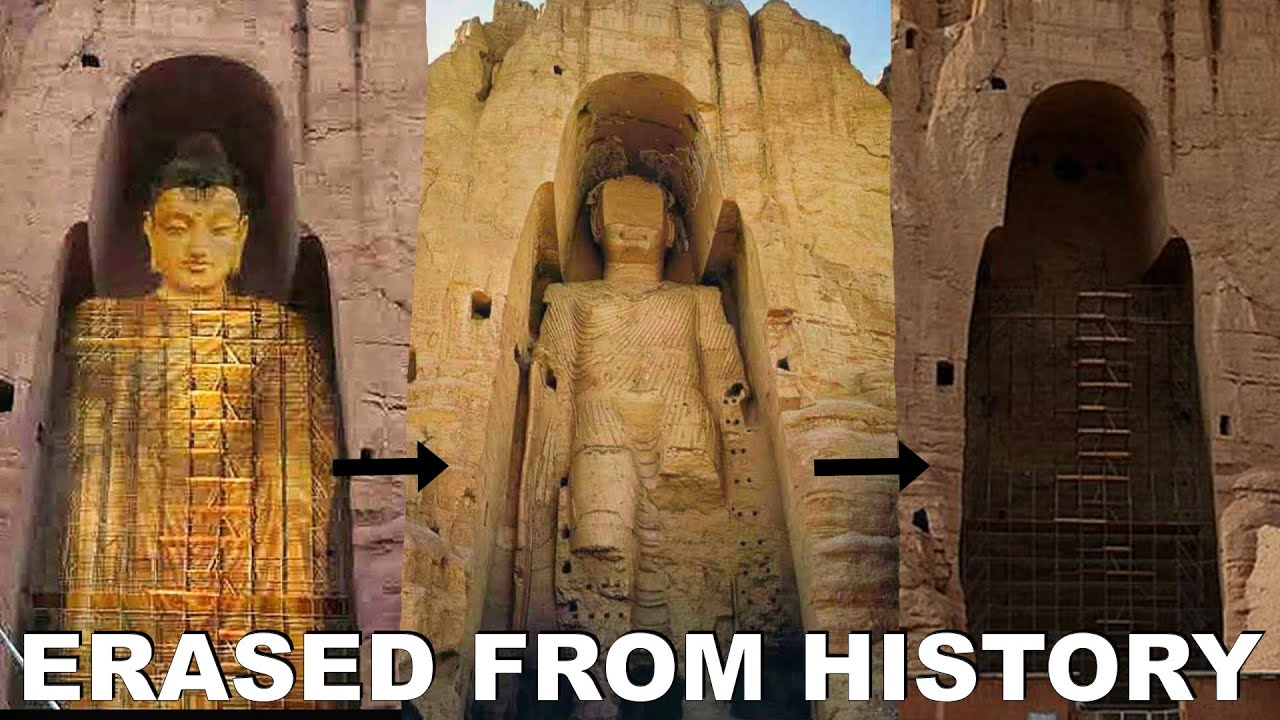
Carved into the sandstone cliffs of Afghanistan’s Bamiyan Valley in the 6th century, these monumental statues — one rising about 55 meters tall, the other 38 — were among the largest standing Buddhas in the world. They gazed out across a crossroads of civilizations, where merchants, monks, pilgrims, and conquerors once passed between East and West.
They endured empires.
They survived invasions.
They outlasted religious transformations and the relentless erosion of time itself.
Until March 2001.
That was when the Taliban deliberately destroyed them, reducing the ancient colossi to rubble with explosives and artillery. After fifteen centuries of survival, the full destructive force of the modern age proved too much to endure.
For many around the world, that tragic act became the entire story.
But the Bamiyan Buddhas were far more than their destruction.
A Forgotten Chapter of Pre-Islamic History
To understand the Buddhas, we have to turn the clock back — long before 2001, long before modern borders, even long before Islam reached the region.
The Bamiyan Valley once lay at the heart of a vibrant network of trade routes connecting India, Persia, Central Asia, and China. It was part of the great Silk Road — a cultural artery where ideas, art, religion, and technology flowed across continents.
During this era, Buddhism flourished across what is now Afghanistan. Monks carved monasteries and cave complexes into the cliffs surrounding the statues. Inside, intricate murals blended Indian, Persian, and even Greco-Roman artistic influences — evidence of a truly globalized ancient world.
The Buddhas themselves reflected this fusion. Their flowing robes showed Hellenistic influence from the legacy of Alexander the Great’s eastern campaigns centuries earlier. Their spiritual symbolism echoed Indian traditions. Their location along Central Asian trade routes made them witnesses to centuries of cultural exchange.
This was not a remote, isolated frontier.
It was a thriving, cosmopolitan crossroads.
Survival Through the Ages
Over the centuries, the region transformed. Buddhist influence declined. Islamic dynasties rose. Empires shifted and borders redrew themselves.
Yet the Buddhas remained.
They were damaged at times, neglected at others, but never fully erased. Even rulers who opposed idolatry often tolerated them as relics of the past — silent, ancient monuments embedded in the landscape.
For over a millennium, they stood as reminders of a pluralistic, interconnected world.
And then, in 2001, they were gone.
More Than Their Destruction
Today, the empty niches in the cliffs of Bamiyan are haunting. The absence itself has become part of the story.
But the Bamiyan Buddhas are not remembered solely for how they were destroyed. They represent:
A lost chapter of Afghanistan’s pre-Islamic heritage
The cultural richness of the Silk Road world
The blending of artistic traditions across continents
And the fragility of human history in the modern era
Though physically gone, their story continues through photographs, archaeological research, digital reconstructions, and global memory.
They are no longer standing in stone.
But they are not forgotten.
🎥 Watch the video below to journey back to the origins of the Bamiyan Buddhas — exploring their rise, their world along the Silk Road, and the full story behind their tragic destruction: