Introduction
Workshops can disappear from the landscape while leaving traces in the soil. Metalworking activities may produce tiny fragments of slag, charcoal, metal droplets, hammer scale, crucible fragments, and chemical residues. Even when buildings and tools have been removed, these materials can preserve evidence of production.
The study of soil-bound metal residues allows archaeologists to investigate workshops that were small, temporary, relocated, or poorly preserved. It can reveal what kinds of metalworking occurred, where activities took place, and how production was organized within settlements.
However, a concentration of metal in soil does not automatically identify a workshop. Natural geology, corrosion, later industrial activity, and the movement of contaminated soil can produce misleading patterns. Reliable interpretation requires microscopic analysis, geochemical testing, spatial mapping, and careful excavation.
What Are Soil-Bound Metal Residues?
Metalworking can release small particles and chemical compounds into the surrounding environment.
These residues may include:
iron-rich hammer scale,
tiny droplets of copper or other metals,
slag from smelting or refining,
fragments of crucibles and molds,
charcoal from fuel,
and microscopic particles produced during heating or hammering.
Some residues remain near the place where they were produced. Others can be transported through wind, water, sweeping, dumping, or later construction.
The resulting soil record may therefore contain a mixture of primary workshop debris and secondary deposits.
How Metalworking Leaves Traces
Different stages of metal production produce different kinds of waste.
Smelting extracts metal from ore and often generates slag.
Refining removes impurities or adjusts the composition of metal.
Casting involves heating metal and pouring it into a mold, potentially leaving crucible fragments, spills, and mold material.
Forging shapes metal through hammering, often producing scale and small fragments.
Repair and recycling may generate a different mixture of residues because old objects are reheated, reshaped, or melted down.
These activities can overlap within one workshop, but not every metalworking site performed all stages. Archaeologists investigate which processes are represented by the recovered materials.
Slag and Production Evidence
Slag is a by-product of several metallurgical processes.
Its composition and structure depend on the ore, fuel, furnace conditions, and metal being produced. Microscopic and chemical analysis can help identify the processes that generated it.
However, slag is not always proof of metal smelting at the exact location where it was found. It may have been transported for reuse, dumped as fill, or moved through later construction.
A slag concentration becomes more informative when it occurs with furnace remains, tuyères, crucibles, metal droplets, or other evidence of production.
Hammer Scale and Forging
Hammer scale consists of small oxidized particles produced when hot iron is worked.
It can accumulate around forging areas and may be identified through magnetic properties, microscopy, and chemical analysis.
Because hammer scale can be very small, it may survive in soil even when larger artifacts have been removed.
Its distribution can help researchers identify possible forging zones within a workshop or settlement.
Yet isolated magnetic particles are not enough to establish a smithy. Other activities and natural materials can produce magnetic signals, so laboratory confirmation and contextual analysis are necessary.
Soil Chemistry and Metal Concentrations
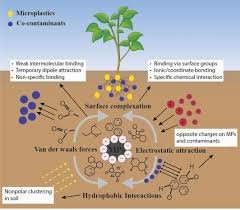
Metalworking can change the chemical composition of surrounding soils.
Copper, lead, iron, arsenic, and other elements may occur in elevated concentrations around production areas, depending on the materials and processes involved.
Researchers can collect systematic soil samples and measure their elemental composition.
The resulting maps may reveal concentrated zones that correspond with suspected activity areas.
However, metals also occur naturally in many soils and rocks. Their concentrations can vary according to geology, drainage, and sediment history.
Researchers therefore need background samples from areas outside the suspected workshop to determine whether a concentration is unusual.
Microarchaeology and Microscopy
Microarchaeology examines small-scale evidence that may not be visible during ordinary excavation.
Soil samples can be studied under a microscope to identify tiny fragments, mineral structures, ash, charcoal, and other remains.
Micromorphology can reveal how deposits formed and whether residues were produced in place or transported.
For example, a thin layer containing metalworking particles directly above a workshop floor may provide stronger evidence of activity than the same particles found in mixed fill.
The context of a residue is often as important as its chemical identity.
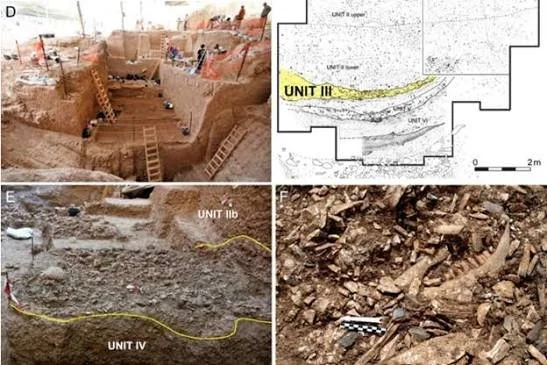
Locating Lost Workshops
Archaeologists may use geophysical survey, soil sampling, metal detection where appropriate, and spatial analysis to identify potential production areas.
Magnetic survey can sometimes detect furnaces or deposits containing magnetic materials. Electrical or other geophysical techniques may reveal buried features, depending on soil conditions.
Remote sensing can identify building remains or industrial features that are difficult to see from the ground.
No single method is definitive. A geophysical anomaly may be caused by geology, modern debris, or an unrelated structure.
Targeted excavation and laboratory analysis are needed to establish what the signal represents.
Workshop Organization and Spatial Patterns
The distribution of residues can reveal how work was organized.
A concentration of slag might indicate a smelting area, while hammer scale and forging debris may occur around a working surface. Crucible fragments and droplets could identify casting or recycling activities.
Different processes may have occupied separate areas because of fire risk, smoke, noise, fuel requirements, or the need to keep materials organized.
However, workshop spaces were not always neatly divided. Small producers might perform several activities in the same area, and production zones could change over time.
Spatial patterns must therefore be reconstructed from the sequence of deposits rather than assumed from a single map.
Metal Sources and Trade
Scientific analysis can sometimes help investigate where metal or ore originated.
Elemental composition may reveal similarities between objects, residues, ores, and known production regions. Lead-isotope analysis can be useful in some provenance studies, although the results are not always unique to one source.
Metal may also be recycled repeatedly, mixing material from different origins. A finished object may therefore contain metal that has passed through several workshops and trading networks.
Provenance research should distinguish between the geological source of raw material, the location of production, and the place where an object was used or discarded.
Recycling and the Long Life of Metal
Metal objects were often repaired and recycled because metal could be valuable and labor-intensive to produce.
A broken tool might be reshaped, a damaged vessel might be melted down, or scrap might be collected for later use.
Recycling can blur the archaeological signature of a workshop. Residues may represent the reworking of imported metal rather than the production of metal from local ore.
Evidence of crucibles, casting spills, and metal fragments may help identify recycling, but interpretation depends on the complete assemblage.
Environmental Consequences
Metalworking could affect the local environment through smoke, charcoal production, waste disposal, and the accumulation of metal-rich residues.
The scale of these effects depended on the technology, materials, duration of production, and proximity to homes or agricultural land.
Soil-bound metals can persist long after a workshop disappears. In some cases, their concentrations may be high enough to affect later land use or require conservation measures.
However, elevated metal concentrations do not automatically indicate serious pollution. Researchers must assess the chemical form of the metal, its mobility, the local geology, and the scale of contamination.
Dating Workshop Activity
Dating a workshop can be challenging because metal residues themselves are not always suitable for direct dating.
Charcoal associated with furnaces may be radiocarbon-dated if it comes from a secure context. Pottery, coins, and other artifacts can provide chronological information.
Stratigraphy helps establish whether residues belong to the same phase of activity or accumulated over time.
The date of a building may not be the date of every deposit found within it. A workshop could be reused long after its original construction, and industrial waste may be moved into later layers.
Conservation and Responsible Excavation
Metalworking residues can be fragile or chemically reactive.
Excavation and storage should preserve their context and prevent contamination. Samples need clear labels, location data, and documentation of the methods used to collect them.
In areas affected by modern industry, distinguishing ancient residues from recent contamination can be especially difficult.
Researchers may need to compare historical maps, industrial records, soil chemistry, and archaeological stratigraphy before assigning a deposit to an ancient workshop.
Conclusion
Soil-bound metal residues provide a valuable way to identify and study workshops that have left few visible structures. Slag, hammer scale, metal droplets, crucible fragments, and altered soil chemistry can reveal evidence of smelting, forging, casting, refining, and recycling.
Yet individual residues rarely tell the whole story. Natural geology, later contamination, and the movement of waste can create patterns that resemble production areas. Strong interpretations require microscopic analysis, geochemical testing, spatial mapping, dating, and careful examination of the surrounding archaeological context.
By studying these tiny traces, archaeologists can reconstruct the locations and organization of lost workshops, investigate the movement of metals, and understand how production shaped settlements and environments. The legacy of a workshop may survive not in its walls or tools, but in the subtle chemical and mineral signatures left behind in the soil.