Introduction
Food preservation has played a major role in human survival, particularly in regions where long winters, seasonal shortages, and limited access to fresh food made storage essential. In cold climates, communities developed different ways to preserve meat, including drying, freezing, smoking, salting, and storing animal products in protected environments. These methods allowed people to use the resources available during productive seasons and maintain supplies when hunting or livestock production became more difficult.
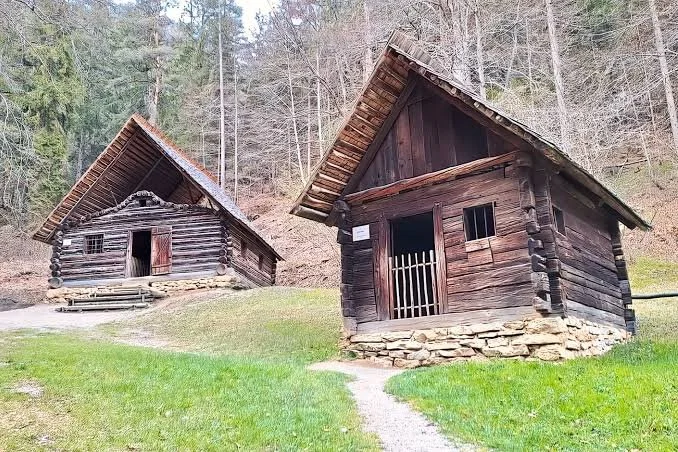
Smokehouses are particularly interesting archaeological structures because they connect food technology with architecture, fuel management, animal husbandry, and household organization. A smokehouse might have been a small wooden structure, a stone-built chamber, or part of a larger domestic complex. Some installations may have disappeared almost entirely, leaving only hearths, charcoal, altered soil, or traces of construction.
Reconstructing ancient smokehouses requires more than identifying a fire feature. Archaeologists must determine whether the structure was used for smoking meat, cooking, heating, drying, or another activity. Through careful analysis, these remains can reveal how communities managed food supplies and adapted their technologies to cold environments.
Smoking as a Preservation Technique
Smoking exposes food to smoke produced by burning or smoldering organic material, usually wood. Depending on the technique, smoking may contribute to drying, introduce compounds that slow some forms of microbial growth, and develop distinctive flavors.
Two broad approaches are commonly distinguished. Cold smoking exposes food to smoke at relatively low temperatures, while hot smoking combines smoke exposure with substantial heating. Traditional methods vary considerably, and ancient practices cannot always be assigned neatly to modern categories.
In prehistoric and historical communities, smoking could be combined with air-drying, salting, or freezing. These combined methods were especially useful when a single technique could not preserve meat reliably for long periods.
The effectiveness of preservation depended on moisture, temperature, airflow, smoke composition, and the type of meat being processed. A structure that produced smoke was not necessarily designed specifically for long-term preservation.
Identifying Archaeological Smokehouses
A possible smokehouse may leave several types of evidence:
Hearths or fire pits associated with a confined space.
Charcoal and ash deposits.
Stone or earthen structures that controlled airflow.
Poles, postholes, or other evidence of racks and suspended food.
Animal bones associated with processing.
Repeated burning or heat alteration on structural surfaces.
None of these features is conclusive by itself. A hearth could have been used for cooking, metalworking, heating, or industrial activity. Animal bones might have entered the deposit through ordinary food disposal rather than preservation.
A stronger interpretation emerges when the layout of the structure, the fire features, the distribution of bones, and evidence of repeated use all support the same explanation.
Cold Climates and Seasonal Food Security
Cold environments present both challenges and opportunities for food preservation. Low temperatures can slow the growth of many microorganisms, but temperature alone does not guarantee safety. Seasonal thawing, fluctuating moisture, and exposure to animals can still damage stored food.
Communities living in northern forests, subarctic regions, mountain valleys, and other cold environments developed different food-storage strategies according to their surroundings.
A successful hunting season could produce more meat than a household could consume immediately. Smoking and drying could reduce waste and extend the period during which the meat remained usable.
For pastoral communities, preserving meat could also help manage livestock slaughter during particular seasons. In some regions, winter conditions made fresh meat difficult to obtain, while in others the availability of wild game changed with animal migration.
Wood Selection and Fuel Management
The wood used in smoking can influence the character of the smoke, the heat produced, and the efficiency of the process. Different tree species burn differently, and their availability depends on the surrounding vegetation.
Archaeologists may examine charcoal fragments to identify the kinds of wood used in a fire. This can provide information about fuel selection and the local environment.
However, charcoal from a hearth does not automatically represent smokehouse fuel. The same wood species might have been used for domestic cooking, heating, construction, or other activities.
Evidence becomes more informative when charcoal analysis is combined with the structure's layout and signs of repeated food processing.
Meat Processing and Animal Remains
Animal bones can help reconstruct how meat was processed before preservation. Butchery marks may indicate where carcasses were divided, while burning and cut marks can reveal aspects of cooking and preparation.
The age and species of the animals may also provide clues about the food economy. A site containing many bones from particular animals might reflect hunting, livestock management, or a specialized processing activity.
Yet bones are not always deposited where the meat was smoked. Carcasses might have been butchered elsewhere, with only selected portions transported to the preservation site.
Researchers therefore need to reconstruct the entire sequence of activities rather than assuming that every stage occurred in one location.
Smokehouses and Household Organization
Food preservation could be a household activity or a more coordinated communal practice. A small installation near a dwelling might have served one family, while a larger facility could have processed meat for several households or for exchange.
The scale of production can sometimes be investigated through the size of the structure, its capacity, the number of associated hearths, and the quantity of processing debris.
Nevertheless, a large structure does not automatically indicate commercial production. It may have served a seasonal gathering, a large household, or repeated use over many years.
The location of a smokehouse relative to dwellings, storage areas, animal enclosures, and routes of movement can help researchers understand how food production fitted into daily life.
Distinguishing Preservation from Other Uses
A major challenge is that smokehouses may resemble other heated structures. Drying rooms, cooking shelters, ovens, and workshops can all produce charcoal and heat-altered surfaces.
Archaeologists must examine evidence of airflow, the position of fire features, possible racks, and the relationship between the structure and food-processing remains.
Microscopic soil analysis may identify repeated ash deposits or changes caused by burning. Experimental archaeology can test how different structures produce smoke and heat, allowing researchers to compare experimental traces with archaeological examples.
Even then, the exact technique may remain uncertain. The evidence may support meat smoking generally without revealing whether the process was cold smoking, hot smoking, or part of a longer preservation sequence.
Conclusion
The archaeology of smokehouses reveals how communities adapted food technology to cold climates and seasonal uncertainty. Hearths, charcoal, animal remains, architectural features, and evidence of repeated burning can help researchers identify possible preservation installations and reconstruct how they were used.
However, no single feature proves that a structure was a smokehouse. Reliable conclusions depend on combining architectural study, environmental analysis, animal-bone evidence, and experimental comparisons.
By investigating these remains, archaeologists can better understand how people managed meat supplies, selected fuel, organized labor, and prepared for periods when fresh food was scarce. Smokehouses were not merely practical structures; they were part of the wider systems that connected seasonal resources, household life, and long-term survival.