Introduction:
Gold has always been a source of wealth, power, and legend. Ancient empires often based their economy, trade, and conquest on access to gold, leading to legendary mines—some real, some mythical—that shaped history.
Famous Ancient Mines:
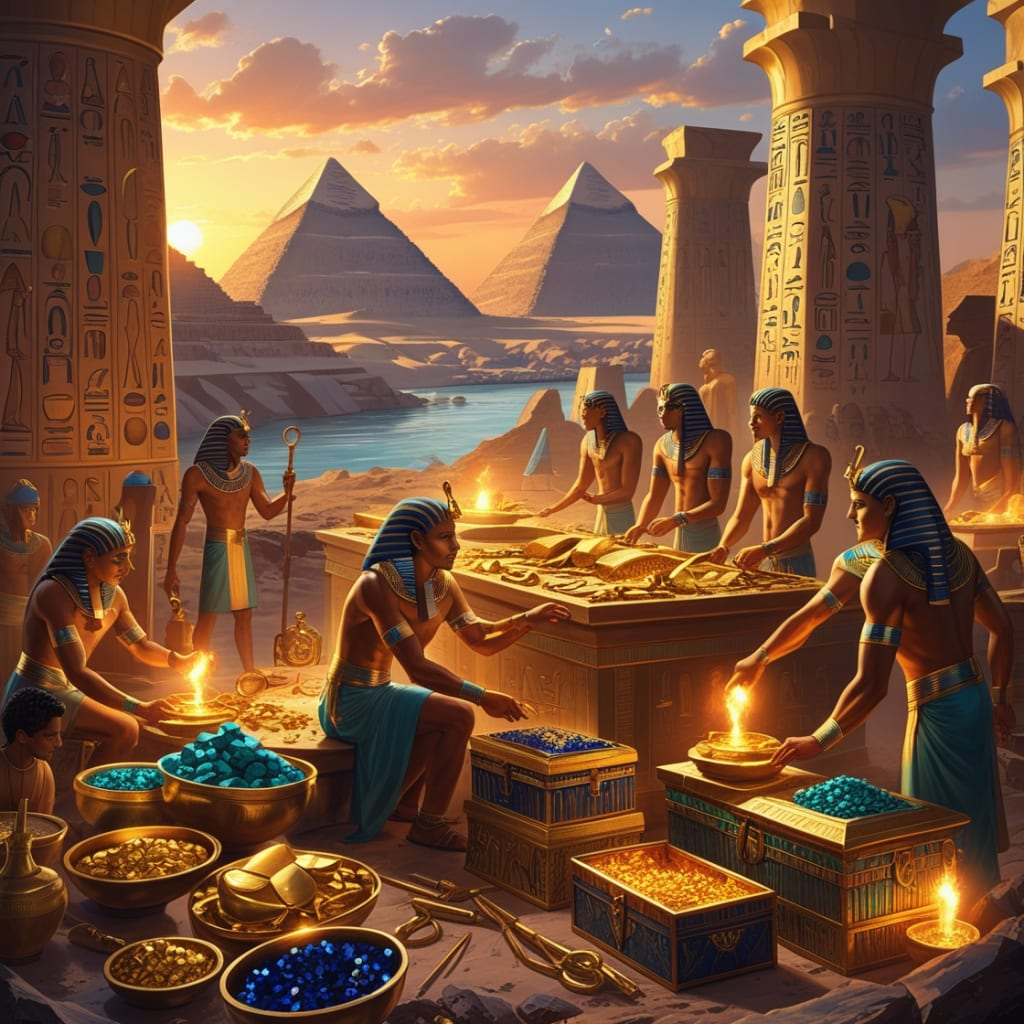
Nubia: Egypt prized Nubian gold for jewelry, temple offerings, and trade. The Nile facilitated transport, creating wealth central to pharaonic power.
Wieliczka, Poland: Salt and gold mines from the Bronze Age reflect early European resource extraction techniques.
Mythical Mines: Stories of King Solomon’s treasures or the “Gold of Ophir” inspired exploration and conquest, blending fact and legend.
Economic and Political Impact:
Gold fueled trade, diplomatic gifts, and tribute systems. Empires with access to gold could maintain armies, build monumental architecture, and display wealth as a symbol of divine favor or legitimacy. Control over mines often determined political stability and expansionist ambitions.
Mining Techniques:
Ancient miners used rudimentary tools, fire, and water channels to extract ore. Archaeological evidence shows extensive tunnels, crushing stones, and smelting techniques, highlighting ingenuity and labor organization.
Cultural Significance:
Gold also had symbolic meaning. It represented the sun, immortality, or divine favor. In Egypt, gold adorned tombs and sarcophagi; in Mesoamerica, it symbolized power and the sacred.
Conclusion:
Lost gold mines remind us that wealth has always been intertwined with human ambition, ingenuity, and myth. They reveal the economic foundations of empires and the enduring allure of treasure, which has driven trade, conquest, and culture for millennia.