A lost version of the Trojan War by Aeschylus has come to light through the Rutland mosaic, revealing surprising cultural connections between Roman Britain and the wider Mediterranean world.
For five years, historians and archaeologists at the University of Leicester had been investigating a mystery beneath the fields of Rutland. There, far from the sunlit ruins of Greece or Türkiye, lay a sprawling mosaic unlike any other found in Britain. Its true significance only became clear recently: it depicted a story almost lost to history.
The Ketton mosaic, created around 1,800 years ago, does more than retell Homer’s Iliad. Instead, it draws on a forgotten tragedy by Aeschylus, the renowned Athenian playwright, whose play Phrygians has mostly vanished except for brief mentions. The mosaic preserves this lost narrative not in text but in carefully arranged tesserae on the floor of a luxurious villa at the northern edge of the Roman Empire.
This discovery elevates the mosaic from a rare archaeological find to evidence that Roman Britain actively participated in the classical imagination connecting the Mediterranean world.
The story of the mosaic’s discovery begins in 2020, during the COVID-19 lockdown, when farmer Jim Irvine noticed fragments of patterned stone on his land. Alerting specialists led to the involvement of the University of Leicester Archaeological Services and Historic England. Excavations revealed a large villa complex, its central room adorned with an 11-meter-long mosaic depicting war, grief, and mythological drama.
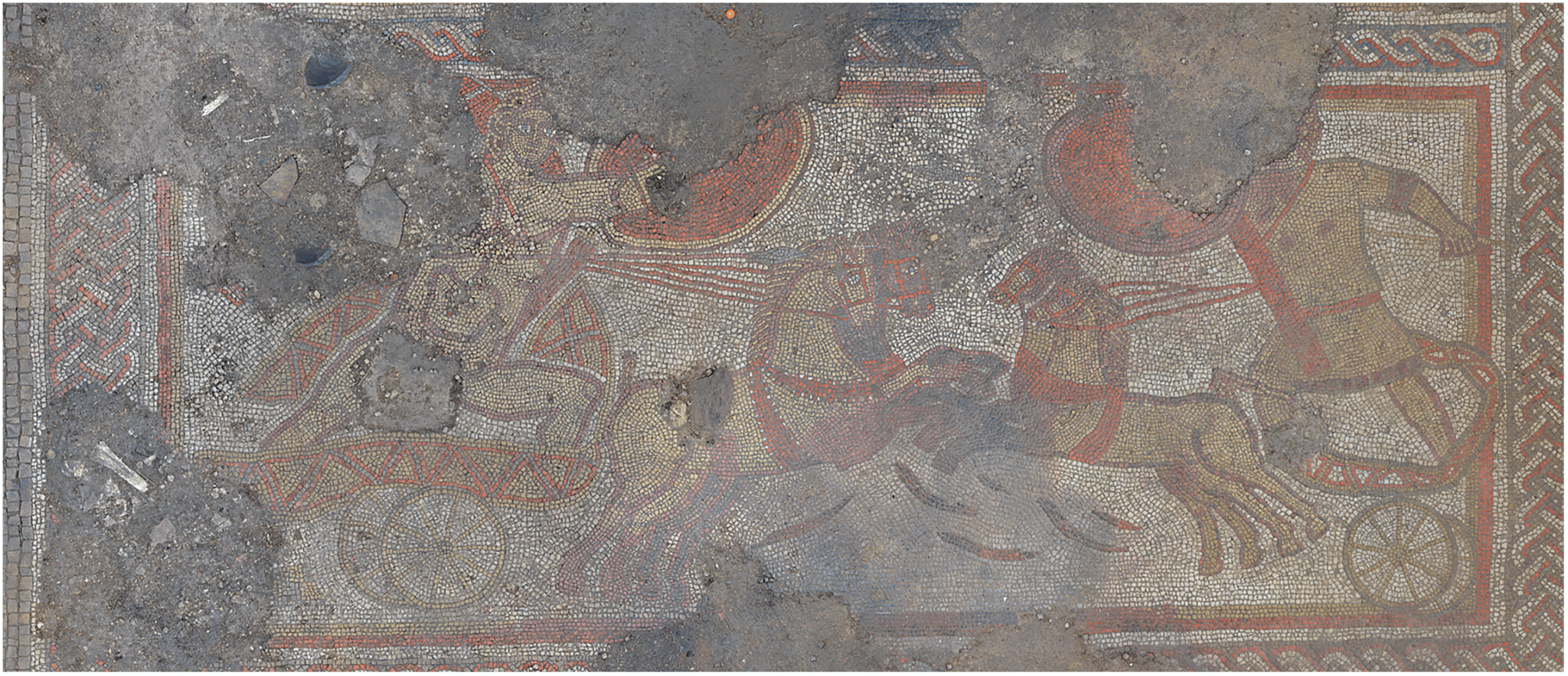
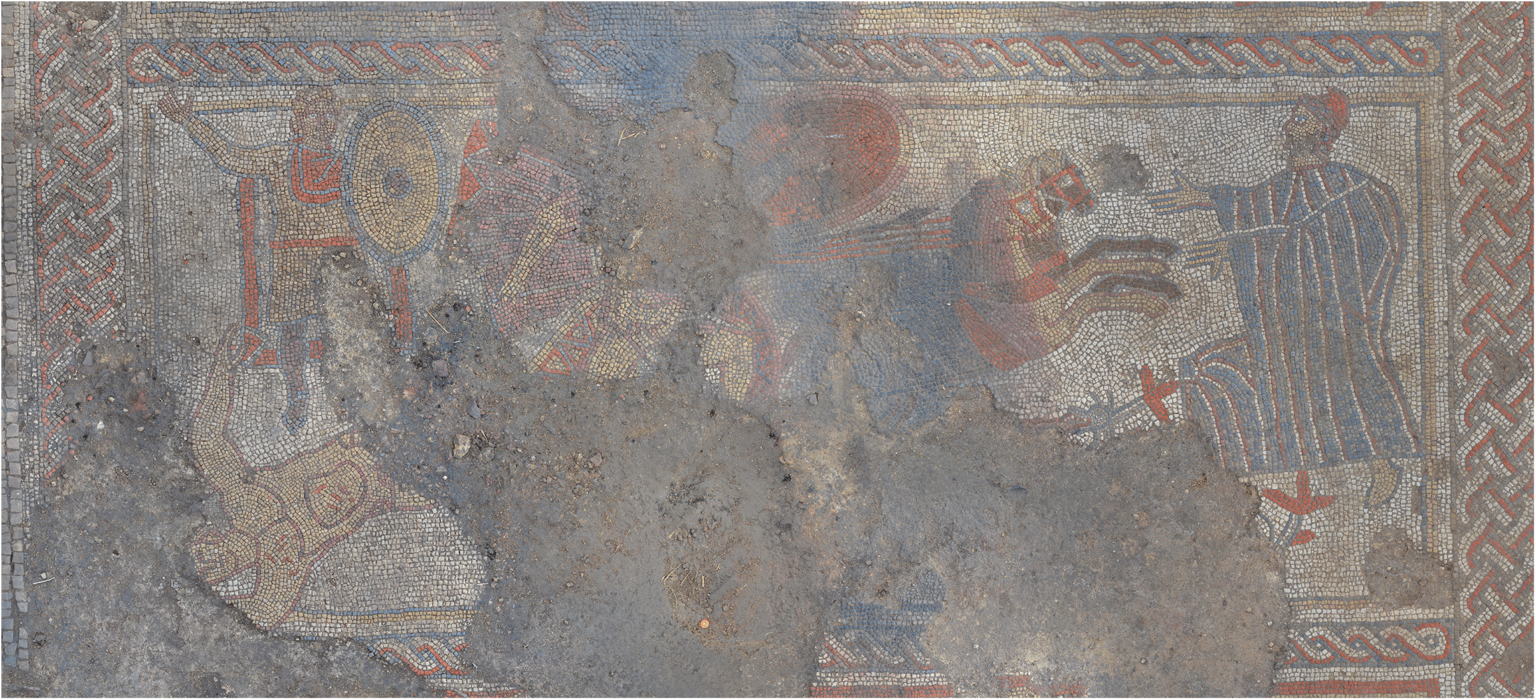
The mosaic is divided into three scenes focused on the conflict between Achilles and Hector. The first captures their duel, each figure poised in the tense moment before impact. The second depicts the aftermath, with Achilles driving his chariot while Hector’s lifeless body is dragged behind. The final scene, however, is the most remarkable: Hector’s body is weighed against gold as King Priam ransoms his son—a detail absent from Homer but present in Aeschylus’ lost version.
This extraordinary element indicates that the villa’s owner and the artists decorating it were familiar with a rare version of the Trojan legend, suggesting a household deeply engaged with classical literature beyond the widely known texts.
What makes the Ketton mosaic even more remarkable is the heritage of its artistic language. Lead researcher Dr. Jane Masséglia and her team found patterns and motifs that had circulated across the Mediterranean for centuries before the mosaic was created. One upper panel reflects a design seen on a Greek vase from Aeschylus’ era. Elsewhere, the imagery draws from Roman silverware in Gaul, coin iconography from Asia Minor, and decorative styles passed from workshop to workshop long before reaching Britain.
These connections challenge the idea that Roman Britain was culturally isolated. Instead, they show a province actively engaged with Mediterranean art, trade, and intellectual life. The mosaic’s craftsmen were not improvising in a remote corner of the empire; they were inheritors of a network of patterns, motifs, and techniques that flowed across continents like texts did.
The villa’s owners were likely educated, wealthy, and ambitious individuals who valued aligning their homes with stories from the heart of classical culture. In the cold winters of Britannia, far from the Aegean origins of Achilles and Hector, they curated an artistic environment that showcased their sophistication to visitors.
For Jim Irvine, who stumbled upon the mosaic, the discovery is thrilling. It portrays a Roman Britain far more cosmopolitan than often depicted—a place where global narratives resonated with provincial elites. Scholars not involved in the excavation agree. Professor Hella Eckhardt notes that the mosaic shows myths were preserved not only in literature but also in visual traditions passed down across centuries and regions, demonstrating how ancient stories traveled through both hands and words.
Today, the Ketton mosaic and its villa are protected as a Scheduled Monument, with their significance officially recognized. Yet the full impact of the discovery continues to emerge. The mosaic not only revives Aeschylus’ lost drama but also reshapes our understanding of Roman Britain as a connected, informed, and culturally ambitious society.
On a quiet farm in Rutland, the stones are speaking again, revealing that the edge of the Roman Empire was never as distant from the classical world as previously imagined.