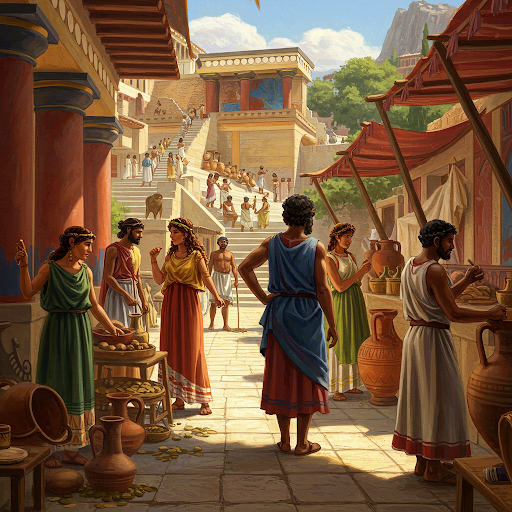
The Minoan Civilization: The Trade in Saffron and Luxury Goods
Introduction
The Minoan civilization was one of the earliest advanced societies in Europe, known for its palaces, maritime power, and extensive trade networks across the Aegean and eastern Mediterranean. Among its most valuable commodities were saffron and a wide range of luxury goods that supported elite culture and long-distance exchange.
The Importance of Trade in Minoan Society
Minoan civilization depended heavily on maritime trade because Crete had limited natural resources.
They traded:
Olive oil
Wine
Pottery
Textiles
Luxury crafted goods
In return, they imported:
Metals (copper and tin for bronze)
Precious stones
Ivory
Exotic goods from Egypt and the Near East
Trade helped the Minoans become one of the wealthiest Bronze Age civilizations.
Saffron: The Precious Spice
One of the most famous luxury products associated with the Minoans was saffron, derived from the crocus flower.
Uses of Saffron:
Dye for textiles (bright yellow-orange color)
Medicine and healing remedies
Perfumes and cosmetics
Religious offerings
Saffron was extremely valuable due to the labor-intensive harvesting process.
Evidence from Frescoes
At the palace of Knossos, wall paintings show figures gathering crocus flowers.
These frescoes suggest:
Organized cultivation or collection of saffron
Possible ritual or religious significance
Importance of women in agricultural or ceremonial roles
Art provides key evidence for understanding Minoan economic life.
Luxury Goods in Minoan Trade
Minoan elites valued imported and crafted luxury items.
Common Luxury Goods Included:
Fine pottery with detailed designs
Jewelry made of gold and semi-precious stones
Elaborate ceremonial vessels
Ivory carvings and decorative objects
Textiles dyed with expensive pigments
These items were symbols of status and wealth.
Maritime Trade Networks
The Minoans were skilled sailors who controlled key sea routes in the Aegean.
Their trade networks reached:
Egypt
The Levant (modern-day Syria and Lebanon)
Anatolia (modern-day Turkey)
Other Aegean islands
Ships transported goods between palace centers and foreign markets.
Palatial Economy and Redistribution
Minoan trade was organized through palaces such as Knossos.
Key features included:
Central storage facilities for goods
Administrative record-keeping
Redistribution of luxury items to elites
Control of production and trade routes
The palace system acted as both economic and political authority.
Cultural and Religious Significance
Luxury goods were not only economic products but also had symbolic meaning:
Saffron associated with fertility and ritual purity
Jewelry used in religious ceremonies
Imported goods signaled divine favor and prestige
Trade reinforced social hierarchy and religious practices.
Influence on Later Civilizations
Minoan trade practices influenced later Aegean cultures, especially the Mycenaean civilization:
Continued use of palace-based economies
Adoption of luxury trade goods
Expansion of maritime trade networks
The Minoans helped shape early Mediterranean commerce.
Conclusion
Saffron and luxury goods played a central role in the Minoan economy, reflecting both wealth and cultural sophistication. Through extensive maritime trade networks and palace-controlled redistribution systems, the Minoans became key players in the Bronze Age world. Their trade in valuable goods not only supported economic prosperity but also reinforced social status and religious traditions.