The Mystery of the Plain of Jars: Megalithic Burial Rites in Laos
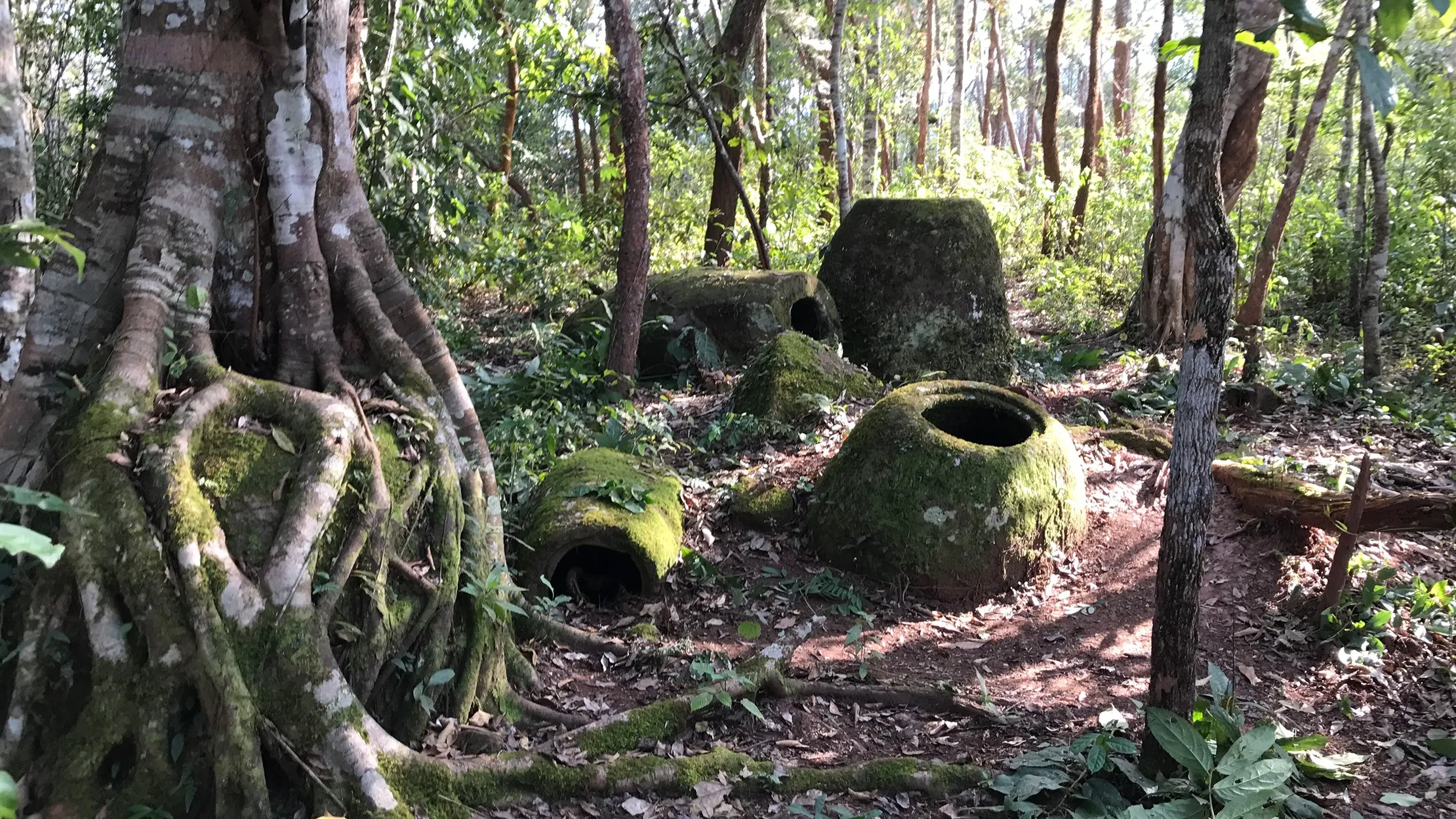
The Plain of Jars (Thong Hai Hin) in the Xieng Khouang province of Laos is one of Southeast Asia's most enigmatic archaeological landscapes. Sprawling across the upland valleys of the Xiangkhoang Plateau, the site features thousands of massive, tubular-shaped stone vessels scattered across numerous locations. Inscribed as a UNESCO World Heritage site in 2019, the Plain of Jars has increasingly come into focus as researchers unlock the secrets of the civilization that created them.
1. The Scale and Mystery of the Jars
The sheer scale of the megalithic jars has puzzled archaeologists and historians since they were first documented by French archaeologist Madeleine Colani in the 1930s.
Dimensions and Weight: The jars range from one to three meters in height and can weigh up to 20 tonnes.
Material and Origin: Carved primarily from solid sandstone and limestone, the jars were sourced from quarries up to 10 kilometers away.
The Engineering Feat: How an ancient, pre-industrial society transported these enormous vessels across rugged, mountainous terrain remains a subject of ongoing research.
2. Mortuary and Burial Practices
Recent excavations led by the Plain of Jars Archaeological Research Project have confirmed that the landscape was used as a sprawling, ancient cemetery, rather than for food storage or water collection as some early theories suggested.
Primary and Secondary Burials: Archaeologists have identified three distinct burial types in the vicinity of the jars:
Primary burials: Human remains placed directly in graves.
Secondary burials: The reburial of bundled, disarticulated bones.
Urn burials: Human teeth and bone fragments placed inside smaller, intricately decorated ceramic vessels buried near the large stone jars.
The Role of the Jars: It is hypothesized that the massive stone jars served as temporary holding containers or crematoriums for elite members of society during complex funerary rituals, similar to historical practices found in Southeast Asian royal traditions.
3. Dating the Landscape
Recent scientific testing has fundamentally shifted the timeline of the site's creation.
Optically Stimulated Luminescence (OSL): Sediment samples analyzed from beneath the jars indicate that they were placed in their final resting positions between 1240 and 660 BCE, pushing the timeline of the site back by nearly a thousand years.
Continued Significance: Radiocarbon dating of skeletal remains and charcoal demonstrates that the landscape maintained profound ritual significance from its initial use into the Iron Age and the historic period (up to 500 CE).
4. Artifacts and Trade Connections
The artifacts discovered during recent excavations highlight an organized, socially stratified society with access to extensive regional networks.
Grave Goods: Archaeologists have unearthed glass and carnelian beads, copper-alloy bangles, spindle whorls, iron tools, and delicate bronze-alloy bells, indicating active trade with China, Vietnam, and other distant regions.
Ting Jars: Some jars feature carved motifs, such as the "Ting" motif, which mimics the cords used to hold bamboo vessels together, showcasing specialized craft production.
5. Modern Challenges: Unexploded Ordnance
Research at the Plain of Jars remains both delicate and dangerous due to the history of the region.
The Bombing Legacy: During the Indochina conflict (1964–1973), the Xieng Khouang province was heavily bombarded, leaving behind a massive amount of unexploded ordnance (UXO).
Accessible Sites: Currently, fewer than 10 percent of the known jar sites have been cleared of UXO, meaning much of the landscape remains off-limits to traditional archaeological exploration.