The Nabataean Water Engineers: How Petra Thrived in a Barren Desert
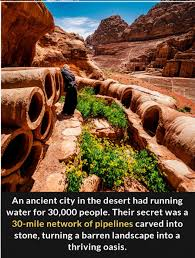
Located in the arid desert of southern Jordan, the ancient city of Petra supported a population of up to 30,000 to 40,000 people. This was only possible due to the sophisticated hydraulic and flood control systems developed by the Nabataeans, an ancient Semitic people.
1. The Desert Environment and the Challenge
Petra is situated in a harsh, mountainous canyon that receives an average of just 6 inches (150 mm) of rainfall per year. The Nabataeans faced two major challenges: an extreme lack of water during the dry months and dangerous flash floods in the winter.
The Strategy: Instead of avoiding the flash floods, the Nabataeans used their desert terrain to stop, slow, divert, and capture every drop of runoff.
Caravan Hub: Because Petra sat at the crossroads of major trade routes, ensuring a consistent water supply was essential for sustaining local residents as well as weary trade caravans and their animals.
2. Harnessing Flash Floods and Dams
The Nabataeans designed a system of dams and bypass tunnels to protect the downtown area of Petra from ravaging floods while simultaneously directing that runoff into storage facilities.
Diversion Dams: The dams held back floodwaters from the Wadi Musa basin, releasing the water gradually to prevent destruction.
Subterranean Cisterns: Hundreds of underground cisterns were carved into solid rock throughout the city. Because they were underground, the water was kept cool and protected from evaporation by the desert heat.
3. Aqueducts and Terracotta Pipelines
The city's supply relied on an ingenious system of channels cut into the mountains and enclosed terracotta pipelines that brought fresh spring water directly to the city center.
The Siq Channel: A covered water channel ran along the left-hand side of the Siq (the main canyon entrance), bringing water from the natural spring in Wadi Musa into Petra.
Pressurized Piping: On the right-hand side of the Siq, interlocking terracotta pipes with tapered ends carried water under pressure.
Slope Optimization: The system maintained a precise declination slope of approximately 2.8 degrees. This ensured a continuous, maximized flow without creating hydrostatic pressure that could crack the pipes or cause leaks.
4. Water Purification: Settling Basins
The Nabataeans engineered particle-settling basins to ensure the water supply remained pure and safe to drink.
Filtration Process: The water was routed through sequential settling basins. These allowed sand, gravel, and impurities to settle at the bottom before the clean water reached the city's residents.
5. Agricultural and Domestic Impact
The presence of flowing channels, overflowing basins, and cascading waterfalls transformed the arid gorge into a lush, hospitable environment.
Everyday Life: The abundant water allowed for domestic use, the irrigation of crops and terrace gardens, and reliable drinking stations for camels and livestock.
Engineering Legacy: Many of the Nabataean water systems proved to be so durable and efficient that several were upgraded and remained in operation in modern-day Jordan.