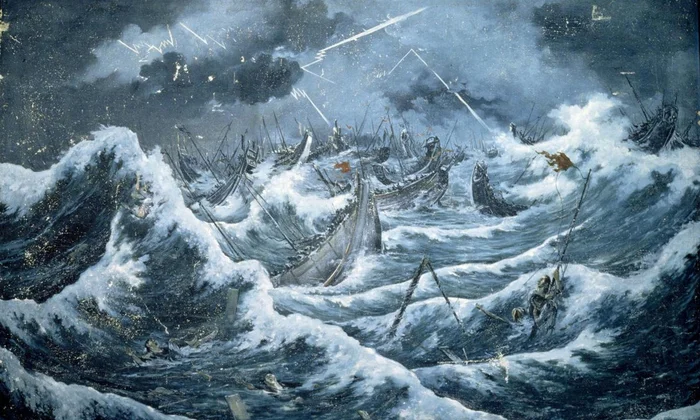
The Lost Fleet of Kublai Khan: Exploring the Sunken Ships of the Mongol Invasions
The catastrophic defeat of Kublai Khan’s fleets off the coast of Japan in the late 13th century gave rise to the term kamikaze ("divine wind"). For centuries, the details of the Mongol invasions and the fleet's destruction were known primarily from historical Japanese and Chinese chronicles. However, decades of underwater archaeology in Imari Bay, particularly around Takashima Island, have begun to reveal the physical reality of the invasion force.
1. The Historical Context and the Storm
In 1274 and 1281, Kublai Khan, the ruler of the Yuan Dynasty and the Mongol Empire, attempted to conquer Japan.
The Two Campaigns: The 1274 attempt utilized around 900 vessels. The massive 1281 campaign consisted of two main forces: a combined Eastern force from Korea and a larger southern fleet from China, comprising more than 4,000 vessels and over 100,000 troops.
The Fatal Typhoons: Both invasions were ultimately thwarted by powerful storms that struck Imari Bay while the fleet was anchored off the coast, dashing the ships to pieces and ending the Mongol threat to Japan.
2. The Search for the Sunken Ships
For centuries, the ships eluded discovery until local historians and academics initiated systematic surveys in the late 20th century.
Pioneering Sonar Surveys: In the early 1980s, engineering professor Torao Mozai used advanced sonar equipment to detect anomalies on the seabed off the southern coast of Takashima Island.
Preservation in Silt: The mud and silt of Imari Bay created a natural time capsule. Artifacts and timbers became buried, protecting them from marine shipworms and the intense wave action of the surface.
Discovery of Hull Remains: In 2011, a joint university team successfully located a buried Yuan-era warship hull roughly 15 meters long. Subsequent discoveries in 2015 and 2023 have revealed more vessels and well-preserved planks, allowing researchers to study Yuan-dynasty ship construction firsthand.
3. What the Underwater Artifacts Reveal
The finds at the Takashima underwater site provide key details about the fleet's size, construction methods, and the weaponry used by the Mongol invaders.
Shipbuilding Techniques: The excavations revealed distinct construction styles. Some ships were flat- or round-bottomed and fastened with iron nails (typical of Chinese shipwrights in Fujian), while others utilized mortise-and-tenon joinery without metal nails, matching Korean construction records.
Anchors and Hardware: Divers found numerous large wood-and-stone anchors, with some individual stones weighing over 170 kilograms.
Military Hardware: The site yielded a wealth of battlefield artifacts, including bundles of iron arrow tips, helmets, swords, and a bronze seal with Phagspa characters indicating the rank of a Yuan commander.
4. The Tetsuhau: Early Explosive Ordnance
One of the most thrilling discoveries in Imari Bay was the recovery of tetsuhau.
Design: These hollow, spherical ceramic vessels were filled with gunpowder and iron shrapnel, serving as an early form of exploding grenade or bomb.
Historical Accuracy: The recovery of these artifacts provides tangible proof of the advanced seagoing ordnance used by the Yuan military, confirming scenes depicted in Japanese scrolls (Moko Shurai Ekotoba).
5. Why the Fleet Perished: Storm vs. Poor Construction
While history credits the kamikaze (the divine wind) for Japan's salvation, archaeological and engineering evidence points to additional factors that doomed the fleet:
Hasty Construction: Many auxiliary ships were built rapidly. Some researchers argue that the use of inferior materials or hasty assembly made the vessels unable to withstand the violent stress of the typhoon.
Anchor Failures: The discovery of numerous single-stone anchors suggests that many ships relied on lightweight or hastily fabricated moorings, which could not hold the ships in place when the storm struck.