• MAIN PAGE
  • LATEST NEWS
    • Lost Cities
    • Archaeology's Greatest Finds
    • Underwater Discoveries
    • Greatest Inventions
    • Studies
    • Blog
  • PHILOSOPHY
  • HISTORY
  • RELIGIONS
    • Africa
    • Anatolia
    • Arabian Peninsula
    • Balkan Region
    • China - East Asia
    • Europe
    • Eurasian Steppe
    • Levant
    • Mesopotamia
    • Oceania - SE Asia
    • Pre-Columbian Civilizations of America
    • Iranian Plateau - Central Asia
    • Indus Valley - South Asia
    • Japan
    • The Archaeologist Editor Group
    • Scientific Studies
    • Aegean Prehistory
    • Historical Period
    • Byzantine Middle Ages
    • Predynastic Period
    • Dynastic Period
    • Greco-Roman Egypt
  • Rome
  • PALEONTOLOGY
  • About us
Menu

The Archaeologist

  • MAIN PAGE
  • LATEST NEWS
  • DISCOVERIES
    • Lost Cities
    • Archaeology's Greatest Finds
    • Underwater Discoveries
    • Greatest Inventions
    • Studies
    • Blog
  • PHILOSOPHY
  • HISTORY
  • RELIGIONS
  • World Civilizations
    • Africa
    • Anatolia
    • Arabian Peninsula
    • Balkan Region
    • China - East Asia
    • Europe
    • Eurasian Steppe
    • Levant
    • Mesopotamia
    • Oceania - SE Asia
    • Pre-Columbian Civilizations of America
    • Iranian Plateau - Central Asia
    • Indus Valley - South Asia
    • Japan
    • The Archaeologist Editor Group
    • Scientific Studies
  • GREECE
    • Aegean Prehistory
    • Historical Period
    • Byzantine Middle Ages
  • Egypt
    • Predynastic Period
    • Dynastic Period
    • Greco-Roman Egypt
  • Rome
  • PALEONTOLOGY
  • About us

The Myth of the Wild Hunt: Ghostly Riders Across the Sky

November 26, 2025

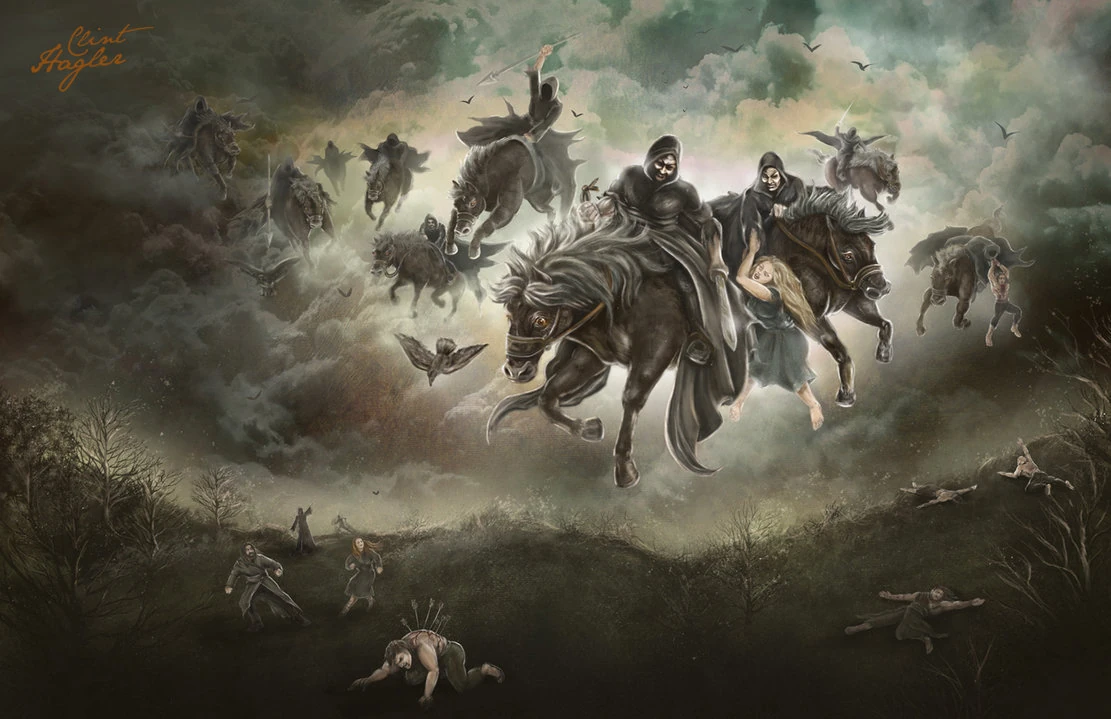
The Wild Hunt is a pan-European myth of spectral riders, often led by a god or legendary figure, sweeping across the night sky with a ghostly entourage.

Origins and Variations

The myth appears in Norse, Germanic, Celtic, and Slavic folklore. Leaders of the hunt include Odin in Norse tales or King Arthur in some British legends. The hunt’s appearance was seen as an omen of war, plague, or death.

Symbolism and Cultural Role

The Wild Hunt represents chaos, supernatural power, and the thin boundary between the mortal and spirit worlds. Communities interpreted its passing as a warning, blending fear with moral and social lessons. 

Modern Legacy

The Wild Hunt inspires literature, music, and games, retaining its eerie reputation. It exemplifies Europe’s rich folklore tradition, connecting ancient fears with cultural storytelling.

← The Mysterious Disappearance of the Indus Valley CivilizationThe Worship of Astarte: The Goddess of Love and War →
Featured
image_2026-01-09_134158495.png
Jan 9, 2026
Stunning UK village 'perfect for recharging' has 'hidden gem' attraction
Jan 9, 2026
Read More →
Jan 9, 2026
Jan 9, 2026
Medieval Graves of Three Elite Warriors Excavated in Hungary
Jan 9, 2026
Read More →
Jan 9, 2026
image_2026-01-09_130702520.png
Jan 9, 2026
Archaeologists Found a 7,500-Year-Old Seal From a Surprisingly Advanced Society
Jan 9, 2026
Read More →
Jan 9, 2026
image_2026-01-09_125433336.png
Jan 9, 2026
Common Childhood Virus Detected in Iron Age Remains
Jan 9, 2026
Read More →
Jan 9, 2026
image_2026-01-09_123726891.png
Jan 9, 2026
Arrow tips found in South Africa are the oldest evidence of poison use in hunting
Jan 9, 2026
Read More →
Jan 9, 2026
image_2026-01-09_122849202.png
Jan 9, 2026
And finally… first Scottish coin
Jan 9, 2026
Read More →
Jan 9, 2026
read more

Powered by The archaeologist