• MAIN PAGE
  • LATEST NEWS
    • Lost Cities
    • Archaeology's Greatest Finds
    • Underwater Discoveries
    • Greatest Inventions
    • Studies
    • Blog
  • PHILOSOPHY
  • HISTORY
  • RELIGIONS
    • Africa
    • Anatolia
    • Arabian Peninsula
    • Balkan Region
    • China - East Asia
    • Europe
    • Eurasian Steppe
    • Levant
    • Mesopotamia
    • Oceania - SE Asia
    • Pre-Columbian Civilizations of America
    • Iranian Plateau - Central Asia
    • Indus Valley - South Asia
    • Japan
    • The Archaeologist Editor Group
    • Scientific Studies
    • Aegean Prehistory
    • Historical Period
    • Byzantine Middle Ages
    • Predynastic Period
    • Dynastic Period
    • Greco-Roman Egypt
  • Rome
  • PALEONTOLOGY
  • About us
Menu

The Archaeologist

  • MAIN PAGE
  • LATEST NEWS
  • DISCOVERIES
    • Lost Cities
    • Archaeology's Greatest Finds
    • Underwater Discoveries
    • Greatest Inventions
    • Studies
    • Blog
  • PHILOSOPHY
  • HISTORY
  • RELIGIONS
  • World Civilizations
    • Africa
    • Anatolia
    • Arabian Peninsula
    • Balkan Region
    • China - East Asia
    • Europe
    • Eurasian Steppe
    • Levant
    • Mesopotamia
    • Oceania - SE Asia
    • Pre-Columbian Civilizations of America
    • Iranian Plateau - Central Asia
    • Indus Valley - South Asia
    • Japan
    • The Archaeologist Editor Group
    • Scientific Studies
  • GREECE
    • Aegean Prehistory
    • Historical Period
    • Byzantine Middle Ages
  • Egypt
    • Predynastic Period
    • Dynastic Period
    • Greco-Roman Egypt
  • Rome
  • PALEONTOLOGY
  • About us
No results found

The Role of Astronomy in Ancient Civilizations

November 29, 2025

How Early Cultures Used the Stars to Shape Their World

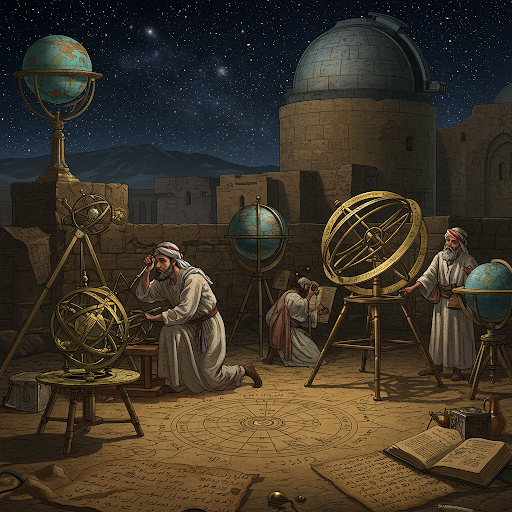
Before telescopes and modern science, ancient peoples looked to the sky to understand time, nature, and the divine. Astronomy guided agriculture, religion, architecture, and even political power.

The Maya: Masters of Celestial Cycles

The Maya tracked:

  • Solar movements

  • Venus cycles

  • Lunar phases

  • Eclipses

Their calendar systems, including the Long Count, were incredibly accurate. Temples like El Castillo at Chichén Itzá align with solstices, showing their skill in astronomical architecture.

Egyptians: Astronomy for Kingship and Eternity

Egyptians used star charts to:

  • Align pyramids precisely with cardinal directions

  • Time religious festivals

  • Track the rising of Sirius, which predicted the Nile flood

Astronomy helped reinforce the pharaoh’s divine authority.

Babylonians: Early Mathematical Astronomy

Babylonians compiled thousands of clay tablets containing:

  • Star catalogues

  • Planetary observations

  • Predictive models

Their systematic approach laid the foundation for later Greek astronomy.

A Universal Human Practice

Across cultures, the sky served as:

  • A calendar

  • A compass

  • A religious symbol

  • A scientific tool

Astronomy connected ancient people to the cosmos and helped shape some of the greatest civilizations.

← The History of the Silk Road: The First Global Trade NetworkThe Great Fire of Rome: Did Nero Really Play the Lyre? →
Featured
image_2026-05-28_213957152.png
May 28, 2026
Ancient Egyptian Boats: The Solar Barque of Khufu
May 28, 2026
Read more →
May 28, 2026
image_2026-05-28_214040298.png
May 28, 2026
The Viking Influence on the English Language: Archaeological Contexts
May 28, 2026
Read more →
May 28, 2026
image_2026-05-28_214120725.png
May 28, 2026
Roman Silver Treasures: The Mildenhall and Sevso Hoards
May 28, 2026
Read more →
May 28, 2026
image_2026-05-28_214200833.png
May 28, 2026
The Minoan Navy: The Wall Paintings of Akrotiri
May 28, 2026
Read more →
May 28, 2026
image_2026-05-28_213737061.png
May 28, 2026
The Roman Amphitheater of Nîmes: A Marvel of Gallic Engineering
May 28, 2026
Read more →
May 28, 2026
image_2026-05-28_213621343.png
May 28, 2026
Ancient Greek Philosophers: The Archaeology of the Lyceum and Academy
May 28, 2026
Read more →
May 28, 2026
read more

Powered by The archaeologist